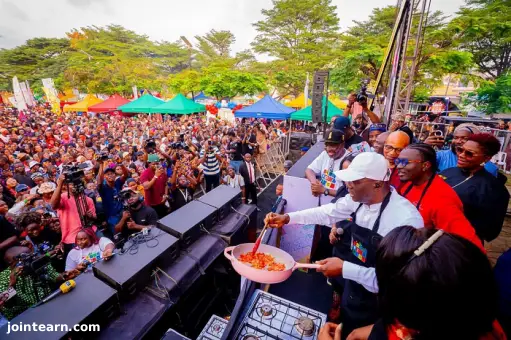
Lagos State Governor, Babajide Sanwo-Olu, has said the state’s food sector is undergoing a major transformation, positioning itself as a critical bridge between Nigeria’s vast agricultural resources and its rapidly expanding consumer market.
Speaking during an interview at the Lagos Food Festival, Sanwo-Olu noted that the food industry is gaining momentum due to rising demand, technological advancements, and strong policy backing from the state government.
According to the governor, the administration is deliberately investing in the talents within Lagos’ growing culinary ecosystem, viewing food not just as a cultural expression but as a powerful engine for economic growth, job creation, and youth empowerment.
He explained that the Lagos Food Festival is being used as a strategic tool to professionalise the food sector, generate thousands of jobs, and further establish Lagos as Africa’s commercial and cultural hub.
“The festival is more than a celebration of food; it is an economic strategy in action,” Sanwo-Olu said. “We are building a robust ecosystem where food entrepreneurs—especially innovative young people—can thrive, sell their products, and grow sustainable businesses.”
The governor described the festival, a flagship initiative of the Ministry of Agriculture and Food Systems, as a platform that attracts entrepreneurs, families, and international visitors, while showcasing Lagos’ diverse culinary heritage and supporting Small and Medium Enterprises (SMEs).
He added that the event reflects the government’s broader approach to food security and enterprise development, combining cultural promotion with economic inclusion.
Sanwo-Olu emphasised the importance of training and support in strengthening the sector, noting that the government is providing access to financing, skills development, and capacity-building programmes to help culinary talents compete globally.
“When you see young people at the festival, they are not just showcasing talent; they are earning income and demonstrating the innovative spirit that defines Lagos,” he said. “We want Lagos to remain home to every skill and profession.”
According to him, the Ministry of Agriculture and Food Systems has rolled out several initiatives, including culinary competitions and agripreneurship programmes, to nurture growth across the food value chain.
The governor also highlighted the cultural value of the food industry, describing it as a form of cultural diplomacy that promotes Lagos cuisine to a global audience while strengthening a stable and efficient food system.
“Food security and sustainable economic transformation are central to our agenda,” Sanwo-Olu said. “Every successful food vendor or young chef represents progress for our economy and reinforces Lagos’ importance to Nigeria’s overall growth.”
During the festival, the governor participated in cooking and tasting seafood rice with stir-fried spinach.
Meanwhile, the Commissioner for Agriculture and Food Systems, Abisola Olusanya, said the food sector holds immense potential as both a driver of economic growth and a catalyst for inclusive development.
She explained that as consumer preferences evolve toward healthier and safer food choices, the government is reinforcing the sector’s strategic role in meeting demand for nutritious, affordable food.
Olusanya said the Lagos Food Festival is one of the key strategies being used to unlock the country’s culinary potential, preserve heritage dishes, and promote Lagos as a world-class tourism destination.
“Food plays a central role in shaping how visitors remember Lagos—through its flavours, traditions, and dining experiences,” she said.
She added that the festival is empowering the next generation of chefs, positioning Lagos’ culinary talents as cultural ambassadors who connect people through food, tradition, and innovation.


Leave a Reply