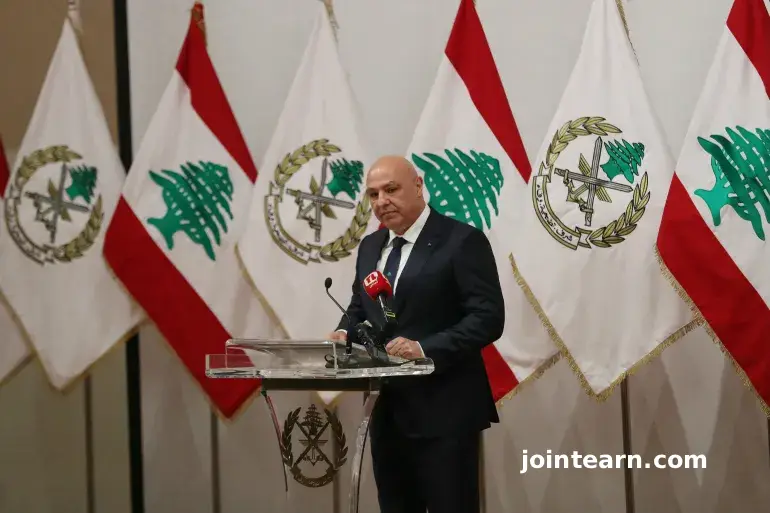
In a breakthrough moment for Middle Eastern diplomacy, Lebanon and Israel are preparing for their first direct civilian-led talks in decades, raising cautious optimism for a more durable and expanded truce between the two long-standing adversaries.
The development comes as both nations agreed to send civilian representatives to participate in a meeting linked to the committee responsible for supervising their fragile 2024 ceasefire. The move represents a rare shift away from purely military-to-military contact and has fueled discussions about the possibility of gradual diplomatic and economic engagement.
Lebanon Sends Civilian Envoy for the First Time
Lebanese President Joseph Aoun confirmed that Beirut will dispatch a civilian delegate—an unprecedented step for the country, which does not officially recognize Israel.
According to Aoun’s office, the decision followed a longstanding request from the United States and came only after Israel indicated it would also include a civilian in its delegation.
Lebanon will be represented by Simon Karam, a former diplomat and ambassador to the United States. Analysts say his involvement sends a message of tentative openness while still reflecting Lebanon’s caution on one of the country’s most politically sensitive issues.
Israel Also Adds a Diplomatic Representative
Israel announced that it too will be sending a civilian member to the talks. Prime Minister Benjamin Netanyahu’s office confirmed that acting National Security Council director Gil Reich has been tasked with appointing a representative.
Israeli media outlet Arutz Sheva identified the chosen envoy as Uri Resnick, a senior figure within Israel’s National Security Council.
Calling the step a “first attempt” to lay a foundation for potential economic cooperation, Netanyahu’s office framed the talks as an opportunity to assess whether deeper diplomatic engagement with Lebanon is possible.
A Sensitive yet Significant Step for Both Countries
Al Jazeera correspondent Zeina Khodr, reporting from Beirut, underscored how divisive this move is inside Lebanon. Many Lebanese citizens continue to view Israel as an occupying enemy, and previous governments have avoided any appearance of direct political engagement.
However, Aoun has recently signaled willingness to pursue a more robust, enforceable truce than the current arrangement brokered in November 2024.
The location and exact timing of the meeting have not yet been announced, though it is expected to take place near the UN-demarcated Blue Line, the unofficial border monitored by peacekeepers.
Ongoing Tensions Underscore the Challenge Ahead
Despite the ceasefire, Israel has conducted multiple strikes across Lebanon throughout 2024 and 2025.
UN figures indicate that more than 300 people, including at least 127 civilians, have been killed in these attacks.
Israel maintains that it is targeting Hezbollah fighters and infrastructure, insisting that the group is attempting to rebuild military capabilities in violation of the truce.
Meanwhile, Washington continues to pressure Lebanon to fulfill its commitment to disarm Hezbollah by the end of the year—a demand that has inflamed political tensions within the country.
Hezbollah Rejects Disarmament Demands
Hezbollah’s Secretary-General Naim Qassem has firmly rejected any calls for the group to disarm, arguing that Lebanon’s sovereignty depends on its ability to deter what he describes as ongoing Israeli aggression.
This standoff highlights one of the central obstacles facing any attempt to solidify peace: the intersection of domestic Lebanese politics, regional alliances, and Israel’s security concerns.
A Diplomatic Opening Amid Uncertainty
Though the talks mark only a first step, they represent a rare diplomatic opening between two nations locked in hostility for decades.
International observers hope that the shift toward civilian-led dialogue could expand the scope of negotiations, strengthen the existing truce, and eventually encourage broader cooperation.
Still, with political divisions inside Lebanon, persistent Israeli military activity, and pressure from global powers, the road to any lasting agreement remains long and uncertain.


Leave a Reply