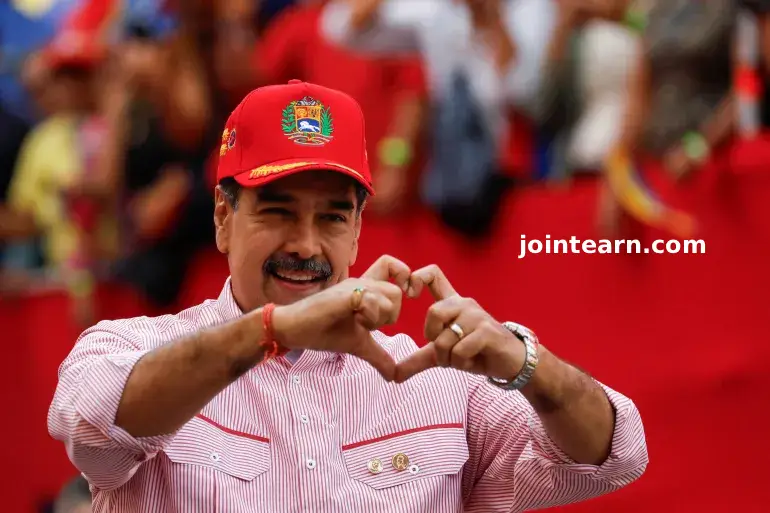
Venezuelan President Nicolás Maduro reaffirmed his government’s stance against foreign intervention during a massive rally in Caracas, telling thousands of supporters that the country seeks peace—but not at the cost of its independence. His remarks come as the United States increases political and military pressure on Venezuela, prompting widespread concern across the region.
The rally took place on Monday outside the Miraflores Palace, where citizens waved flags and showed support for Maduro amid growing fears of potential US military involvement. Meanwhile, reports from Washington indicated that US President Donald Trump had met with national security leaders to discuss Venezuela’s future and possible next steps.
Maduro: Venezuela Wants Peace “With Sovereignty and Freedom”
Speaking to the crowd, Maduro insisted that Venezuela would not accept what he described as “a slave’s peace” or any form of foreign domination. He emphasized that while his government preferred diplomacy, it would not compromise on national sovereignty.
In recent months, tensions have escalated as the US increased its military presence in the Caribbean, describing the move as part of an anti-drug operation. Venezuelan officials, however, argue that the buildup is intended to pressure or remove Maduro’s government. According to reports, the US has stationed 15,000 troops and deployed a major aircraft carrier to the region.
Alongside the military activity, US officials have labeled the Cartel de los Soles—a group they claim is tied to the Venezuelan leadership—as a “terrorist” organization. Since September, the US has carried out more than 20 operations targeting alleged drug-trafficking vessels.
Caracas Accuses the US of Psychological Pressure
Maduro accused Washington of creating fear and instability through what he called “psychological terrorism.” He said the Venezuelan public had endured weeks of pressure but continued to demonstrate loyalty to the country.
Venezuelan government officials also dismissed the US military buildup as excessive for a drug-interdiction mission, arguing that its true goal is to influence Venezuela’s political future and gain control of strategic natural resources, including oil.
Reports of a Private Trump–Maduro Phone Call Surface
Reports from Reuters suggest that Trump and Maduro spoke by phone on November 21. According to unnamed sources, Trump allegedly offered Maduro safe passage out of Venezuela. The sources claim Maduro said he might consider leaving if he and his family received legal protections, including the removal of sanctions and resolution of a case he faces before the International Criminal Court.
Trump reportedly refused most of those conditions and gave Maduro one week to leave. After the deadline passed, Trump declared Venezuela’s airspace closed, according to the same reports. Neither government publicly confirmed the details.
Residents Near the Border Express Concern Over Possible Conflict
Reporting from the Colombia–Venezuela border, Al Jazeera’s Teresa Bo noted that many Venezuelans crossing the Simon Bolivar International Bridge were worried about the possibility of a direct military strike. Rumors had circulated that Maduro had left Venezuela, but his public appearance in Caracas disproved those claims.
According to Bo, Venezuela has been positioning military units around the country, particularly near Caracas and key transportation routes. Defense Minister Vladimir Padrino López has also showcased military equipment, though analysts say Venezuela’s forces are not comparable to those of the United States.
Experts Warn of Potential Unrest if Tensions Escalate
Analysts say that if conflict breaks out, Venezuela might rely on irregular tactics—such as sabotage or support from non-state armed groups—rather than direct confrontation. Many Venezuelans fear that any escalation could bring instability or chaos, even among those who oppose Maduro and want political change.
For now, both the public and international observers remain watchful as diplomatic relations between the US and Venezuela continue to deteriorate.


Leave a Reply