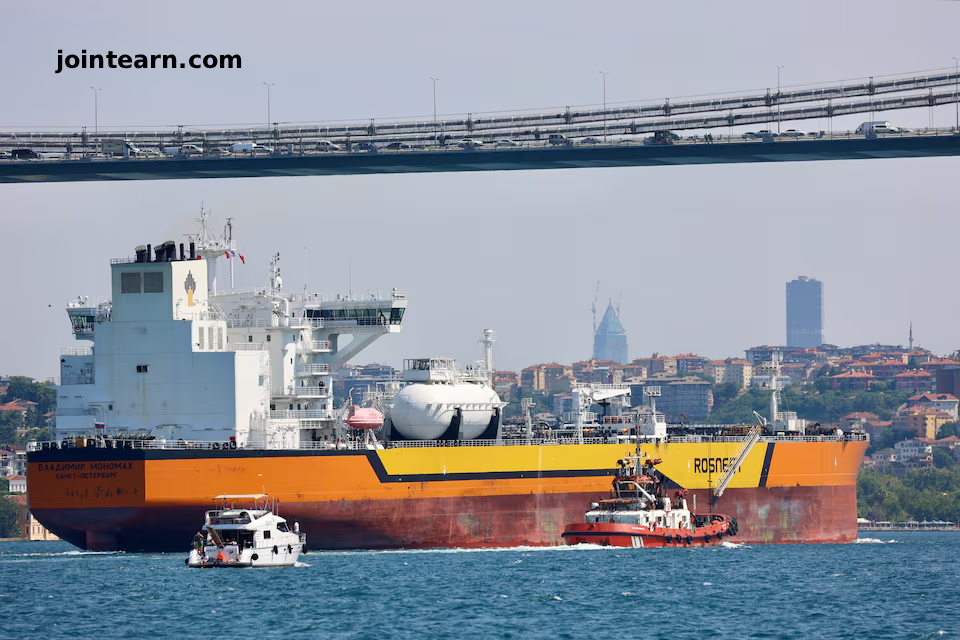
Moscow and Beijing are actively discussing strategies to expand Russian oil exports to China, Russian Deputy Prime Minister Alexander Novak confirmed on Tuesday. The talks highlight Russia’s growing reliance on Asian markets, particularly China and India, following Western sanctions and geopolitical tensions.
China and India Drive Russian Oil Demand
Since the onset of Russia’s military campaign in Ukraine in February 2022, China and India have emerged as Russia’s primary oil buyers. Current figures show that China imports roughly 1.4 million barrels per day (bpd) of Russian crude by sea and approximately 900,000 bpd via pipeline.
The strong Asian demand has helped Russia maintain stable crude export volumes despite restrictions and sanctions imposed by the United States, European Union, and the United Kingdom. These sanctions specifically target Russia’s largest oil producers, Rosneft and Lukoil, limiting their access to international financial systems and complicating transactions with Western buyers.
Russia’s Response to Western Sanctions
Russian President Vladimir Putin has publicly criticized the U.S. sanctions as an unfriendly act, asserting that they will not significantly impact the Russian economy. He emphasized Russia’s continued importance in the global energy market, citing strong demand from China, India, and other key partners.
Despite some conflicting reports about the volume of Russian oil supplies to Asia, overall Russian crude exports have remained relatively steady. This stability is due in part to strategic diversification, long-term agreements, and the resilience of Russian energy infrastructure.
Long-Term Agreements and Pipeline Projects
Deputy Prime Minister Novak indicated at a Sino-Russian business forum in Beijing that discussions with Chinese partners include opportunities to extend existing oil supply agreements. Intergovernmental agreements currently allow for the extension of oil supply terms through Kazakhstan for an additional 10 years, until 2033.
This long-term planning demonstrates Moscow’s commitment to securing a reliable and growing market in China, ensuring continuity in revenue streams and energy cooperation despite global economic pressures and sanctions.
Outlook for Russian Oil Exports to China
Analysts suggest that continued collaboration between Moscow and Beijing could result in increased Russian crude shipments to China, helping offset losses from declining exports to Europe and other Western-aligned markets. Key factors likely to influence this expansion include:
- Development of new pipeline capacities through Kazakhstan
- Strengthened bilateral agreements on energy cooperation
- Strategic adjustments to shipping routes and delivery logistics
- Mitigation of risks posed by U.S. and EU sanctions
This pivot toward Asia is likely to shape global oil trade patterns in the coming years, positioning China as a crucial consumer of Russian energy resources while reinforcing Russia’s economic resilience in a constrained international market.


Leave a Reply