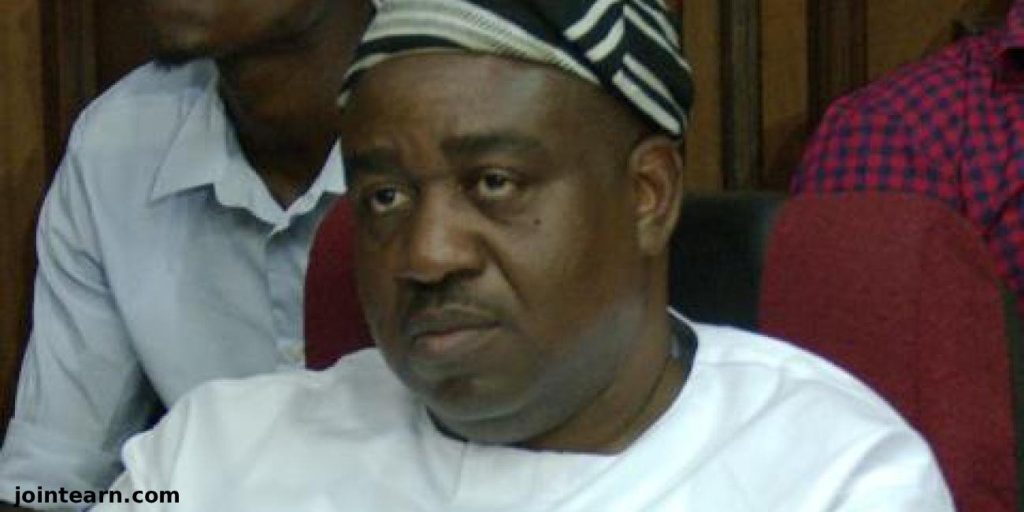
The Federal High Court in Abuja has fixed January 20, 2026 for the adoption of final written addresses in the alleged N3.1 billion fraud case involving former Benue State Governor Gabriel Suswam and his former Commissioner for Finance, Omodachi Okolobia.
Justice Peter Lifu scheduled the date after the defendants formally closed their defence. The court directed the prosecution to file and serve its final written address within 14 days, after which the defence will also have 14 days to respond.
Suswam and Okolobia are standing trial on an 11-count amended charge bordering on the alleged diversion of N3.1 billion—purported proceeds from the sale of Benue State Government shares through the Benue Investment and Property Company Limited. According to the prosecution, the transactions were allegedly conducted using Elixir Securities Limited and Elixir Investment Partners Limited.
The Economic and Financial Crimes Commission (EFCC) had earlier called nine witnesses before closing its case. Instead of opening their defence, the defendants filed a no-case submission, arguing that the prosecution failed to link them to the alleged offences.
However, in a ruling delivered on July 23, Justice Lifu dismissed the no-case submission, holding that the EFCC had presented sufficient evidence to establish a prima facie case, warranting explanations from the defendants.
The judge ruled:
“Consequently, upon my conclusion on the above stated, the defendants’ no-case submission is hereby refused and dismissed. The defendants are hereby called upon to enter their various defences.”
The EFCC first charged Suswam and Okolobia in 2015 over allegations that they misappropriated funds belonging to the Benue State Government and the Benue Investment and Property Company. They were re-arraigned on November 2, 2020.
In the amended charge, the EFCC also alleged that Okolobia conducted cash transactions totalling N578 million in four tranches—an amount said to be above the limits permitted under Nigeria’s money laundering laws. The alleged offences were said to have been committed between December 2014 and January 2015.


Leave a Reply