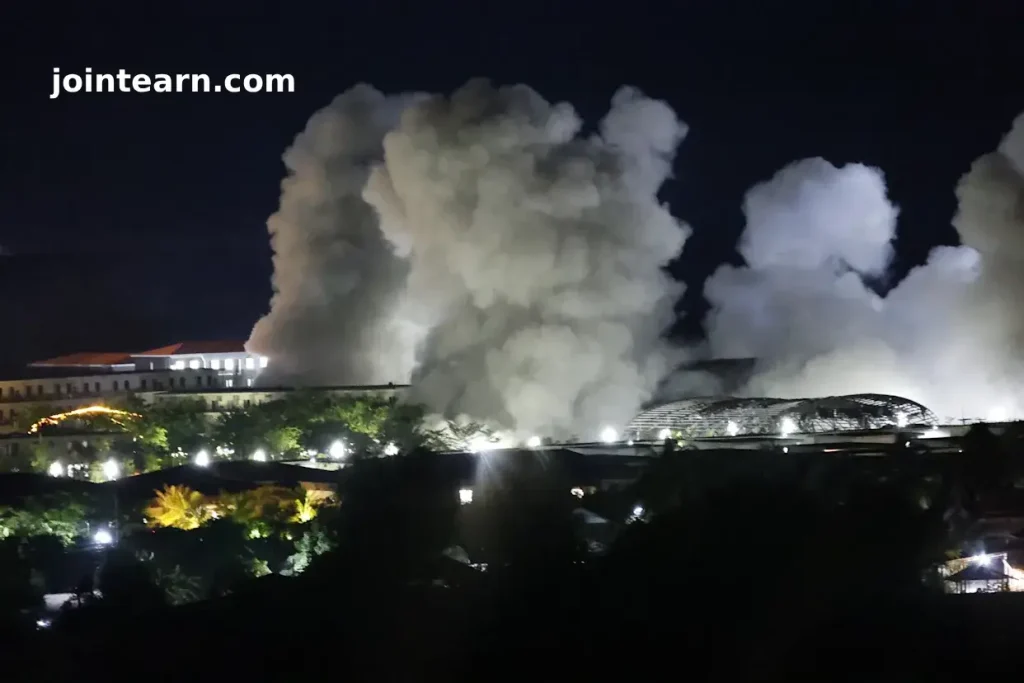
Myanmar’s military government has intensified its crackdown on online scam operations, broadcasting detailed footage on state television of raids on major scam centers and the detention of thousands of foreign nationals. The crackdown comes amid increasing international pressure on Myanmar following its controversial seizure of power from Aung San Suu Kyi’s government in 2021 and ongoing human rights concerns.
State-run MRTV television has aired videos showing security forces demolishing buildings, bulldozing computers, and detaining over 1,700 foreigners in recent raids.
The Raids: Shwe Kokko and KK Park
The military’s operations have primarily targeted two notorious scam centers near Myawaddy, a border town with Thailand: Shwe Kokko and KK Park.
- Shwe Kokko Raid (Nov. 18–24, 2025): Over six days, 1,746 foreigners were detained. Authorities confiscated 2,893 computers, 21,750 mobile phones, 101 Starlink devices, 21 internet routers, and other equipment used for online scams and illegal gambling.
- KK Park Raid (mid-October 2025): Footage aired on MRTV showed buildings demolished by explosives and crushed under steamrollers, along with hundreds of computers destroyed.
Reports indicate that since January, a total of 12,586 foreigners have been detained for involvement in scam centers, with 9,978 deported via Thailand. Many of these individuals have claimed they were misled into working at these operations and were prevented from leaving.
Myanmar’s Cyberscam Problem
Myanmar has gained notoriety as a hub for online scam operations, often involving romantic ploys and fraudulent investment schemes targeting global victims. According to the United Nations Office on Drugs and Crime (UNODC), these scams generate nearly $40 billion annually for criminal gangs.
The military government launched its crackdown in early September 2025, but critics argue that the masterminds behind these scams continue to operate in other locations, highlighting the ongoing challenge of policing cyberscam networks in the region.
Ethnic Militias and Local Influence
The Myawaddy area is heavily influenced by ethnic minority militias, including:
- Border Guard Force (BGF): Military-backed group with a ceasefire agreement. Claimed participation in the crackdown but historically believed to have protected some scam operators.
- Karen National Union (KNU): Part of the nationwide resistance against military rule; denies involvement in scam operations.
The military government has suggested a connection between these groups and scam centers, citing alleged real estate deals, but both militias have denied participation.
Publicizing the Crackdown
The extensive media coverage on MRTV appears aimed at showcasing the military government’s efforts to tackle online fraud after months of negative publicity. Daily broadcasts feature:
- Security forces sweeping through buildings without resistance
- Foreign detainees being lined up in squat positions
- Demolition of buildings previously used for scam operations
The detailed publicization of raids is unusual, signaling the government’s desire to display control and responsiveness to international scrutiny.
Challenges Ahead
Despite the military’s high-profile operations, experts warn that online scam networks remain resilient, often relocating to other areas. Cybercrime in Myanmar continues to be fueled by cross-border coordination and the involvement of foreign nationals, making enforcement a complex and ongoing task.


Leave a Reply