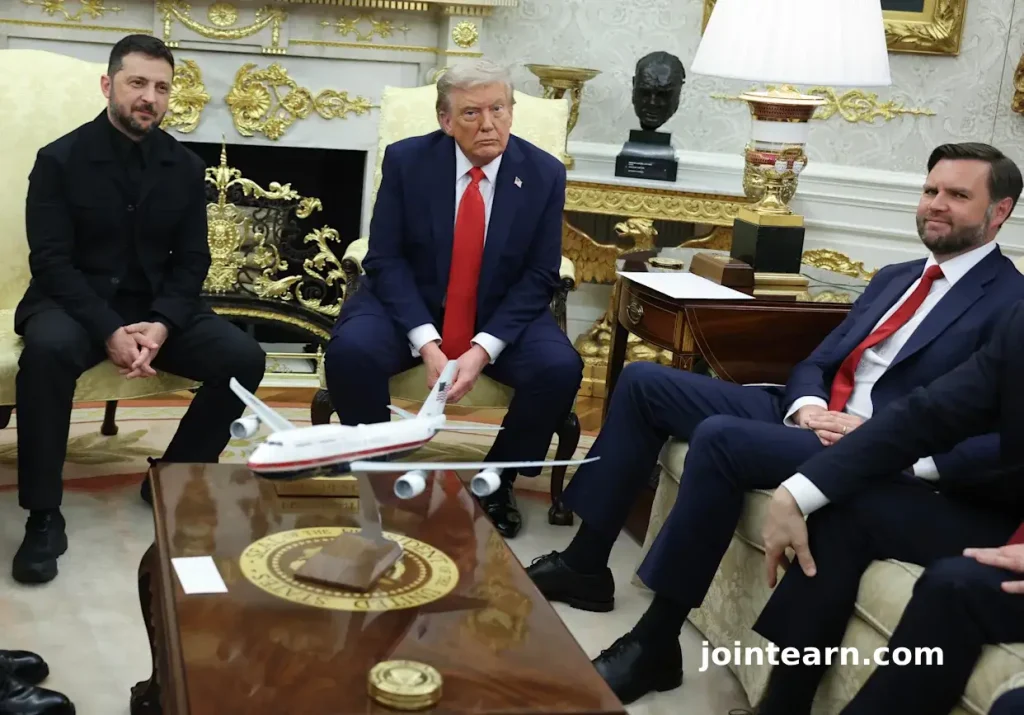
U.S. and Ukrainian officials are reportedly exploring the possibility of bringing Ukrainian President Volodymyr Zelenskyy to the United States this week as part of President Trump’s push for a peace agreement in Ukraine before Thanksgiving. Sources familiar with the discussions told CBS News that Zelenskyy’s potential trip depends on the outcome of ongoing negotiations in Geneva.
“Whether Zelenskyy’s trip happens is dependent on the outcome of peace negotiations in Geneva on Sunday,” officials said, highlighting the high-stakes diplomacy surrounding the 28-point U.S.-drafted peace proposal.
Progress in Geneva Talks
Speaking from Geneva, Secretary of State Marco Rubio described discussions with European and Ukrainian officials as “very, very meaningful,” calling it perhaps “the best meeting and day we have had so far in this entire process.” However, he emphasized that “more work needs to be done,” with teams continuing negotiations to refine the framework.
Zelenskyy’s chief of staff, Andriy Yermak, expressed optimism after the Geneva talks, stating, “We have very good progress and we are moving forward to a just and lasting peace.”
At present, no formal plans for a U.S. visit have been finalized, and no meetings with Russian officials are currently scheduled. Another option under discussion is for Army Secretary Dan Driscoll to meet with Russian officials or travel to Russia as part of ongoing diplomatic efforts.
Ukraine’s Response to the 28-Point Proposal
Ukraine has voiced significant concerns over the leaked 28-point peace plan, which was verified by the White House after being leaked by an opposition politician. Ambassador Olga Stefanishyna told CBS News that Ukraine has not agreed to all terms in the draft plan.
“This plan is not about justice and the truth of this war and the aggression,” Stefanishyna said. “It’s about ending the war and stopping military engagement.”
She also noted that Russia has yet to make concessions, and the plan contains no binding measures to compel action on the Russian side.
In addition, Stefanishyna confirmed the existence of a security framework document accompanying the 28 points. While it intends to provide defense assurances similar to Article 5 of the NATO treaty, the framework lacks detailed guarantees or Congressional backing, making its reliability uncertain—particularly given past failures of the West to honor security promises under the 1994 Budapest Memorandum.
Strategic Assumptions and Ground Realities
A U.S. official explained that the Trump administration’s Geneva negotiations were based on the assumption that Russian President Vladimir Putin is likely to capture the Donetsk region, either through diplomacy or continued military action. Recent Russian advances in Pokrovsk, a logistics hub in eastern Ukraine, are seen as unfavorable for Kyiv’s defensive position.
The administration is balancing multiple parallel diplomatic efforts. Jared Kushner and U.S. Middle East envoy Steve Witkoff have been developing a “term sheet” modeled after prior ceasefire proposals, while sanctions and other pressures aim to compel Russian engagement. Treasury Secretary Scott Bessent initially dismissed discussions with Russian advisor Kirill Dmitriev, who later contributed to drafting the 28-point plan now under U.S. consideration.
Political Implications and Congressional Reactions
U.S. lawmakers have raised concerns over concessions perceived as too favorable to Russia. Senator Angus King criticized the plan, stating it “rewards Russia’s illegal and unprovoked aggression” while offering vague security guarantees to Ukraine. Similarly, other senators sought reassurance that the plan was authored by the U.S., not Russia, and that military and intelligence support to Ukraine would not be threatened.
Vice President J.D. Vance and Secretary of State Rubio have acted as key liaisons, maintaining communication with lawmakers to clarify the administration’s intentions and mitigate potential domestic political backlash.
Next Steps in Diplomacy
As negotiations continue, U.S. and Ukrainian officials are working to refine the plan and security assurances. Driscoll’s role remains critical, combining military engagement discussions with the emerging diplomacy from the leaked Kushner-Witkoff term sheet.
The situation remains fluid, with Zelenskyy’s potential U.S. visit contingent on progress in Geneva and broader acceptance of the refined proposals by both Ukrainian and international partners.


Leave a Reply