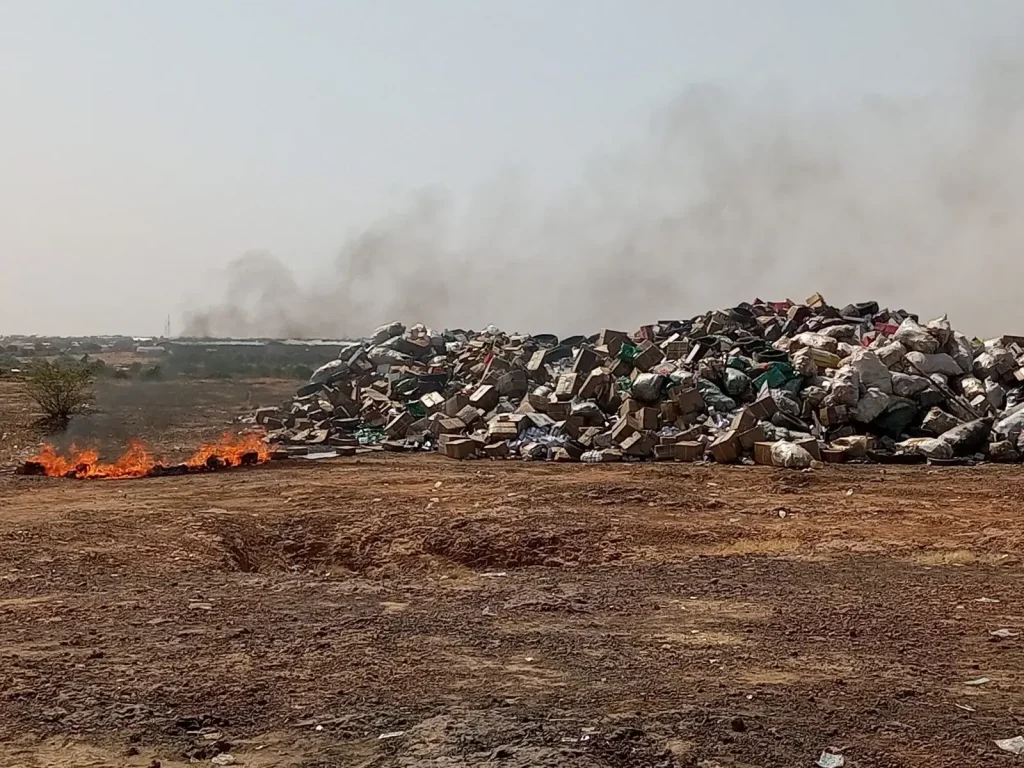
The National Agency for Food and Drug Administration and Control (NAFDAC) on Thursday destroyed 618 tonnes of fake, counterfeit, substandard, expired, and unwholesome regulated products valued at over ₦10.19 billion in Kano State.
The Director-General of NAFDAC, Prof. Mojisola Adeyeye, disclosed this during the destruction exercise, describing it as a major milestone in Nigeria’s commitment to safeguarding public health.
Represented by the Director of NAFDAC’s North-West Zone, Mr. Fraden Nantim-Mullah, Adeyeye said the exercise went beyond enforcement, serving as a clear signal that the era of impunity for individuals endangering lives through counterfeit and dangerous products was coming to an end.
She explained that NAFDAC, established under Act Cap N1, Laws of the Federation of Nigeria 2004, is mandated to regulate and control food, drugs, cosmetics, medical devices, chemicals, and related products to ensure safety, quality, and efficacy.
“Our mandate is unequivocal—to ensure that every regulated product available to Nigerians meets stringent standards of safety and quality. Today’s exercise demonstrates our unwavering commitment to this mandate,” Adeyeye said.
She warned manufacturers, importers, distributors, and retailers involved in the production and sale of counterfeit or substandard goods that NAFDAC’s surveillance and enforcement systems remain robust and that offenders would face the full weight of the law.
According to her, the destroyed items were seized from unscrupulous operators across the pharmaceutical, food, cosmetic, agrochemical, and chemical sectors.
Items destroyed included counterfeit medicines such as antibiotics, anti-malarials, antihypertensives, analgesics, herbal remedies, and controlled psychoactive substances. Others were adulterated vegetable oils, contaminated beverages, unsafe sachet water, substandard condiments, falsified tomato paste, and hazardous cosmetic products containing dangerous chemical compounds.
Adeyeye added that fake agrochemicals—including insecticides and pesticides that threaten food security—as well as counterfeit medical devices such as diagnostic kits and compromised infusion equipment, were also destroyed.
“Each of these represents a deliberate assault on public health. Those involved are not just violating regulations; they are endangering lives and undermining Nigeria’s health security,” she said.
The NAFDAC boss also highlighted Nigeria’s recent attainment of the World Health Organisation (WHO) Maturity Level 3 status, describing it as proof of a stable and effective regulatory system. She said the agency is working towards achieving WHO Maturity Level 4 with the support of President Bola Tinubu’s administration.
On the economic impact, Adeyeye noted that removing falsified and substandard products from circulation would reduce healthcare costs, boost productivity, and contribute to national economic growth.
She acknowledged the support of stakeholders, including compliant pharmaceutical companies that voluntarily surrendered expired products, the Nigeria Customs Service (Kano/Jigawa Command), the Nigeria Police Force, Kano State Government, Pharmaceutical Society of Nigeria (PSN), National Association of Proprietary and Patent Medicine Dealers (NAPPMED), NGOs, and trade unions.
Reiterating NAFDAC’s zero-tolerance stance on regulatory violations, Adeyeye urged Nigerians to remain vigilant, avoid purchasing medicines from unlicensed hawkers, and report suspicious products through the agency’s reporting channels.
Governor Abba Yusuf of Kano State, represented by the Director of Pharmaceutical Services at the State Ministry of Health, Mr. Kamilu Yakasai, commended NAFDAC for the exercise. He said destroying seized and expired products was necessary to prevent them from re-entering the market and harming unsuspecting citizens.
Yakasai assured that the Kano State Government would continue to collaborate with NAFDAC to protect public health and improve healthcare delivery.
Officials from the Nigeria Customs Service, Nigeria Police Force, National Drug Law Enforcement Agency (NDLEA), Department of State Services (DSS), and other stakeholders were present at the exercise.


Leave a Reply