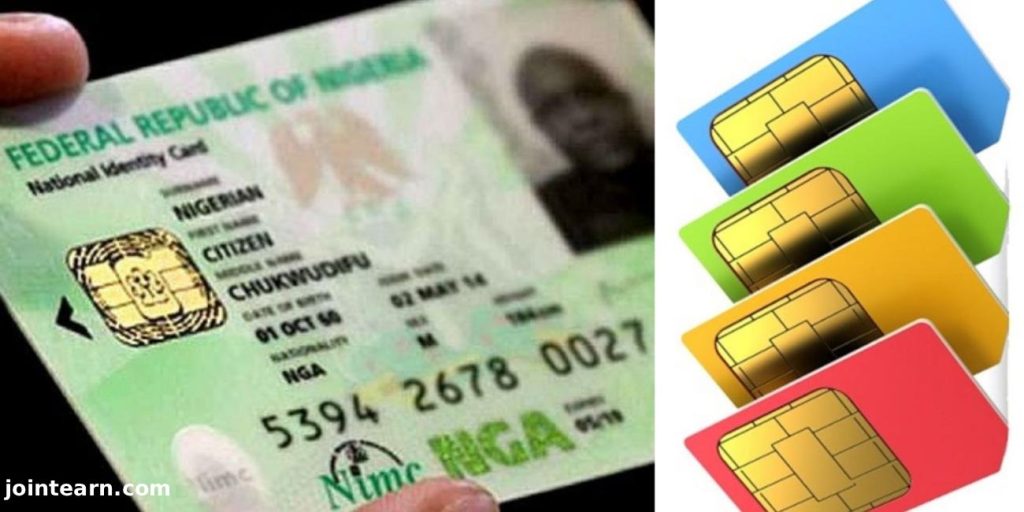
The Nigerian government has acknowledged that tracking SIM cards used by kidnappers and other criminal groups remains a significant challenge, despite years of mandatory SIM registration and the linkage of SIM cards to the National Identification Number (NIN).
Bosun Tijani, Nigeria’s Minister of Communications, Innovation and Digital Economy, made this disclosure on Friday while discussing the government’s efforts to combat insecurity through the telecommunications sector.
Technical Challenges in Tracking Criminal Networks
Speaking on Channels Television, Tijani explained that the difficulty in tracking SIM cards used by criminals is more technical than many Nigerians realize. He noted that criminal gangs have become adept at bypassing existing surveillance measures by employing advanced communication techniques, often taking advantage of poor network coverage in remote areas.
Since 2020, the Nigerian government has enforced compulsory NIN-SIM linkage in a bid to curb fraud, prevent anonymous communications, and reduce crimes committed through unregistered phone lines. However, Tijani admitted that the continued use of untraceable or unregistered SIM cards in crimes like kidnapping remains a pressing issue.
“There was an exercise conducted by the telcos to clean out all SIMs. The reason the President pushed us to invest in towers in those areas was because we realized there was a special type of technology criminals were using to make calls,” Tijani said.
Criminals Bypass Conventional Towers
The minister explained that many criminal groups no longer rely on conventional telecom towers for communication. Instead, they route calls through multiple towers, a tactic that becomes especially effective in poorly connected and remote locations.
“They were not using the normal towers; they bounce calls off multiple towers. That’s why they enjoy living in areas that are unconnected,” Tijani added.
These technical hurdles, he said, make it much harder for security agencies to track the movements and communications of criminals, particularly in areas where the telecom network infrastructure is either weak or non-existent.
Government’s Multi-Layered Strategy to Enhance Connectivity
In response to these challenges, Tijani outlined a comprehensive strategy to strengthen Nigeria’s telecom infrastructure and reduce the vulnerabilities that criminals exploit. The government is focusing on upgrading existing satellite capabilities, expanding fibre-optic networks, and deploying new telecom towers in rural areas where criminal activities are prevalent.
Nigeria is currently the only country in West Africa that operates its own communications satellites. To further enhance surveillance and improve connectivity, the government plans to upgrade its two existing satellites.
“This is why we are upgrading our two satellites, so that if our towers are not working, our satellites will work,” Tijani explained.
Deployment of 4,000 New Telecom Towers
To improve network coverage in underserved rural areas, the Nigerian government has approved the deployment of 4,000 new telecom towers. These areas are often exploited by kidnappers and illegal SIM card operators due to the lack of reliable network infrastructure.
The project, which will be executed in collaboration with Chinese technology giant Huawei, was approved by the Federal Executive Council last Wednesday. According to Tijani, the towers will help reduce coverage blackspots, boost rural commerce, and improve security surveillance in remote areas.
“It is why we are investing in fibre. It is why next year this project will start. We are doing it with Huawei—4,000 towers in rural areas,” Tijani stated.
Long-Term Vision for Satellite Upgrades
While the deployment of new towers and fibre expansion are already underway, Tijani cautioned that upgrading the country’s satellite infrastructure would take longer. He described the satellite upgrades as the “third leg” of the government’s broader connectivity strategy, which would strengthen Nigeria’s telecom capabilities and improve security nationwide.
“Satellite upgrades will take longer than the other two initiatives, but the first two—the fibre and tower projects—are well in progress,” he said.


Leave a Reply