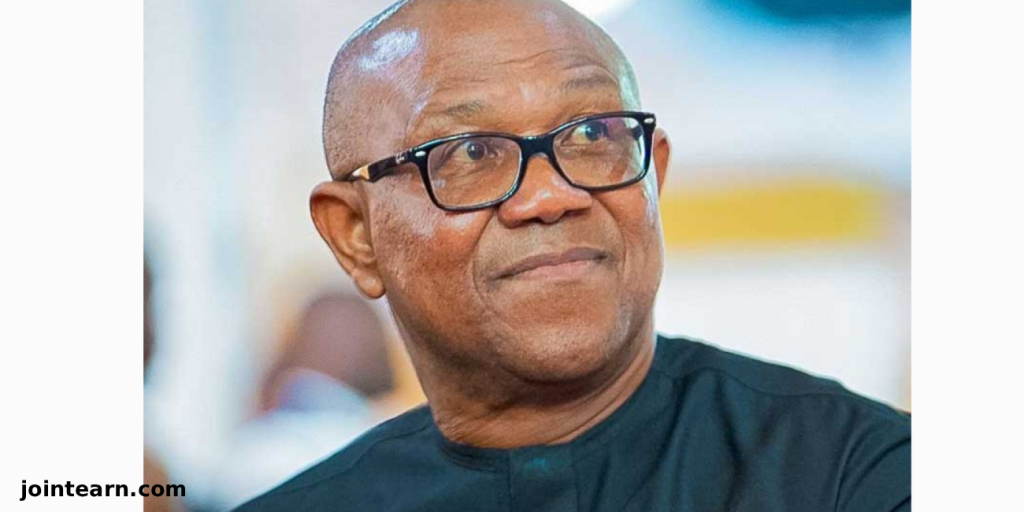
Peter Obi, the 2023 presidential candidate of the Labour Party, has strongly criticized the Nigerian government’s decision to borrow ₦20 trillion to finance the 2026 budget, warning that this could push Nigeria towards fiscal collapse. Obi’s remarks were made in a statement on Friday, in which he expressed grave concerns about the country’s rising debt levels and the lack of transparency in government revenue management.
A Dangerous Path to Fiscal Collapse
Obi emphasized that the proposed loan would further strain Nigeria’s already fragile economy. He pointed out that debt servicing is expected to consume nearly half of the nation’s revenue, leaving little room for investment in essential public services, infrastructure, or the alleviation of widespread poverty. Citizens, according to Obi, continue to suffer from rampant insecurity, soaring unemployment, and rising living costs despite the government’s claims of improving revenue generation.
“I am deeply concerned about this latest plan to borrow ₦20 trillion, which will put an enormous strain on Nigeria’s fiscal health,” Obi said. “At this rate, debt servicing will account for almost half of our national revenue, leaving little room for meaningful development or addressing the country’s growing challenges.”
Lack of Transparency and Unaccounted Revenue
One of Obi’s major points of criticism was the government’s failure to provide clear and transparent information regarding the revenues generated in 2025. He questioned the government’s claims of surpassing revenue targets, asking, “Where are all the revenues that accrued in 2025, especially after being told that we exceeded revenue expectations since August?”
Obi’s concerns were amplified by the government’s continued borrowing pattern, which he described as irresponsible and lacking accountability. He argued that loans are not being channeled into productive sectors of the economy, but rather are being used for short-term consumption.
Criticism of Borrowing for Consumption, Not Production
Obi also condemned the government’s approach to borrowing, which he believes is not targeted at investment in sectors that will drive economic growth. “The pattern of borrowing must be stopped. This uncontrolled and unexplained borrowing is not invested in the productive sectors of the economy but is instead consumed without creating value,” he said. “We must stop this fiscal rascality and start investing in long-term solutions.”
Sustainable Growth Through Production, Not Borrowing
Obi reiterated his stance that Nigeria cannot borrow its way into prosperity. He has long maintained that nations do not achieve development by consuming more than they produce; they do so through increased production, exports, and value creation. A key component of his argument was the importance of building strong institutions to ensure transparency and the efficient use of public funds.
“For years, I have consistently said that Nigeria cannot borrow its way into prosperity. The path to development lies in production, exports, and creating value, supported by strong institutions that ensure accountability,” Obi said.
Increased Borrowing Amid Claims of Revenue Growth
The former governor of Anambra State also raised doubts over the government’s claims of increased revenue, pointing out the contradiction in simultaneously increasing borrowing. “How can we be told that revenue is growing while borrowing is skyrocketing to historic levels? This is not fiscal responsibility—it is propaganda,” Obi argued.
He warned that if the current economic trajectory continues, Nigeria’s national debt will rise to unsustainable levels, which could have disastrous long-term effects on the country’s economy and production capacity.
Call for Urgent Fiscal Reforms
Obi concluded by calling for urgent fiscal reforms, urging the government to shift focus towards creating a sustainable economic model. He stressed the need for transparency, accountability, and investment in the nation’s productive sectors, which he believes are the only paths to true economic development.
“We cannot build a new Nigeria on a foundation of misleading figures, rising debts, shrinking production, and continuous hardship. It is time for the government to focus on creating value through production and fostering an environment of transparency and accountability,” Obi concluded.


Leave a Reply