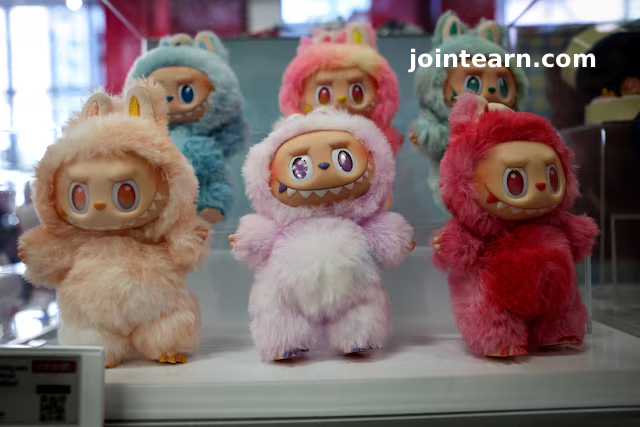
Chinese toy giant Pop Mart is taking major steps to expand its global presence by adding new manufacturing facilities in Mexico, Cambodia, and Indonesia. This move is part of the company’s broader strategy to meet skyrocketing international demand for its popular Labubu blind-box collectibles and other signature art toys.
Pop Mart’s Strategic Supply Chain Expansion
Unlike traditional toy manufacturers, Pop Mart does not operate its own factories. Instead, it relies on a partner-led manufacturing network, which the company says allows it to boost production capacity and improve access to new products worldwide. While specific details about production volumes at the new locations were not disclosed, Pop Mart confirmed that the expansion aims to increase supply chain resilience, efficiency, and service to consumers.
Previously, all of Pop Mart’s production facilities were located in China and Vietnam. The expansion marks a significant shift for the company, reflecting its ambition to strengthen its footprint in international markets.
Labubu and the Global Collectibles Boom
Pop Mart is best known for its Labubu toys, which gained explosive popularity in 2025. The surge in demand has extended beyond China and Japan to the United States and Southeast Asia, making Labubu one of the most sought-after collectibles globally.
To meet this rising demand, Pop Mart has been scaling up its production capabilities. In August 2025, the company announced that monthly plush toy output had reached approximately 30 million units, more than ten times the production from 2024. This growth underscores Pop Mart’s ability to capitalize on the booming market for blind-box collectibles, a niche segment in which surprise toy releases generate excitement and repeat purchases.
Aggressive U.S. Expansion Plans
Pop Mart is aggressively targeting the U.S. market, where it currently operates around 60 stores and plans to open dozens more in 2026. The brand has become a rare example of a Chinese consumer product achieving overseas success, particularly in a market traditionally dominated by Western toy companies.
By combining physical retail stores with its global supply chain expansion, Pop Mart aims to ensure that collectors worldwide have timely access to its latest releases. The company believes that local production in multiple countries will shorten lead times, reduce shipping costs, and improve the overall customer experience.
Pop Mart’s Market Performance
Despite the strong demand for Labubu, Pop Mart’s stock has faced volatility. Shares closed at HK$199.50, down approximately 40% from their August 2025 peak, reflecting investor concerns over how sustainable the Labubu craze might be. Nevertheless, analysts remain optimistic about Pop Mart’s long-term growth prospects given its expanding international footprint and continued brand popularity.
The Future of Pop Mart and Collectible Toys
As Pop Mart 2026 unfolds, the company’s dual strategy of expanding its global supply chain and retail presence positions it as a key player in the collectible toy market. The move also highlights a broader trend of Chinese toy brands pursuing overseas growth, leveraging popular IPs and innovative product concepts to capture international audiences.
With the ongoing craze for blind-box collectibles, Pop Mart’s expansion could set a benchmark for other companies seeking to globalize their brands while maintaining agility in production and distribution.


Leave a Reply