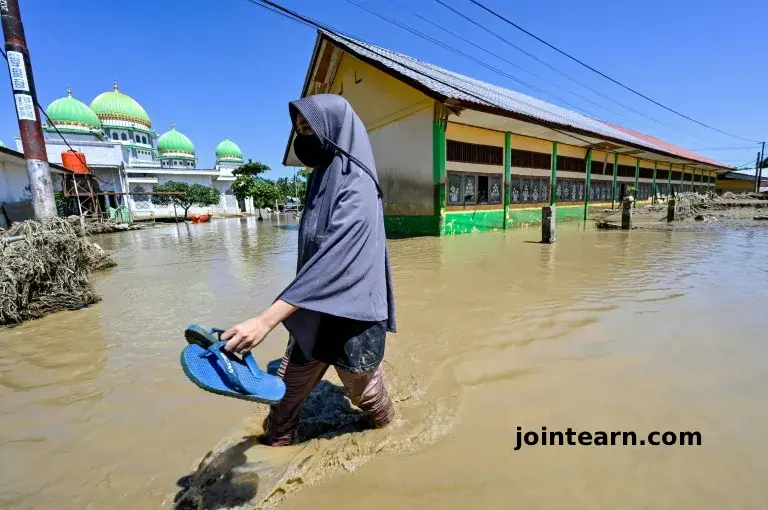
Governments and humanitarian organizations are racing to deliver aid to survivors of catastrophic floods in Asia as the death toll across Indonesia, Thailand, Malaysia, and Sri Lanka approaches 1,200. Torrential monsoon rains, compounded by two tropical cyclones last week, have devastated communities, destroyed infrastructure, and displaced millions.
Indonesia: Aceh Faces Severe Crisis
Indonesia’s Aceh province is among the hardest-hit regions. At least 631 people have died, and 472 remain missing. The disaster agency reports that around one million people have evacuated their homes, with many seeking refuge in shelters or atop local buildings to escape floodwaters.
Residents describe the flooding as “unstoppable, like a tsunami wave.” Zamzami, a survivor from East Aceh, recounted taking shelter atop a two-story fish market, while struggling with power and communications outages, contaminated water, and limited medical supplies.
Local markets have been severely affected, with prices for essentials such as chili peppers rising sharply. “Most things are already sky-high… chillies alone are up to 300,000 rupiah per kilo ($18), so people are panic-buying,” said 29-year-old Erna Mardhiah, who waited two hours in line for fuel in Banda Aceh.
The Indonesian government is urgently sending 34,000 tons of rice and 6.8 million liters of cooking oil to the three worst-affected provinces: Aceh, North Sumatra, and West Sumatra. Aid organizations, including Islamic Relief, warn that without rapid restoration of supply lines, communities face severe food shortages and hunger within a week.
Thailand and Malaysia: Cyclone and Monsoon Devastation
Southern Thailand experienced heavy flooding, claiming at least 176 lives, while neighboring Malaysia reported two fatalities. Floodwaters have now largely receded, but hundreds of thousands remain in shelters, grappling with food, clean water, and medical shortages.
Sri Lanka: Cyclone-Induced Flash Floods and Landslides
Sri Lanka has faced its worst flooding in a decade due to heavy rains from a separate cyclone. At least 390 people have died, and 352 remain missing. President Anura Kumara Dissanayake declared a state of emergency, calling it the country’s most challenging natural disaster.
Rescue operations are ongoing, with Sri Lanka’s air force, backed by India and Pakistan, evacuating stranded residents and delivering food and medical supplies. In mountainous regions such as Welimada, security forces recovered the bodies of residents buried by mudslides.
Even in the capital, Colombo, residents were surprised by the speed and severity of the flooding. “It is not just the amount of water, but how quickly everything went under,” said local delivery driver Dinusha Sanjaya. Authorities continue to monitor landslide risks in central and mountainous areas.
Climate Change and Intensifying Weather Events
Experts warn that climate change is likely exacerbating the severity of these storms. A warmer atmosphere holds more moisture, while warmer ocean waters can fuel cyclones, making rainfall heavier and flood events more destructive.
With millions affected, the immediate focus remains on humanitarian relief, restoring access to communities, and providing food, clean water, and medical care. Aid agencies are working around the clock to prevent further loss of life and mitigate the long-term impacts of the disaster on the region.


Leave a Reply