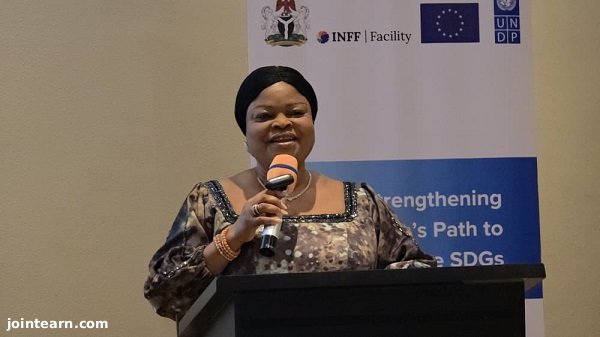
Nigeria has taken major steps toward addressing its widening development financing gaps as senior government officials, development partners, private sector players, and civil society groups concluded a three-day retreat in Lagos focused on accelerating the implementation of the Integrated National Financing Framework (INFF).
Held from November 24 to 26, 2025, the retreat was described as one of the most important engagements on sustainable development financing in recent years. Stakeholders agreed that the INFF must evolve beyond a policy document into a practical tool capable of driving investments that support national priorities and the Sustainable Development Goals (SDGs).
The retreat, themed “Deepening the Implementation of Nigeria’s Integrated National Financing Framework (INFF): Lessons, Opportunities and Next Steps,” examined Nigeria’s persistent funding shortfalls and proposed actionable reforms to boost domestic revenue, attract private capital, and improve intergovernmental coordination.
Participants emphasised that Nigeria’s development needs can no longer be met by public resources alone. They agreed that the INFF should serve as the central platform for aligning public, private, domestic, and external financing into a unified national strategy.
According to a statement by Desmond Utomwen, Special Assistant on Media, Publicity and Strategic Communications in OSSAP-SDGs, one of the clearest outcomes of the retreat was the call for stronger sub-national integration. Since most development challenges occur at state level, stakeholders urged the adoption of state-specific financing strategies and better project preparation systems.
To support this, participants recommended establishing a National Project Preparation Facility to help states and MDAs transform ideas into bankable, investor-ready projects—ensuring that viable initiatives do not fail due to structural or technical weaknesses.
Another key theme was the need for deeper political commitment. Stakeholders noted that the National Steering Committee of the INFF must take a more visible leadership role, especially in driving tax reforms, aligning investment priorities, and restructuring public finance.
Development partners, including the European Union, stressed that investors want clearer evidence of government ownership of the INFF and encouraged stronger co-financing commitments.
Co-chaired by OSSAP-SDGs, the UNDP, and the Ministry of Budget and Economic Planning, the meeting reaffirmed the importance of mobilising innovative financing tools such as blended finance, green bonds, impact investing, and Public-Private Partnerships (PPPs). Delegates also highlighted transparency, digital tax administration, procurement reforms, and effective monitoring as essential for creating fiscal space.
Representing the EU, Reuben Alba-Aguilera noted that public revenues alone cannot bridge Nigeria’s financing gap. He said blended finance and private sector mobilisation are indispensable and reaffirmed the EU’s support for governance reforms and climate-aligned development.
Senior Special Assistant to the President on SDGs, Princess Adejoke Orelope-Adefulire, highlighted progress made in institutionalising the INFF, including national coordination structures and Development Finance Assessments. She described the INFF as a roadmap for mobilising resources “prudently, effectively, and inclusively,” while noting ongoing challenges, especially in domestic revenue generation and alignment of external financing.
Technical experts from the UNDP, Bank of Industry, CSEA, FIRS, and private sector groups provided assessments outlining the scale of Nigeria’s financial needs and the opportunities for innovative solutions. UNDP’s Tony Muhumuza called for greater coherence in financing systems, while BOI Chairman Dr. Mansur Mukhtar emphasised the need for public finance reforms to restore investor confidence.
Co-chair of the INFF Core Working Group, Mr. Felix Okonkwo, described the framework as Nigeria’s “strategic vehicle for orchestrating and mobilising resources across public and private quadrants.”
The retreat concluded with a renewed commitment to move from strategy to execution. Stakeholders pledged to address bottlenecks, strengthen institutional coordination, and ensure that the INFF becomes a functional instrument for mobilising development finance and advancing Nigeria’s progress toward the SDGs.


Leave a Reply