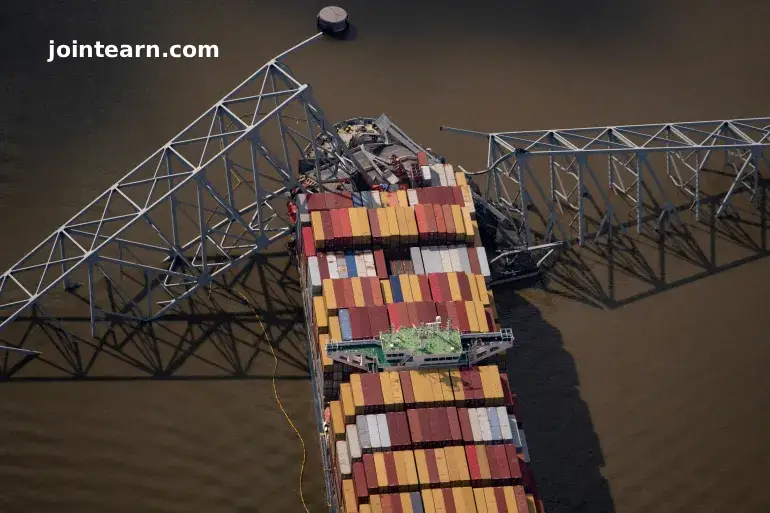
A single loose wire on the massive Dali cargo ship has been identified as the primary cause of the catastrophic collapse of the Francis Scott Key Bridge in Baltimore, Maryland, last year. The revelation comes from a detailed investigation conducted by the United States National Transportation Safety Board (NTSB), which spent months unraveling the complex chain of events leading up to the disaster.
The Dali, a 300-metre (984-foot) container vessel, suffered two electrical blackouts on March 26, 2024, due to the faulty wiring. These blackouts rendered the ship’s propulsion and steering systems inoperative, ultimately causing it to collide with the bridge. Tragically, six highway workers lost their lives in the accident.
How a Loose Wire Triggered a Catastrophe
NTSB investigators described the process of locating the faulty wire as exceptionally challenging, comparing it to “hunting for a loose rivet on the Eiffel Tower.” According to NTSB Chairwoman Jennifer Homendy, the Dali, nearly 1,000 feet long, contains miles of wiring and thousands of electrical connections. Pinpointing a single loose wire in such a vast network required painstaking effort and advanced investigative techniques.
“The Dali at almost 1,000 feet is as long as the Eiffel Tower is high, with miles of wiring and thousands of electrical connections. Finding this single wire was like hunting for a loose rivet on the Eiffel Tower,” Homendy said.
Crew Response and Initial Warnings
The investigation revealed that the ship’s crew made immediate attempts to regain control and steer the vessel away from the bridge. Unfortunately, due to the electrical malfunctions, these efforts failed. Despite the challenges, the crew quickly alerted local authorities, prompting the Maryland Transportation Authority to close the bridge to traffic just moments before the collision.
At the time of the accident, seven workers were on the bridge performing routine maintenance. Six of them were killed when a section of the bridge collapsed, highlighting the devastating human cost of the incident.
Global Attention and Viral Footage
The collapse of the Francis Scott Key Bridge attracted worldwide attention, largely due to a livestream camera installed to monitor traffic through the Port of Baltimore. The footage went viral, capturing the rapid fall of a major section of the bridge in real time, which shocked audiences across the globe.
Long-Term Consequences and Reconstruction
The maritime accident and subsequent bridge collapse have had lasting repercussions. While the shipping channel reopened in June 2024, the bridge itself will remain closed for years. The Maryland Transportation Board recently announced that reconstruction will not be completed until 2030, with projected costs ranging from $4.3 billion to $5.2 billion, making it one of the most expensive bridge repairs in U.S. history.
The incident has also sparked discussions on maritime safety standards, electrical system inspections on large vessels, and infrastructure vulnerability, prompting authorities to review protocols to prevent similar disasters in the future.
NTSB’s Final Assessment
The NTSB concluded that the crash was avoidable had the electrical system been properly maintained. The single loose wire, while seemingly minor, triggered a catastrophic failure that underscores the importance of meticulous maintenance and safety checks on large cargo ships. The agency praised the Dali’s crew for their quick response, which prevented further loss of life and additional damage to the surrounding area.
This disaster serves as a stark reminder of how a seemingly small mechanical or electrical oversight on massive ships can have devastating consequences for public infrastructure and human lives.


Leave a Reply