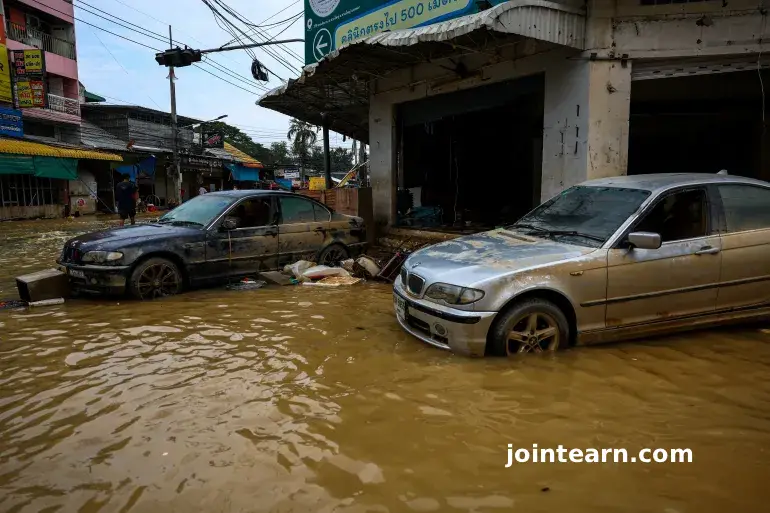
The death toll from catastrophic flooding in southern Thailand has tragically climbed to 145, with the hardest-hit Songkhla province reporting 110 fatalities alone, according to government officials. The devastating natural disaster has caused widespread destruction, left thousands stranded, and severely disrupted daily life across the region.
Hat Yai and Southern Thailand Overwhelmed by Floodwaters
The southern provinces of Thailand, particularly the Hat Yai district near the Malaysian border, have been hit hardest by this week’s relentless downpours. Heavy rains combined with overflowing rivers have submerged entire neighborhoods, damaged vehicles, and rendered roads impassable. The flooding has left countless residents stranded, some trapped in their homes as water levels rose.
Government spokesperson Siripong Angkasakulkiat confirmed during a news briefing that rescue and recovery operations have intensified as floodwaters begin to recede. “The total deaths across the southern provinces now stand at 145, with Songkhla accounting for 110,” he said, updating earlier figures that had previously underestimated the human toll.
Search and Rescue Operations Gain Ground
As floodwaters start to decrease, rescue teams have been able to access areas that were previously submerged. Reports from local media show emergency responders recovering more bodies in residential neighborhoods, particularly in the city of Hat Yai, the largest urban center in southern Thailand.
The aftermath has left a stark visual of destruction: roads blocked by debris, fallen power poles, overturned cars, and damaged household appliances. In several areas, vehicles were swept away by the powerful currents and stacked atop one another, highlighting the extreme force of the floodwaters.
Impact on Infrastructure and Daily Life
The flooding has caused severe disruption to infrastructure and basic services. Streets in several towns remain submerged, preventing transportation and complicating rescue efforts. Homes and low-rise buildings in affected areas have been inundated, forcing thousands of residents to seek emergency shelters.
The Thailand Meteorological Department reported a reduction in rainfall across southern provinces but warned of lingering thunderstorms in some areas, raising concerns about further flooding.
Regional and International Implications
The southern Thailand floods come amid a broader pattern of extreme weather events across Southeast Asia. Neighboring countries, including Malaysia and Indonesia, have also been affected by heavy rains and flooding this year, emphasizing the urgent need for improved disaster preparedness and response mechanisms in the region.
Videos and photos from affected areas highlight the scale of the disaster. Streets are littered with debris, while rescue teams continue their operations to reach stranded residents and provide essential aid.
Government Response and Aid Efforts
The Thai government has mobilized military and emergency services to assist in relief efforts. Authorities are working to distribute food, clean water, and medical supplies to those trapped in flood-affected regions. International aid organizations are also on alert to provide assistance if required.
Officials urge residents to remain cautious as floodwaters recede, warning that standing water and weakened infrastructure continue to pose risks. The tragedy underscores the vulnerability of southern Thailand to extreme weather events and the critical importance of community preparedness and government intervention.


Leave a Reply