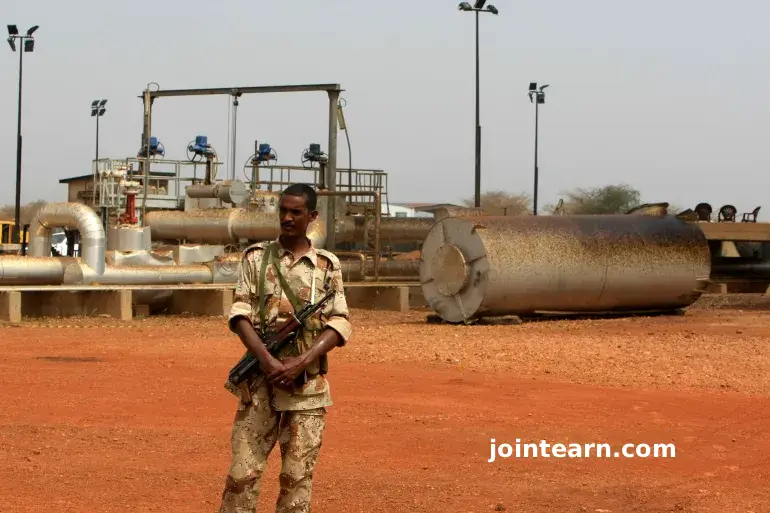
Khartoum, Sudan – The Rapid Support Forces (RSF) have taken control of the Heglig oilfield, Sudan’s most important operational oil facility, marking a major turning point in the country’s ongoing civil war. The takeover has forced the evacuation of technical staff toward South Sudan and halted oil production, signaling a dramatic shift in the economic, military, and geopolitical balance between the RSF and Sudan’s central government.
Heglig’s significance extends far beyond oil output. Analysts cite three primary areas affected by the RSF’s control: economic resources, military strategy, and geopolitical influence.
Economic Impact: Loss of Sudan’s Last Major Oil Revenue Source
The Heglig field processes between 80,000 and 100,000 barrels of oil per day, serving both Sudan and South Sudan. Oil from Heglig is piped through Port Sudan, and the facility generates critical revenue from oil transit fees and exports.
The RSF’s control deprives Khartoum of these revenues, undermining the government’s ability to finance operations, pay soldiers, and maintain local loyalties. While Heglig’s production cannot immediately resume due to evacuated staff, the strategic disruption alone exerts financial pressure on Sudan’s military-led government, forcing it to rely increasingly on foreign aid, internal taxation, and remaining oil transit fees.
Military Significance: Shifting the Balance of Power
Heglig was the last major army stronghold in West and South Kordofan, following the earlier fall of el-Fasher in Darfur. The army’s withdrawal from Heglig, even under the pretext of protecting facilities, signals the RSF’s growing dominance in Sudan’s western and central regions.
The RSF may now focus on advancing along the el-Obeid – Kadugli – Dilling axis, consolidating its hold in Kordofan and potentially preparing for campaigns to control additional strategic towns such as Abu Jubeiha. Analysts see Heglig not as an immediate production asset but as a pressure card, enhancing the RSF’s negotiation leverage in future talks.
Geopolitical Implications: A Contested Resource Network
Heglig sits on a shared oil network with South Sudan, historically a point of dispute between Khartoum and Juba. The RSF’s control introduces new geopolitical tensions, impacting relations with South Sudan and raising concerns for regional and international powers.
Moreover, the potential Russian naval base on Sudan’s Red Sea coast, coupled with arms deals, has heightened U.S. interest. The Trump administration has indicated personal involvement in peace efforts, with concerns that a Russian foothold would challenge U.S. influence over Red Sea trade routes and strategic maritime access.
The Rise of Sudan’s ‘War Economy’
The Heglig battle exemplifies the growing war economy in Sudan. The RSF now controls oil and gold resources in western Sudan, the army dominates ports and taxes in the east and north, and other armed groups retain local revenue streams. Natural resources are increasingly commodified as tools of power, sustaining militias and fueling ongoing conflict.
Even if a ceasefire or political settlement is imposed, these armed-economic networks may trigger recurring violence unless dismantled and restructured, highlighting that resource control is central to Sudan’s ongoing instability.
Impact on Peace Prospects
While Heglig’s fall increases the economic cost of war for General Abdel Fattah al-Burhan’s government, it does not automatically force negotiations. Both sides are entrenched: the army views settlement as rewarding a “rebel militia,” while the RSF uses territorial and resource control to assert legitimacy.
The cumulative effect of losing Heglig and el-Fasher, combined with international pressure, may eventually create the conditions for talks. Analysts emphasize that a successful peace process must address Sudan’s war economy, civilian involvement, and fragmented spheres of influence, rather than relying solely on military outcomes.
Conclusion
The RSF’s capture of Heglig represents a strategic turning point in Sudan’s war, weakening the government’s economic foundations, enhancing RSF leverage, and accelerating the fragmentation of control across the country. The battle underscores the complexity of Sudan’s conflict, where military victories, resource control, and geopolitics intersect, and highlights the urgent need for comprehensive solutions addressing both the war economy and political negotiation framework.


Leave a Reply