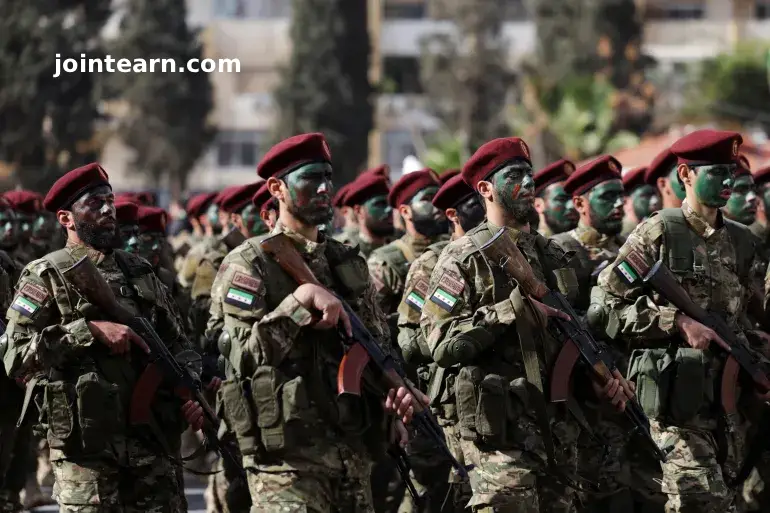
Efforts to integrate the Kurdish-led Syrian Democratic Forces (SDF) into the Syrian national army have stalled, with no tangible progress reported despite a deal signed in March 2025. The negotiations highlight ongoing tensions over control, decentralization, and governance in Syria’s oil-rich north and northeast.
Stalled Military Integration Talks
On Sunday, January 4, 2026, the SDF confirmed that a delegation led by commander Mazloum Abdi (Mazloum Kobani) met with Syrian government officials in Damascus to discuss merging the Kurdish-led forces into the national army. However, both sides acknowledged that the talks did not yield significant results.
“No tangible results were produced,” state media reported, adding that further meetings are planned.
The SDF, which has tens of thousands of fighters, remains the largest force yet to be absorbed into Syria’s military structure. A central point of contention is whether the SDF would maintain its cohesion as a single unit or be broken up and integrated individually into government forces.
The March 2025 Agreement
The March 2025 agreement between the SDF and the interim Syrian government under President Ahmed al-Sharaa outlined key terms for integration:
- Full control of border crossings with Iraq and Turkiye.
- Oversight of airports and oil fields in the northeast.
- Transfer of approximately 9,000 suspected ISIL prisoners to government authority.
The deal aimed to bring Syria’s fragmented regions under central control while incorporating the SDF into formal state structures by the end of 2025. Implementation has since been delayed due to disagreements over the SDF’s organizational autonomy and the government’s resistance to decentralization.
Regional Implications and Turkiye’s Concerns
Turkiye considers the SDF a terrorist organization due to its links to the Kurdistan Workers’ Party (PKK) and views Kurdish forces along its border as a security threat. While Ankara supports the integration of the SDF into Syria’s military, it opposes the idea of the group remaining as a single, cohesive unit.
In late December 2025, tensions escalated in Aleppo when clashes erupted between SDF fighters and government security forces during a visit by Turkiye’s Foreign Minister Hakan Fidan. Fidan has publicly warned the SDF not to obstruct Syria’s stability, emphasizing that patience with the Kurdish-led group is running thin.
SDF’s Position and Calls for Decentralization
The SDF insists on a decentralized governance model to maintain influence over the regions it controls. This stance is at odds with the Syrian government, which opposes decentralization and seeks full administrative control over the north and northeast.
Analysts warn that if integration is forced without compromise, violence and unrest could continue, further complicating Syria’s post-war recovery and reconstruction.
Strategic Importance of Northeastern Syria
The northeastern region, where the SDF operates, is oil-rich and strategically significant, making integration a high-stakes issue. Control over oil fields, border crossings, and airports is crucial for both the Syrian government and its international partners, including Turkiye.
With the SDF holding de facto authority over these areas, successful integration—or failure thereof—will influence not only Syria’s military cohesion but also its economic recovery and regional diplomacy.
Conclusion
The stalled talks between the Syrian government and the SDF underscore the fragility of post-conflict agreements in Syria. While both sides express a desire to integrate forces, disagreements over cohesion, decentralization, and regional influence continue to hinder progress. Analysts caution that without a carefully negotiated compromise, further instability and violence remain likely in Syria’s northeast.


Leave a Reply