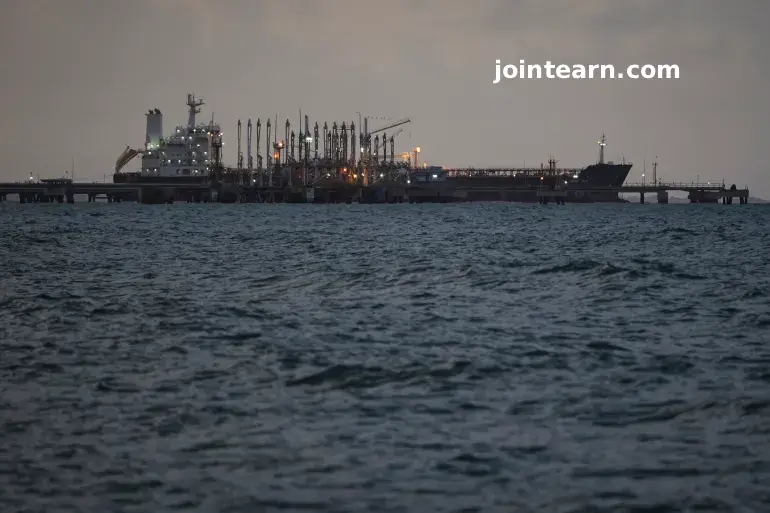
While the United States initially justified its military operations in Venezuela as an anti-drug campaign, evidence—including statements from President Donald Trump—suggests Washington’s primary interest lies in Venezuela’s massive oil reserves, estimated at roughly 303 billion barrels, the largest proven reserves in the world.
U.S. Military Action Framed as Anti-Drug Operation
On January 3, 2026, U.S. forces captured Venezuelan President Nicolas Maduro and his wife, Cilia Flores, citing indictments for alleged “narco-terrorism” and cocaine trafficking. For weeks prior, U.S. officials had portrayed the intervention as targeting narcotics networks, including vessels accused of trafficking fentanyl.
However, within hours of Maduro’s removal, President Trump shifted rhetoric to oil and resource control, openly discussing U.S. intentions to rebuild Venezuela’s energy infrastructure and exploit its oil for global markets, including China and Russia.
“We will take out a tremendous amount of wealth out of the ground,” Trump said, highlighting the focus on oil over anti-drug objectives.
Maduro has consistently denied any involvement in drug trafficking, framing U.S. accusations as a pretext to gain control of Venezuela’s oil reserves.
Vice President Delcy Rodriguez Named Acting President
Despite Maduro’s capture, Venezuela’s political structure remains largely intact. Vice President Delcy Rodriguez has been appointed acting president by the constitutional chamber of the Supreme Court, ensuring administrative continuity. She also continues to oversee the finance and oil ministries, giving her considerable influence over the struggling economy and oil sector.
Trump indicated that U.S. forces would not occupy Venezuela if Rodriguez complies with U.S. expectations, emphasizing that control over the oil sector is the primary objective rather than an outright political takeover.
Venezuela’s Oil Sector: Potential and Challenges
Venezuela’s oil output has been constrained by sanctions, underinvestment, and mismanagement. Production currently hovers below 1 million barrels per day (bpd)—far below its potential of 2.5 million bpd with adequate investment and modernization, according to economist Francisco Rodriguez.
“If the U.S. removes sanctions and facilitates foreign investment, Venezuela’s oil output could rise significantly over three to five years,” Rodriguez said.
The state-owned oil company PDVSA has suffered from aging infrastructure, neglected maintenance, and restricted access to necessary diluents, preventing optimal production. Meanwhile, U.S. sanctions and blockades have directly reduced exports, suppressing Venezuela’s presence in global markets.
Global Implications for OPEC and Oil Markets
A sudden surge in Venezuelan oil production under U.S. direction could disrupt OPEC quotas and global oil prices. Saudi Arabia and other major exporters may face oversupply, potentially undermining price leadership and influencing geopolitical alignments.
Furthermore, Venezuela’s pivot toward U.S. influence could weaken Iran’s regional oil partnerships, as both nations previously leveraged discounted oil sales to China. The return of Venezuelan oil to the global market would intensify competition and shift regional energy dynamics.
Oil Over Drugs: The Strategic Motivation
Trump’s comments underscore that the U.S. strategy focuses on oil extraction and revenue generation, rather than narcotics control. He framed Venezuela’s oil reserves as compensation for U.S. costs related to intervention and perceived damages, signaling that resource acquisition is central to Washington’s long-term plan.
“They took all of our energy rights, they took all of our oil… and we want it back,” Trump said in December 2025.
The prioritization of oil has broad economic and geopolitical implications, from shaping Venezuela’s domestic recovery to altering energy markets and regional alliances. Analysts note that any political transition in Venezuela must account for economic stabilization via oil production to avoid chaos or instability.
Looking Ahead
While the Maduro administration has been removed, Venezuela’s economic recovery and the management of its oil wealth will be crucial in shaping the country’s future. U.S. policy emphasizes controlling resources over political governance, with potential repercussions for global oil supply, OPEC strategies, and Latin American geopolitics.


Leave a Reply