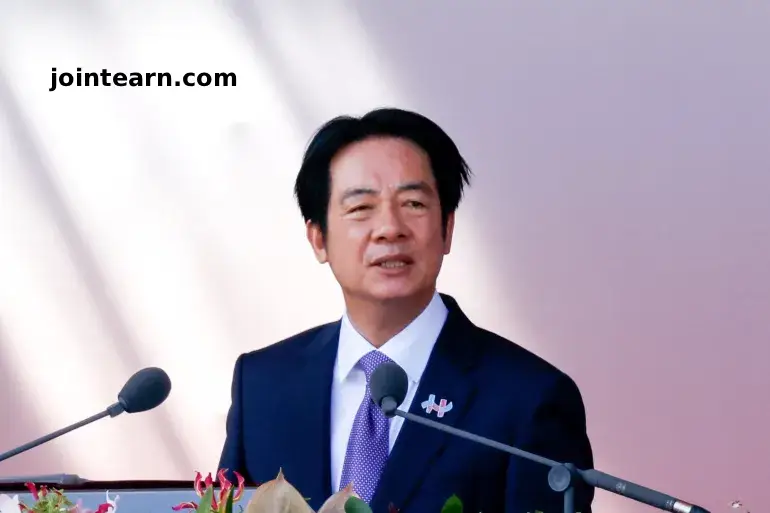
Taiwan’s political landscape has reached a new level of polarization as opposition parties formally initiated an impeachment campaign targeting President William Lai Ching-te and Premier Cho Jung-tai. The move comes amid growing tensions between the executive branch and Taiwan’s divided legislature, highlighting deepening partisan divides on the self-ruled island.
The Kuomintang (KMT) and Taiwan People’s Party (TPP), alongside two independent lawmakers, filed impeachment proceedings on Friday, accusing President Lai and Premier Cho of violating Taiwan’s constitution and obstructing the legislative process. While the opposition has sufficient lawmakers to initiate the process, they still fall short of the two-thirds majority required to advance the impeachment to a vote, which is currently scheduled for May 19, 2026.
Symbolic Gesture Rather Than Practical Impeachment
Political analysts suggest that the impeachment effort is largely symbolic, designed to demonstrate opposition displeasure and register public protest rather than effect an actual removal from office.
“It’s not possible to have a real impeachment; however, they want to make a record that President Lai would be the first president considered impeached in Taiwan’s democratic history,” said Yen-tu Su, an expert in constitutional law at Academia Sinica, Taiwan’s leading research institution.
Su added that the impeachment campaign allows the opposition to express frustration at the executive branch’s refusal to promulgate legislation passed by lawmakers, while also sending a political message to supporters. “It’s a way to humiliate the president, and also a way to retaliate against the executive branch,” he explained.
Legislative Deadlock in Taiwan
Taiwan’s legislature has experienced significant gridlock since Lai took office in 2024 following his third consecutive term victory with the Democratic Progressive Party (DPP). Despite this historic win, the DPP lost its legislative majority, making it difficult for Lai to push through key policy initiatives.
Legislative conflicts have touched on major issues, including the 2026 national budget and defense spending. The KMT has blocked Lai’s supplemental $40 billion defense spending bill, while Premier Cho recently vetoed a proposal aimed at simplifying the allocation of tax revenues between local and central governments, citing feasibility concerns.
Brian Hioe, a political commentator and non-resident fellow at the University of Nottingham Taiwan Research Hub, described the impeachment campaign as “a stunt to gain attention.” He emphasized that the effort is likely to resonate more with core KMT and TPP supporters than with undecided or swing voters.
Partisan Polarization and Divided Government
Experts note that Taiwan is currently experiencing its second period of divided government, with Lai’s DPP controlling the presidency while the opposition dominates the legislature. According to Su, this period of divided governance is marked by heightened partisan polarization and legislative obstruction, making effective governance increasingly difficult.
“This is much uglier and more complicated than Taiwan’s previous divided government from 2000 to 2008,” Su said. “The impeachment campaign is a symptom of deeper systemic challenges within Taiwan’s political structure.”
The ongoing political deadlock also impacts Taiwan’s broader policy, including its relationship with China, national defense planning, and internal governance reforms. With legislative infighting continuing, the ability of the executive branch to pass crucial legislation remains severely constrained.
Looking Ahead
While the impeachment proceedings are unlikely to succeed in the Constitutional Court, they underscore the intense partisan tensions that now characterize Taiwanese politics. Analysts suggest that the symbolic nature of this effort will reinforce political divisions, energize party bases, and serve as a warning of the challenges facing President Lai and Premier Cho in navigating Taiwan’s highly polarized government.
The coming months will test both Taiwan’s constitutional framework and its ability to manage a functioning democracy under divided government, particularly as contentious issues like defense funding, cross-strait relations, and local governance remain unresolved.


Leave a Reply