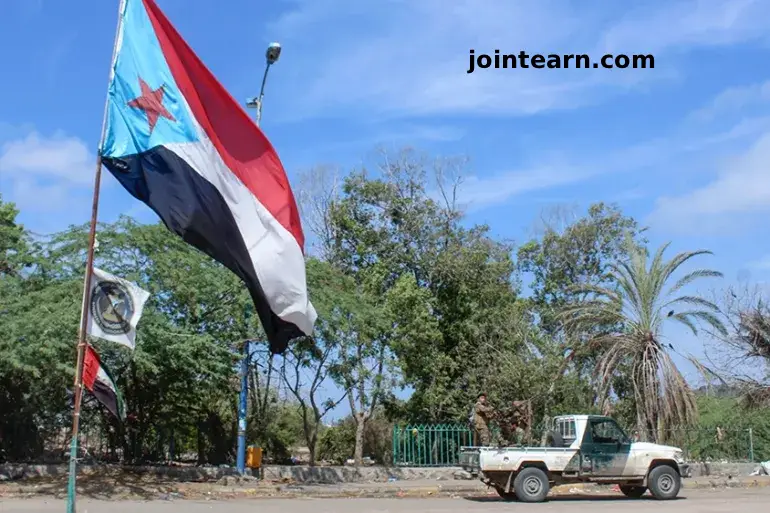
The United Arab Emirates (UAE) has publicly welcomed Saudi Arabia’s efforts to restore security and stability in Yemen amid recent advances by the Southern Transitional Council (STC). The announcement by the UAE Ministry of Foreign Affairs emphasizes the Emirates’ continued commitment to supporting peace and stability in the war-torn country.
The statement comes a day after Saudi Arabia urged Yemen’s main southern separatist group, the STC, to de-escalate tensions and withdraw forces from the eastern governorates of Hadramout and al-Mahra, which the separatists seized earlier this month.
Background on the STC Advance
The STC, which has historically received both military and financial backing from the UAE, recently expanded its control beyond Aden, threatening the stability of Yemen’s fragile coalition government. Earlier this month, the STC successfully pushed the Saudi-backed, internationally recognized government out of its headquarters in Aden, claiming authority over large swaths of southern Yemen.
“The UAE reaffirmed its steadfast commitment to supporting all endeavors aimed at strengthening stability and development in Yemen,” the Emirati Foreign Ministry said in its statement.
Saudi-Emirati Diplomatic and Military Efforts
On December 12, 2025, a joint Saudi-Emirati military delegation arrived in Aden to negotiate and implement measures designed to defuse tensions in the region. According to Saudi officials, the teams were dispatched to make “the necessary arrangements” for ensuring that STC forces return to their previous positions outside Hadramout and al-Mahra provinces.” Efforts are ongoing, highlighting the delicate balance required to maintain peace in Yemen.
Political Implications and Regional Dynamics
The STC’s recent movements have intensified risks of internal conflict within the coalition that has been fighting the Iran-backed Houthi rebels in northern Yemen since 2015. Initially allied with the Saudi-backed government intervention, the STC has increasingly sought self-rule for southern Yemen, creating new fault lines in the already fragmented country.
Yemen’s civil war, which began in 2014, has seen the Houthis seize control of the northern part of the country, including the capital Sanaa, forcing the internationally recognized government to retreat southward. Historically, Yemen was divided into northern and southern states until unification in 1990, which adds further complexity to current territorial disputes.
Saudi Arabia and the UAE remain key external actors in Yemen’s ongoing conflict, each pursuing strategic interests while attempting to mediate tensions between the STC and the central government. Analysts warn that the STC advance could jeopardize the broader anti-Houthi coalition, complicating ongoing efforts to achieve lasting peace.
Strategic Importance of Yemen
Yemen’s location along the Red Sea shipping route makes it a geopolitically critical country. Ensuring stability in the south is not only vital for Yemen’s future but also for regional security and trade routes, which are essential to global commerce. Both the UAE and Saudi Arabia have consistently framed their interventions as efforts to maintain stability, counter extremism, and prevent the fragmentation of Yemen.
The Road Ahead
As Saudi and Emirati delegations continue negotiations with the STC, the coming weeks will be critical for determining whether peaceful reintegration of southern forces is possible. The ongoing engagement demonstrates the UAE’s and Saudi Arabia’s commitment to regional security, while also highlighting the challenges of reconciling local separatist ambitions with national unity and international interests.
The situation remains fluid, with the potential for renewed confrontations if diplomatic measures fail. Yemen’s path toward stability and development continues to depend on both internal reconciliation and the sustained involvement of regional powers.


Leave a Reply