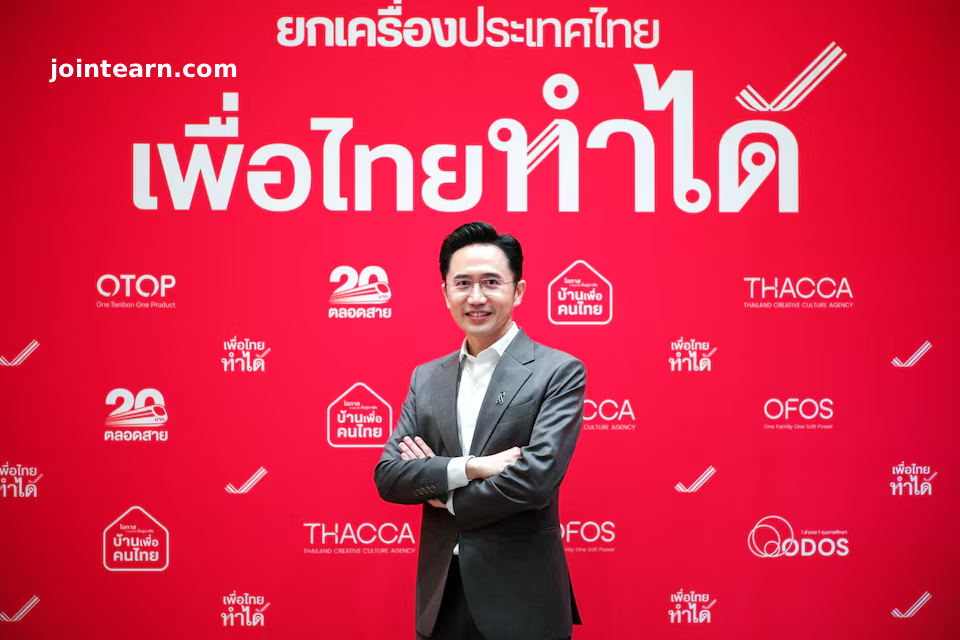
With Thailand’s general election scheduled for February 8, 2026, the country’s embattled Pheu Thai party is turning to Yodchanan Wongsawat, the nephew of former prime ministers, as its leading candidate for the premiership. This comes after the party’s patriarch, billionaire Thaksin Shinawatra, was jailed, and his daughter, Paetongtarn Shinawatra, was ousted from power earlier this year.
Yodchanan Wongsawat: The New Face of Pheu Thai
At 46, Yodchanan Wongsawat is a political novice. An engineer by training with a PhD from the University of Texas at Arlington, he has spent much of his adult life in academia and currently serves as a professor in biomedical engineering at Mahidol University in Bangkok. Despite limited political experience—having only advised on tech-related policies in the previous Pheu Thai-led government—he is expected to bring a methodical, project-management approach to politics.
Yodchanan himself acknowledges his relative inexperience, noting:
“I’m the very small guy, but I’m on the shoulder of a giant,”
referring to the influential Shinawatra family, which has produced four prime ministers in two decades, including his uncle Thaksin and his father Somchai Wongsawat.
Pheu Thai’s Political Challenges
The Pheu Thai party has faced a series of political setbacks this year:
- Thaksin Shinawatra was jailed for one year in September for conflict of interest and abuse of power during his tenure as prime minister from 2001-2006.
- Paetongtarn Shinawatra, Thaksin’s daughter, was removed as prime minister in August following a court ruling over a controversial phone call with Cambodia’s former leader Hun Sen, amid rising tensions between the two countries.
- Pheu Thai’s support has declined sharply, polling 11.04% nationwide in December, down from 13.96% in September and 28.05% in March.
The political upheaval prompted Prime Minister Anutin Charnvirakul to dissolve parliament, triggering an early election season and leaving the Pheu Thai party scrambling for leadership.
Pheu Thai’s Strategy: Betting on Outsiders
Despite Yodchanan’s inexperience, Pheu Thai has a history of nominating political outsiders who successfully won office, including Yingluck Shinawatra in 2011 and Srettha Thavisin and Paetongtarn Shinawatra in 2023.
Yodchanan emphasized the party’s populist legacy, which includes policies such as universal healthcare and rural cash handouts, as a foundation for winning voter support:
“We still believe we can win. If we can translate (policies) and make the people know that vision, people would protect us.”
He also signaled a willingness to form coalition governments if no party achieves a clear majority in the February election:
“We want to win, obviously, but if we cannot, we can pair with the party that would have the same intention.”
Key Issues for the Upcoming Election
The upcoming vote is expected to be influenced by several factors:
- Ongoing conflict with Cambodia and rising nationalist sentiment may affect public perception of the Shinawatra family.
- Political inexperience vs. administrative competence: Yodchanan hopes his academic and project management experience will appeal to voters seeking pragmatic leadership.
- Coalition dynamics: Analysts predict the next parliament may be fragmented, requiring negotiations and alliances between parties.
Conclusion
As Thailand heads toward its February 2026 general election, the Pheu Thai party is banking on Yodchanan Wongsawat to restore credibility and navigate a complex political landscape. With declining support, ongoing regional tensions, and the shadow of the Shinawatra family legacy, the party faces an uphill battle—but Yodchanan’s novice status may also provide a fresh image to reconnect with voters.


Leave a Reply