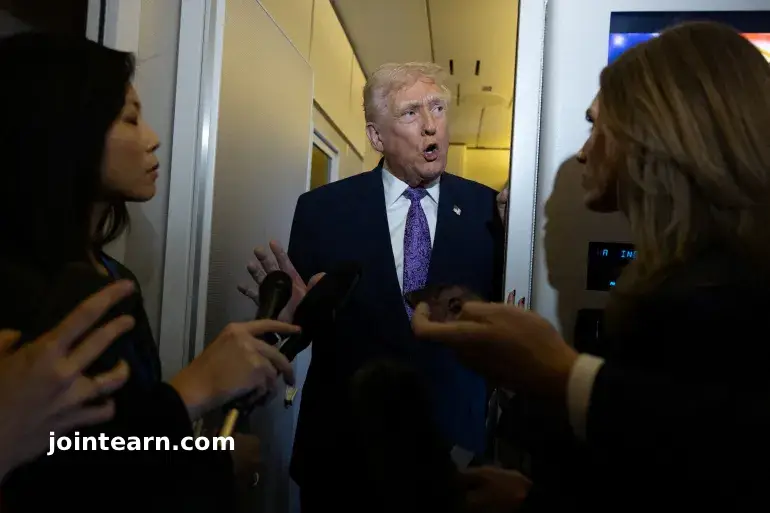
Trump Holds National Security Talks on Venezuela
US President Donald Trump convened a high-level national security meeting on Monday, December 1, 2025, to discuss “next steps” regarding Venezuela. Reports indicate that senior officials present included Secretary of Defense Pete Hegseth, Chairman of the Joint Chiefs of Staff General Dan Caine, Secretary of State Marco Rubio, and other White House aides.
The discussions come amid an ongoing surge of US military assets into the Caribbean, raising international concerns over a potential land invasion of Venezuela aimed at toppling President Nicolas Maduro.
Surge of Military Forces Sparks Fears
The US military build-up includes 15,000 personnel deployed to the Caribbean, along with several major naval assets, including the USS Gerald R. Ford, the USS Winston S. Churchill, and the USS Bainbridge. This show of force has fueled speculation that the US is preparing either coercive diplomacy or potential military operations in the region.
Observers in Washington have interpreted the moves as an effort to pressure Maduro to leave office before direct action, while others suggest that control over Venezuela’s vast oil reserves could be a motivating factor.
Controversial Strikes on Alleged Drug Smugglers
The Trump administration has faced renewed scrutiny over its lethal strikes on suspected Venezuelan drug smuggling vessels in international waters. Reports suggest that Secretary of Defense Pete Hegseth allegedly issued a verbal order to kill all individuals aboard one vessel, prompting concerns over potential war crimes or violations of international law.
Subsequent “follow-on” strikes reportedly occurred after survivors were observed from the first attack, raising further legal and ethical questions. In response, Hegseth stated that all operations were “in compliance with the law of armed conflict.”
The White House confirmed that a second strike took place, authorized by Admiral Frank Bradley, citing self-defense and the elimination of threats to the United States.
Political and Legal Backlash
The controversial strikes have prompted oversight from both Republican and Democratic lawmakers in the US House and Senate armed services committees. Legal experts warn that targeting individuals in international waters without trial or warning may constitute war crimes or murder under international law.
Venezuela’s National Assembly had planned an extraordinary session to form a commission investigating the strikes, but the meeting was postponed without explanation, highlighting the ongoing political tension between Washington and Caracas.
Trump’s Messaging and Strategic Ambiguity
President Trump has attempted to downplay speculation around the strikes and the military build-up. In public statements, he emphasized that no final military operations had been decided and dismissed reports about airspace restrictions over Venezuela as precautionary, though observers note that such announcements are typically linked to impending operations.
Analysts suggest that Trump faces a delicate balancing act: maintaining credibility with his MAGA supporters, who favor avoiding “foreign wars,” while demonstrating strength in the Western Hemisphere.
Implications for US-Venezuela Relations
The current escalation represents one of the most tense periods in US-Venezuela relations in recent years. With ongoing strikes, troop deployments, and legal challenges, the situation poses risks of direct confrontation, international condemnation, and wider regional instability.
Experts continue to monitor whether the US will maintain a posture of coercion and deterrence or escalate toward direct military engagement. The coming weeks are critical in determining the trajectory of both Trump’s foreign policy and Venezuelan political stability.


Leave a Reply