ECOWAS Steps In to Mediate Guinea-Bissau Crisis
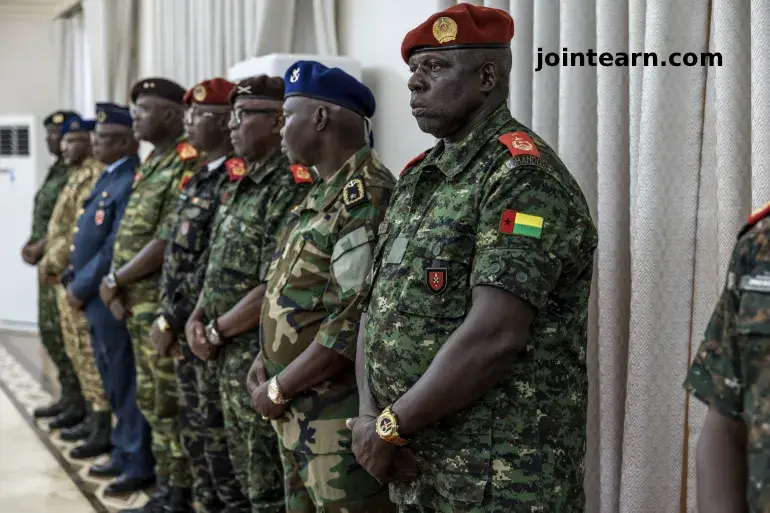
A high-level delegation from the Economic Community of West African States (ECOWAS) arrived in Guinea-Bissau on Monday, December 1, 2025, to engage in mediation talks following last week’s military coup. The delegation, led by ECOWAS chairman and Sierra Leone President Julius Maada Bio, sought to pressure the military leaders to ensure a full restoration of constitutional order in the country.
Sierra Leone’s Foreign Minister, Timothy Musa Kabba, described the discussions as “very fruitful,” highlighting that both the military authorities and regional mediators had expressed their concerns.
Military Tightens Grip Amid Post-Election Chaos
Following the coup, the military has imposed strict restrictions, including bans on demonstrations and strikes, further escalating political tensions. The takeover occurred three days after Guinea-Bissau’s closely contested presidential election, in which both incumbent President Umaro Sissoco Embalo and opposition candidate Fernando Dias da Costa claimed victory before official results were announced.
Embalo reported that he had been deposed and arrested, later fleeing to Brazzaville, the capital of the Republic of Congo. The military appointed former army chief of staff General Horta Inta-A as the head of a one-year transitional government, which quickly formed a 28-member cabinet largely composed of figures allied with the deposed president.
Nigeria Protects Opposition Leader Fernando Dias da Costa
Nigeria has taken decisive action amid the crisis, with President Bola Tinubu authorizing protection for opposition leader Fernando Dias da Costa, citing an “imminent threat to his life.” Dias da Costa is currently sheltered at the Nigerian embassy in Bissau, and Nigeria has requested ECOWAS troop deployment to ensure his security.
Opposition Faces Crackdown
The main opposition party, African Independence Party for Guinea and Cape Verde (PAIGC), reported that its headquarters in Bissau had been illegally invaded by heavily armed militia groups. The party had also been barred from presenting a presidential candidate in the November 23 elections, a move widely criticized by civil rights groups as part of a broader suppression of dissent.
ECOWAS and International Response
ECOWAS has taken a strong stance against the coup, suspending Guinea-Bissau from all decision-making bodies until constitutional order is restored. The regional body, widely regarded as West Africa’s leading political authority, has emphasized dialogue and peaceful resolution of the crisis.
International condemnation has been vocal. United Nations Secretary-General Antonio Guterres expressed grave concern over the military takeover, describing it as an unacceptable violation of democratic principles. Guterres called for the immediate release of detained officials, including electoral authorities and opposition figures, and demanded the restoration of constitutional governance in Guinea-Bissau.
The Road Ahead for Guinea-Bissau
The political crisis in Guinea-Bissau underscores ongoing challenges to democracy in West Africa, particularly in nations with contested elections and fragile institutions. ECOWAS’s mediation, alongside international pressure, will be critical in preventing further destabilization and ensuring the safety of political leaders like Fernando Dias da Costa.
The coming weeks will be decisive, as Guinea-Bissau navigates military control, international mediation, and the urgent need for democratic restoration.


Leave a Reply