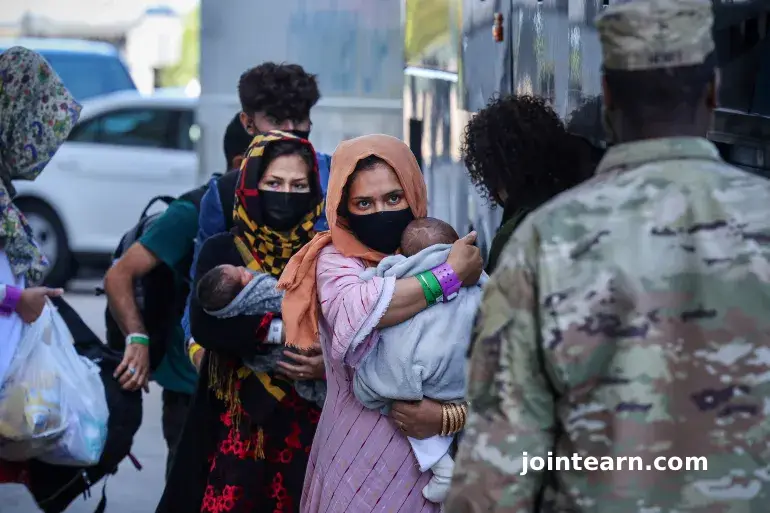
The administration of U.S. President Donald Trump has announced a controversial new policy to retroactively vet refugees who have already been resettled in the United States. The move has raised concerns among immigrant rights groups, who warn that it could target some of the most vulnerable members of American society.
DHS Confirms Review of Refugee Admissions
A statement from the Department of Homeland Security (DHS) confirmed that corrective action is being taken “to ensure those who are present in the United States deserve to be here,” according to DHS spokesperson Tricia McLaughlin.
According to reports obtained by the Associated Press and Reuters, a government memorandum signed by USCIS Director Joseph Edlow orders a review of more than 230,000 refugees admitted under the administration of former President Joe Biden. Refugees found not to meet the legal standards for resettlement could face revocation of their legal status.
The memorandum specifies that all refugees admitted between January 20, 2021, and February 20, 2025, will be subject to comprehensive review and possible re-interview. USCIS may extend the review to refugees admitted outside this period if deemed necessary.
Background on U.S. Refugee Admissions
In 2024, the United States admitted over 100,000 refugees, with leading countries of origin including the Democratic Republic of the Congo, Afghanistan, Venezuela, and Syria. Unlike asylum seekers, refugees apply for entry while still abroad and are allowed to enter the U.S. with the presumption of long-term residency and protection from persecution.
Refugees undergo extensive vetting, including multiple interviews and background checks. The process often begins with a referral from a third party, such as the United Nations, before U.S. immigration authorities conduct rigorous screening. Applicants must demonstrate that they have faced persecution based on race, religion, nationality, political beliefs, or membership in a particular social group.
Criticism from Advocacy Groups
Immigration advocates argue that the policy is unnecessary and harmful. Sharif Aly, president of the International Refugee Assistance Project (IRAP), criticized the move as an attempt to “bully some of the most vulnerable members of our communities.” He added that the review could subject refugees to a “re-traumatizing process” and place them at risk of unfair enforcement.
Similarly, Mark Hetfield, president of the humanitarian organization HIAS, called the policy “unnecessary, cruel, and wasteful,” emphasizing that refugees are already among the most thoroughly vetted immigrants in the United States.
Trump Administration’s Previous Refugee Policies
The Trump administration significantly reduced refugee admissions during his first term and implemented strict limitations after returning to office in January. For 2026, the refugee admission cap has been set at a historic low of 7,500, prioritizing specific groups, including white South Africans, whom the administration claims face discrimination in their home country.
These measures form part of a broader effort by the administration to restrict immigration and tighten oversight of noncitizens already residing in the U.S.
Implications for Refugees
If implemented, the policy could force refugees who were legally admitted years ago to undergo re-interviews and background checks, potentially putting their legal status at risk. Advocacy groups warn that this retroactive review undermines the security and stability of thousands of refugees who have integrated into U.S. communities and contribute to society.
The policy has sparked widespread concern and debate about the treatment of vulnerable populations, the ethics of retroactive enforcement, and the administration’s approach to immigration reform.


Leave a Reply