U.S. President Donald Trump has sparked fresh concerns about a potential escalation with Iran after being photographed holding a hat emblazoned with the slogan “Make Iran Great Again”, just days after the controversial U.S. military abduction of Venezuelan President Nicolas Maduro.
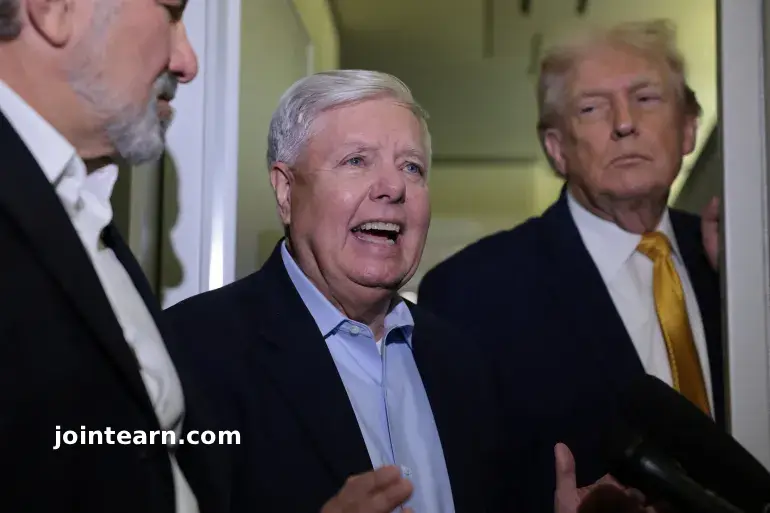
The image, shared publicly by Republican Senator Lindsey Graham, shows Trump aboard Air Force One en route from Florida to Washington, DC. The hat, a reworking of Trump’s long‑standing “Make America Great Again” slogan, appears to reference regime change in Iran, intensifying speculation about the administration’s next foreign policy target.
Lindsey Graham Shares Image, Praises Trump’s Leadership
Senator Graham, a close Trump ally and a long‑time advocate of hardline U.S. foreign policy, posted the image on social media platform X on Monday. In his post, Graham praised Trump’s leadership and framed U.S. pressure on Iran as support for the Iranian people.
“God bless our Commander in Chief and all of the brave men and women who serve under him,” Graham wrote. “I’m proud to be an American. God bless and protect the brave people of Iran who are standing up to tyranny.”
The hat itself features Iran’s pre‑1979 national flag, commonly used by supporters of restoring the monarchy or overturning the Islamic Republic.
Rhetoric Follows U.S. Abduction of Venezuela’s President
The photograph comes amid heightened global scrutiny of the Trump administration following the forcible removal of President Nicolas Maduro from Caracas by U.S. special forces, an action widely criticised by international law experts, the United Nations, and several U.S. allies.
Iran has long been a close ally of Venezuela, and observers say the Maduro operation has raised fears that Washington may adopt similar tactics elsewhere, particularly against governments Trump has openly opposed.
Earlier on Sunday, Trump renewed threats of military action against Iran, warning that the U.S. would respond forcefully if Iranian security forces kill anti‑government protesters.
“If they start killing people like they have in the past, I think they’re going to get hit very hard by the United States,” Trump told reporters.
Graham Openly Advocates Iranian Government Overthrow
Senator Graham had earlier appeared in a television interview wearing the same hat, explicitly linking it to hopes for political change in Iran.
“So I pray and hope that 2026 will be the year that we make Iran great again,” Graham said, arguing that Trump has not “turned his back on the people of Iran” amid sporadic protests across the country.
U.S. foreign policy hawks, including Graham, have increasingly portrayed themselves as champions of Iranian protesters, even as critics note their support for military actions that have caused large civilian casualties.
Iran Pushes Back Against Trump’s Threats
Iranian officials swiftly rejected Trump’s rhetoric. Supreme Leader Ayatollah Ali Khamenei warned that Iran would respond decisively to any U.S. aggression.
“We will not give in to the enemy,” Khamenei wrote on X following Maduro’s abduction. “We will bring the enemy to its knees.”
Tensions between the U.S. and Iran remain high following June 2025 airstrikes, when U.S. forces joined Israel in bombing Iran’s three main nuclear facilities. Iran retaliated by launching missiles at a U.S. airbase in Doha, causing damage but no casualties. A ceasefire was reached shortly afterward.
Trump Threatens Renewed War Over Nuclear Programme
Despite the ceasefire, Trump last week warned that military action could resume if Iran attempts to rebuild its nuclear or missile capabilities.
“Now I hear that Iran is trying to build up again, and if they are, we’re going to have to knock them down,” Trump said. “We’ll knock the hell out of them.”
Analysts say the symbolism of the “Make Iran Great Again” hat, combined with Trump’s increasingly aggressive language, signals a shift toward open confrontation, particularly after the precedent set in Venezuela.
Growing Fears of Wider Conflict
The combination of military intervention in Latin America, escalating threats toward Iran, and vocal support for regime change has heightened concerns among diplomats and security experts about a broader destabilisation of global politics in 2026.
As protests, geopolitical rivalries, and military posturing intensify, many observers warn that rhetoric once dismissed as symbolic may now be laying the groundwork for real-world escalation.


Leave a Reply