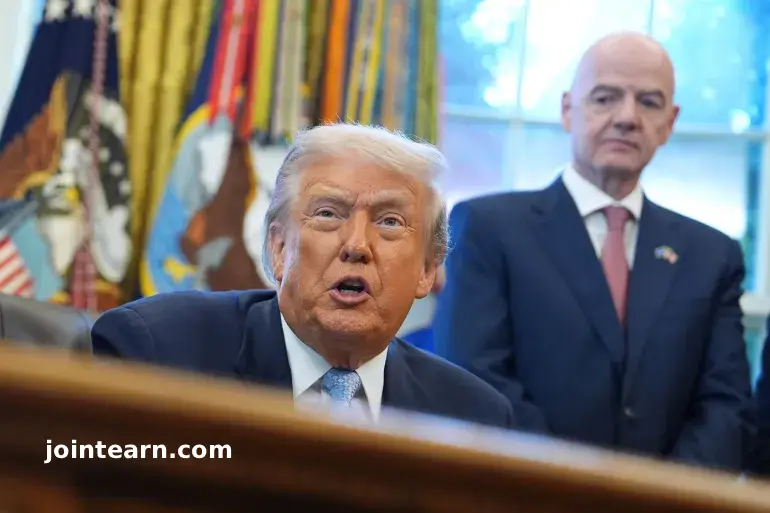
United States President Donald Trump has announced a controversial plan to weaken vehicle mileage rules, significantly reducing fuel economy standards for cars and trucks through the 2031 model year. The move, unveiled on Wednesday, 3 December 2025, would relax regulatory requirements on automakers, allowing larger, less fuel-efficient vehicles to dominate the US market while rolling back efforts to reduce greenhouse gas emissions.
According to the National Highway Traffic Safety Administration (NHTSA), the proposal sets the fleetwide average fuel economy for light-duty vehicles at roughly 34.5 miles per gallon (65.5 km per gallon) by 2031, a marked reduction from the Biden-era target of about 50 miles per gallon.
Officials argue the adjustment gives Americans more vehicle options they can afford and allows automakers to focus on larger, profitable vehicles like SUVs. However, environmental advocates warn the policy will increase carbon emissions, raise fuel costs for consumers, and reverse years of progress on clean transportation.
Industry Support for Rollback
The Trump administration has repeatedly relaxed environmental regulations for the auto sector since taking office, including:
- Repealing fines for automakers failing to meet federal mileage standards.
- Eliminating consumer tax credits of up to $7,500 for electric vehicles (EVs).
- Scaling back emissions rules that encouraged cleaner cars and trucks.
Major US automakers welcomed the new proposal. Ford CEO Jim Farley called it “a win for customers and common sense,” praising the administration for aligning standards with market realities. Similarly, Stellantis CEO Antonio Filosa highlighted the benefits of “realigning” standards with real-world conditions, giving automakers flexibility while claiming to maintain progress on energy efficiency and carbon reduction.
The administration estimates that carmakers will save more than $35 billion in technology costs through 2031. General Motors would save $8.7 billion, while Ford and Stellantis would each save over $5 billion. Hyundai, Subaru, and Toyota also stand to reduce compliance costs.
Environmental and Public Concerns
Environmentalists and advocacy groups strongly criticized the proposal. Dan Becker, director of the Safe Climate Transport Campaign, stated:
“In one stroke, Trump is worsening three of our nation’s most vexing problems: the thirst for oil, high gas pump costs, and global warming.”
Katherine Garcia, director of the Sierra Club’s Clean Transportation program, warned the rollback would keep polluting cars on US roads for years, threatening public health, particularly for children and the elderly.
The rollback could result in higher fuel costs for drivers, with estimates projecting Americans may pay up to $185 billion more through 2050. Additionally, abandoning Biden-era standards could increase carbon dioxide emissions by 22,111 tonnes per year by 2035, along with significant increases in soot, nitrogen oxides, and volatile organic compounds.
Controversy Over EVs
Trump has repeatedly criticized what he calls an EV “mandate”, falsely claiming that federal policies force automakers to sell electric vehicles. In reality, no federal law requires EV sales, though states like California have imposed zero-emission vehicle rules. Trump and Congressional Republicans blocked California’s 2035 EV mandate earlier this year.
The NHTSA highlighted that Biden-era rules would have reduced petrol consumption by 14 billion gallons by 2050. Reversing the standards undermines this goal, potentially locking in decades of higher emissions and reliance on fossil fuels.
Next Steps
The proposed rollback will undergo a 45-day public comment period before it can be finalized, providing stakeholders and advocacy groups an opportunity to weigh in. Analysts warn that if approved, the change would mark one of the most significant climate policy reversals in US automotive history, favoring short-term industry profits over long-term environmental sustainability.


Leave a Reply