In a significant diplomatic push, U.S. President Donald Trump is dispatching his special envoy, Steve Witkoff, to Russia to resolve the final outstanding differences over a proposed plan to end the ongoing Ukraine-Russia war. The move comes as Ukraine signals support for the “essence” of the plan, while Moscow remains cautious amid ongoing missile attacks on Kyiv.
Ukraine Backs U.S. Peace Plan Amid Continued Attacks
Following a series of high-level meetings in Geneva, Ukrainian officials expressed readiness to move forward with the modified peace framework, although sensitive details remain under discussion. President Volodymyr Zelenskyy emphasized that Kyiv supports the framework’s core principles and is working to ensure robust security guarantees.
Zelenskyy’s chief of staff, Andriy Yermak, who led the Geneva negotiations, told U.S. media that the security measures for Ukraine look “very solid,” reflecting a growing sense of momentum in talks facilitated by the United States.
Speaking from the White House, Trump acknowledged that negotiating a deal to end the Ukraine war is “not easy,” but expressed optimism: “We’re getting close to a deal. I thought that would be easier, but we’re making progress.”
Trump also confirmed plans to send Steve Witkoff to meet Russian President Vladimir Putin in Moscow to address “a few” remaining differences. Trump stressed that meetings with both Putin and Zelenskyy will only occur once the deal is finalized or in its final stages.
Russia Remains Skeptical
Despite diplomatic momentum, Russia has yet to review the modified proposal, which remains unpublished. Foreign Minister Sergey Lavrov insisted that any peace framework must respect the “spirit and letter” of the U.S.-Russia understandings reached at the Anchorage summit earlier this year. Lavrov warned that deviations from these agreements could result in a “fundamentally different situation” for Moscow.
Al Jazeera reports from Moscow highlight uncertainty within the Kremlin. Behind-the-scenes communications reportedly took place between Russian envoy Kirill Dmitriev and U.S. envoy Steve Witkoff, though Russia is reportedly displeased with changes to the initial plan. Unlike Trump’s original 28-point proposal, the revised framework reportedly does not call for Ukrainian forces to withdraw from Donbas, allows Ukraine to pursue NATO membership, and does not limit the size of its armed forces.
Diplomatic Coordination Among Western Allies
Amid U.S.-led negotiations, Western allies are actively coordinating on security guarantees and a post-ceasefire reconstruction plan for Ukraine. A video conference of the “coalition of the willing,” co-chaired by French President Emmanuel Macron and British Prime Minister Keir Starmer, with Zelenskyy and U.S. Secretary of State Marco Rubio in attendance, laid the groundwork for a joint task force to solidify security commitments.
Trump has not yet committed to a U.S. military role in a post-ceasefire “reassurance force,” which would rely on European allies for training, air, and naval support. Macron emphasized that Ukraine’s military should not face restrictions, in contrast to proposals in the initial draft of Trump’s plan.
The coalition also addressed the politically sensitive issue of frozen Russian assets, which Western countries have withheld since 2022, totaling roughly $300 billion. Macron indicated that a final decision on utilizing these funds for Ukraine’s reconstruction would be finalized shortly by the European Commission, amid disagreements between nations over legal and political considerations.
Continued Violence Undermines Peace Efforts
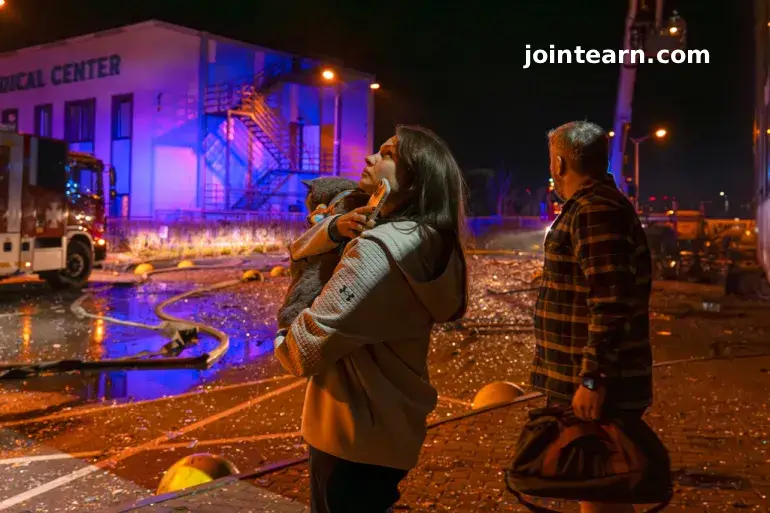
While negotiations progress, Russia launched a deadly missile attack on Kyiv, killing seven people and disrupting electricity and heating infrastructure. Zelenskyy condemned the strikes as “especially cynical,” noting that they occurred while talks on ending the war were ongoing. Macron similarly called for continued pressure on Moscow, stressing that the situation on the ground contradicts a genuine willingness for peace.
U.S. officials, including Army Secretary Dan Driscoll, remain cautiously optimistic, citing productive discussions with Russian representatives in Abu Dhabi. White House Press Secretary Karoline Leavitt emphasized that only “a few delicate, but not insurmountable” issues remain, which require continued dialogue between the U.S., Ukraine, and Russia.
With the upcoming Thanksgiving holiday in the United States, the timing of further talks remains uncertain, but global attention is focused on whether the revised U.S.-Ukraine peace plan can successfully bridge the gap with Moscow and bring an end to one of Europe’s most devastating conflicts.


Leave a Reply