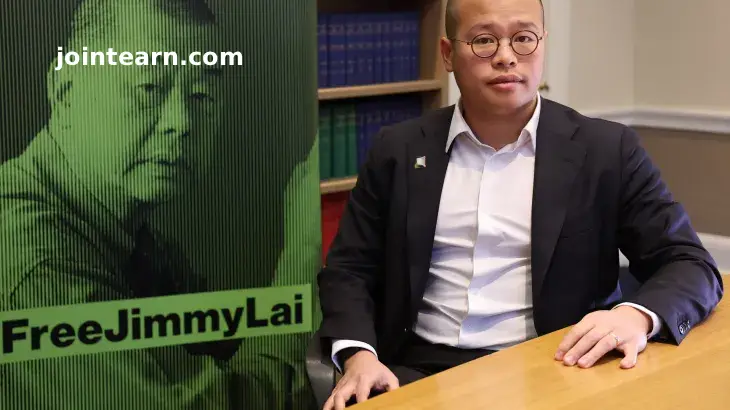
U.S. President Donald Trump has publicly appealed to Chinese President Xi Jinping to release Hong Kong pro-democracy media tycoon Jimmy Lai, expressing deep concern for Lai’s health following his conviction under Hong Kong’s national security law. The case has drawn international condemnation and intensified global scrutiny of press freedoms in the city.
Jimmy Lai’s Conviction in Hong Kong
On December 16, 2025, Hong Kong’s High Court found Jimmy Lai guilty on three charges, including conspiracy to collude with foreign forces and publishing seditious material. Prosecutors accused Lai of orchestrating conspiracies to encourage foreign governments to act against Hong Kong or China while publishing content deemed to “excite disaffection” against Chinese authorities. Lai, 78, pleaded not guilty and now faces a potential life sentence.
Human rights and press freedom advocates have condemned the conviction, arguing that it represents a severe blow to media independence and a stark signal of Beijing’s control over Hong Kong’s democratic institutions.
Trump’s Appeal to Xi Jinping
Speaking to reporters, Trump revealed that he personally requested Xi to consider Lai’s release, citing concerns over the media tycoon’s deteriorating health.
“He’s an older man, and he’s not well. So I did put that request out. We’ll see what happens,” Trump said.
The former president is believed to have raised the issue with Xi during a meeting in South Korea in October, demonstrating bipartisan international concern over the implications of Lai’s imprisonment.
U.S. Secretary of State Marco Rubio reinforced the urgency of the situation, stating that Lai’s conviction underscores Beijing’s determination to suppress dissent and silence those advocating for freedom of speech and other fundamental rights.
Background: Jimmy Lai and Apple Daily
Jimmy Lai founded Apple Daily, once Hong Kong’s leading pro-democracy tabloid known for its critical reporting on China and the local government. Following the implementation of the national security law, Lai’s newspaper was forcibly shut down in 2021, marking a turning point for Hong Kong’s media landscape.
The closure of Apple Daily, combined with the prosecution of Lai, has contributed to Hong Kong’s steep decline in global press freedom rankings, dropping to 140th out of 180 countries according to advocacy group Radio Free Asia.
Former Apple Daily editor Edward Li, now residing in Taiwan, highlighted the chilling effect:
“Not only does Hong Kong no longer have Apple Daily; Hong Kong no longer has a strong voice to criticise and monitor the government…, which is why we feel the need to fill that role.”
International Reactions
The United Kingdom, of which Lai is a citizen, condemned the conviction as “politically motivated” and called for his immediate release. Lai’s son, Sebastien, urged the UK government to exert more pressure on Beijing, stating that his father’s freedom should be a precondition for closer relations with China.
Lai’s daughter, Claire, emphasized that her father is not a political extremist and wishes to dedicate his remaining years to family and faith if released, highlighting the humanitarian dimension of the appeal.
Implications for Press Freedom
Lai’s imprisonment serves as a stark reminder of the erosion of media freedoms in Hong Kong. News organizations have scaled back critical coverage of China, fearing prosecution under the national security law. The international community continues to watch closely, with Trump’s intervention representing a high-profile call for human rights and press freedom advocacy.
Conclusion
The case of Jimmy Lai reflects the broader struggle for democracy and independent media in Hong Kong under increasing pressure from Beijing. Trump’s appeal to Xi Jinping underscores the global concern over political repression, the treatment of pro-democracy activists, and the erosion of press freedoms. As international calls for Lai’s release grow, the outcome of this case will have significant ramifications for Hong Kong’s media landscape and its role as a hub for free expression in Asia.


Leave a Reply