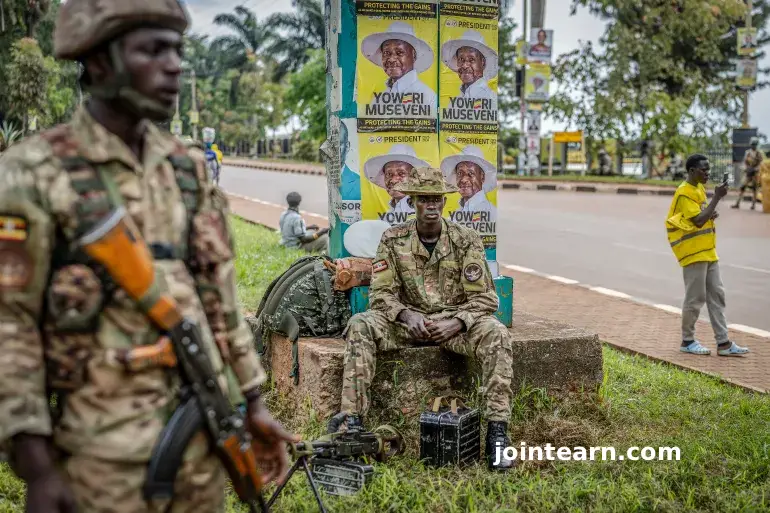
KAMPALA, Uganda – Ugandan authorities have shut down the internet nationwide just days before the presidential election, in which President Yoweri Museveni is seeking a seventh term after more than 40 years in power.
The Uganda Communications Commission instructed mobile network operators to block public internet access starting at 6 p.m. local time (15:00 GMT) Tuesday. NetBlocks, an internet monitoring group, confirmed a “nation-scale disruption to internet connectivity.”
Crackdown on Opposition
The blackout coincides with a surge in security operations against opposition figures and supporters. Hundreds of opposition activists have been rounded up, and live ammunition and tear gas have been deployed at rallies for Museveni’s main challenger, pop star-turned-politician Bobi Wine.
Kizza Besigye, who has run against Museveni in four previous elections, remains jailed on treason charges.
The United Nations Human Rights Office has condemned Uganda’s pre-election environment as one of “widespread repression and intimidation,” while the International Crisis Group says Museveni “has re-election all but locked down.”
Bobi Wine has described his campaign as a fight against impunity, but acknowledges the odds of a free and fair election are slim.
NGOs Targeted
Alongside the internet shutdown, Museveni’s government ordered two local human rights organizations to halt operations: Chapter Four Uganda and Human Rights Network for Journalists-Uganda. The National Bureau for NGOs accused the groups of engaging in activities “prejudicial to Uganda’s security.”
Kristof Titeca, a Uganda expert at Antwerp University, noted that the clampdown has made it too dangerous for opposition organizing, raising the cost of political engagement for citizens.
Historical Context
Uganda also experienced an internet blackout during the 2021 elections, which were widely criticized for state violence and alleged manipulation. Authorities had promised the internet would remain accessible this time, saying as recently as January 5 that “claims suggesting otherwise are false and intended to cause unnecessary fear.”
The 2026 election features eight candidates, including Museveni and Wine, with 21.6 million registered voters in a country of roughly 45 million people.


Leave a Reply