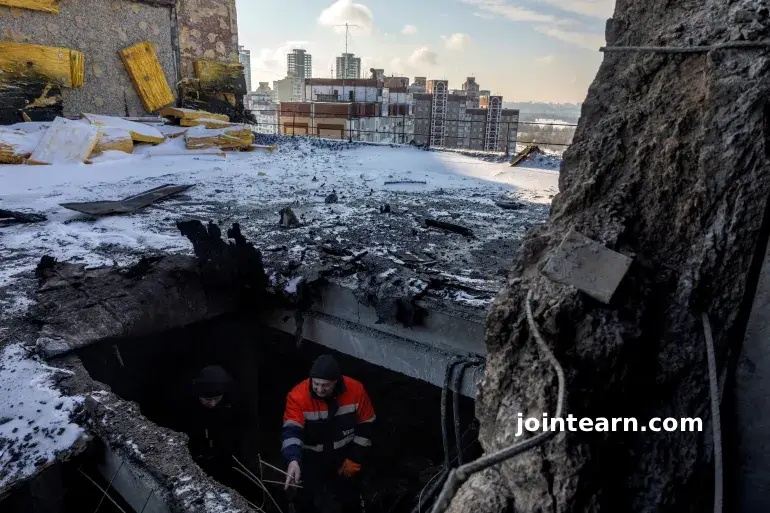
Kyiv, Ukraine – January 15, 2026 – Ukrainian President Volodymyr Zelenskyy has announced a state of emergency for Ukraine’s energy sector as repeated Russian attacks continue to devastate the country’s power infrastructure. With temperatures plummeting to -19°C (-2.2°F) in the capital Kyiv, thousands of residents remain without heat, electricity, or water, raising urgent humanitarian concerns.
The situation has prompted emergency measures from the Ukrainian government, as repair crews, energy companies, and municipal services work tirelessly to restore basic utilities amid one of the harshest winters in recent years.
Widespread Power Outages in Kyiv
Following a massive Russian strike last week, Kyiv’s city officials reported that 471 apartment buildings remained without heat nearly a week after the attack. Thousands of residents were left without electricity or water, facing life-threatening conditions in freezing temperatures.
Mayor Vitali Klitschko urged citizens to leave the city temporarily, warning that nearly half of the apartment buildings in Kyiv – approximately 6,000 – were without heating due to critical infrastructure damage.
Zelenskyy’s Response and Emergency Measures
President Zelenskyy highlighted the severity of the crisis in a post on X, stating:
“The consequences of Russian strikes and deteriorating weather conditions are severe. Repair crews, energy companies, municipal services, and the State Emergency Service of Ukraine continue to work around the clock to restore electricity and heating.”
The government is reviewing curfew restrictions to ensure residents can stay safe during extreme cold, and is working to increase electricity imports to alleviate shortages.
Russian Attacks Targeting Ukraine’s Energy Sector
Energy infrastructure has been a frequent target throughout Russia’s war on Ukraine. Attacks have focused on oil refineries, gas pipelines, pumping stations, and thermal and nuclear power plants, which rely on coal, oil, and natural gas.
Electricians have been working under dangerous conditions to repair power lines and transformers damaged by regular drone strikes. For instance, a transformer burned out due to a voltage surge caused by the attacks in Kyiv region, leaving thousands without power.
Humanitarian Concerns and Public Safety
The ongoing attacks and severe winter conditions have created a critical humanitarian situation. Residents in affected areas are struggling to access heat and water, while city authorities have issued safety guidance for emergency preparedness, including staying indoors and conserving energy.
Many citizens, like those in Kyiv, are enduring sub-zero temperatures in apartments without heating, emphasizing the urgent need for international aid and domestic support to prevent further suffering.
Energy Infrastructure Threats Extend Beyond Ukraine
The Russian-Ukrainian conflict has also affected international energy routes, including the Black Sea, where oil tankers have come under drone attacks. Recent incidents involved two tankers chartered by US oil giant Chevron, sailing toward a terminal on the Russian coast.
Kazakhstan reported that three oil tankers heading to a Caspian Pipeline Consortium (CPC) terminal were also attacked, highlighting growing risks to global energy infrastructure. The ministry urged the US and Europe to assist in securing oil transport routes.
“The increasing frequency of such incidents highlights the growing risks to the functioning of international energy infrastructure,” the statement read.
Russian-Occupied Areas Also Affected
Russian-appointed officials in Zaporizhia reported that over 3,000 people lost electricity in Ukrainian-controlled areas due to recent strikes, further illustrating the widespread nature of the energy crisis.
The attacks underscore the strategic targeting of energy supply by both sides in the conflict, directly impacting civilians and disrupting economic and daily life across Ukraine.
The Human Cost of Energy Attacks
Residents like those in Kyiv face a dual threat: extreme cold and interrupted energy supplies. Heating and electricity are vital for survival in temperatures below -15°C, and emergency services continue to prioritize repairs while navigating damaged infrastructure and ongoing attacks.
The crisis has sparked concerns over the resilience of Ukraine’s energy system and the long-term effects of continued Russian attacks on civilians, industry, and national security.
What’s Next for Ukraine’s Energy Crisis
With winter at its peak and attacks continuing, Ukraine is racing against time to restore power and heat before conditions worsen. The international community is closely monitoring the situation, with urgent calls for humanitarian aid and protection of civilian energy infrastructure.
President Zelenskyy’s declaration of a state of emergency highlights the scale of the crisis and the need for coordinated domestic and international response to mitigate the humanitarian disaster in the freezing country.


Leave a Reply