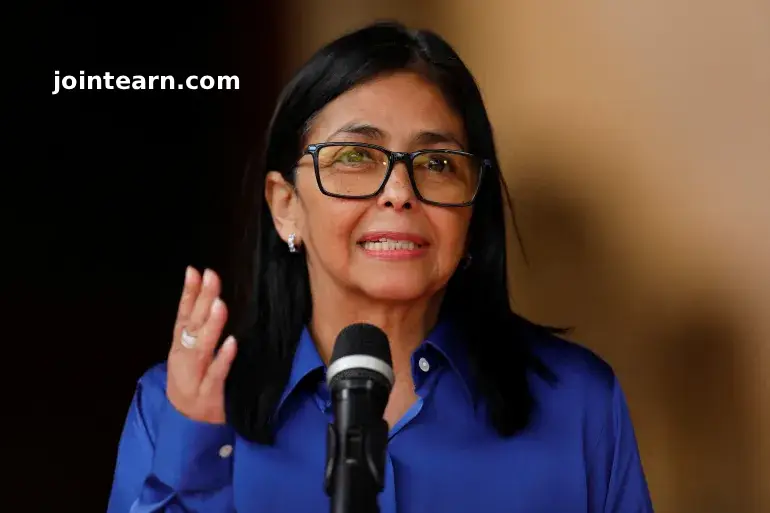
Caracas, Venezuela – January 15, 2026 – Venezuela’s acting President Delcy Rodriguez has pledged to continue the release of prisoners detained under the administration of former President Nicolas Maduro, marking a new political direction for the country. Rodriguez also described her first phone call with United States President Donald Trump since Maduro’s recent abduction by US forces as “productive and courteous,” signaling a potential thaw in Venezuela-US relations.
The phone call and subsequent policy announcements come amid a period of heightened political uncertainty following the US military operation in Caracas on January 3, which resulted in the capture of Maduro and his wife, First Lady Cilia Flores.
First Phone Call Between Rodriguez and Trump
During her address on Wednesday, Rodriguez emphasized that her discussion with Trump focused on bilateral cooperation, including trade, oil, minerals, and national security. She described the conversation as constructive, with both sides exploring ways to build a mutually beneficial relationship.
Trump also praised Rodriguez publicly. Speaking at the White House, he described her as a “terrific person” and lauded the developing partnership as “spectacular.” He highlighted ongoing communication between US Secretary of State Marco Rubio and the acting Venezuelan leadership.
“I think we’re getting along very well with Venezuela,” Trump said, noting that cooperation from Caracas had already led to the release of a significant number of prisoners and the cancellation of a second wave of planned US attacks.
Rodriguez Promises Continued Prisoner Releases
At her first press conference since Maduro’s abduction, Rodriguez promised that the process of releasing detainees is ongoing. Flanked by National Assembly President Jorge Rodriguez and Interior Minister Diosdado Cabello, she emphasized that Venezuela is entering a “new political moment” and pledged strict enforcement of the law while condemning acts of hatred and intolerance.
Rodriguez said:
“This opportunity is for Venezuela and for the people to witness a new moment where coexistence, recognition, and dialogue allow us to build a renewed national spirit.”
The announcement follows the recent release of more than 400 detainees, as reported by Jorge Rodriguez in parliament. While Venezuelan authorities deny holding political prisoners, the release of individuals detained for political reasons has been a long-standing demand of international human rights organizations and opposition groups.
Political Context After Maduro’s Abduction
The US military’s abduction of Maduro and his wife has dramatically shifted Venezuela’s political landscape. The operation, which occurred on January 3, left the country under the leadership of Rodriguez, who was previously Maduro’s vice president.
The move has drawn international attention, sparking debates over the legality of foreign military interventions and the broader geopolitical implications for Latin America. Rodriguez’s assurances on prisoner releases and law enforcement signal an effort to stabilize the nation and gain legitimacy both domestically and internationally.
Relations with the US and Opposition Leaders
Rodriguez’s engagement with the US marks the first official communication between the acting Venezuelan government and President Trump since the military operation. The focus on trade, energy, and security suggests a pragmatic approach to cooperation, potentially opening channels for diplomatic negotiations.
Additionally, Trump is scheduled to meet Venezuelan opposition leader Maria Corina Machado at the White House, marking their first in-person discussion since Maduro’s capture. Machado, a Nobel Peace Prize laureate, has publicly offered to transfer her prize to Trump, although the Nobel Committee has stated that the award cannot be transferred.
Human Rights and International Reactions
Despite the progress in prisoner releases, international rights groups have criticized the slow pace of reforms under Rodriguez’s leadership. Calls for full transparency regarding political detainees remain strong, with human rights organizations monitoring developments closely.
Rodriguez’s government maintains that messages of intolerance and violence will not be permitted, aiming to project an image of order and adherence to the rule of law while managing the transition from Maduro’s administration.
Venezuela’s Path Forward
Venezuela is now navigating a period of political uncertainty, with the acting government balancing domestic reforms, prisoner releases, and international diplomacy. Rodriguez’s engagement with the US and promises of legal and humanitarian reforms suggest a potential recalibration of Venezuela’s international relationships.
The coming weeks will be critical, as the acting government seeks to strengthen legitimacy, reassure citizens, and maintain stability in a nation still reeling from decades of political and economic turmoil.


Leave a Reply