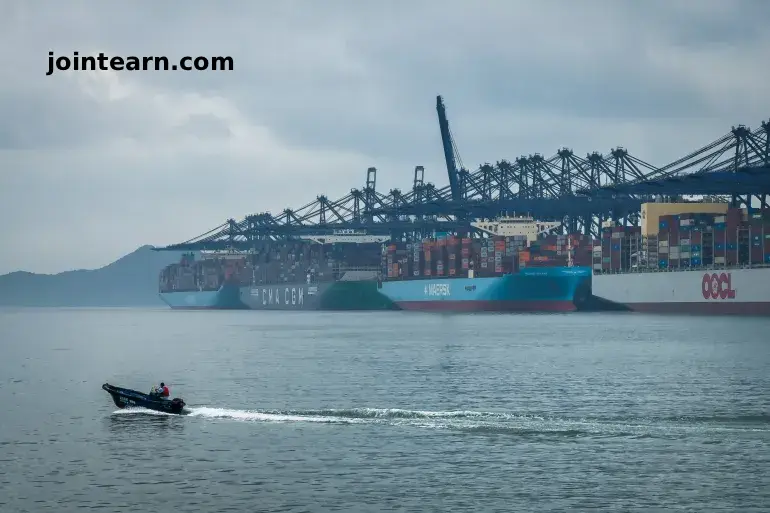
In a move highlighting escalating U.S. maritime operations, American forces reportedly boarded a cargo ship traveling from China to Iran last month. The incident, which took place hundreds of miles from Sri Lanka, marks the latest in a series of aggressive naval actions under the administration of former President Donald Trump, according to a report by the Wall Street Journal.
This operation represents the first known interception of Chinese-bound cargo en route to Iran in several years, signaling an intensification of U.S. enforcement of sanctions against Tehran. Unnamed officials cited by the newspaper indicated that the seized materials were “potentially useful for Iran’s conventional weapons programs,” though they noted that the items in question were dual-use, meaning they could serve both civilian and military purposes. Following the interdiction, the ship was allowed to continue its voyage.
Context of U.S. Maritime Enforcement
The November operation comes just weeks before U.S. forces seized an oil tanker off the Venezuelan coast, another action described by some experts as a rare and aggressive enforcement of sanctions on international shipping. These moves reflect a broader strategy of economic and military pressure being applied to nations that the United States considers adversarial, particularly Iran and Venezuela.
White House spokesperson Karoline Leavitt confirmed that the administration has not ruled out further maritime interdictions near Venezuelan waters, signaling potential continued pressure in the region.
Global Reactions
Iran remains under heavy U.S. sanctions, and neither Tehran nor Beijing immediately responded to the latest report. However, China—an essential trading partner for Iran—has consistently criticized U.S. sanctions as illegal and politically motivated. Earlier on the same day as the U.S. seizure of the Venezuelan tanker, Chinese Foreign Ministry spokesperson Guo Jiakun condemned the action, calling it an example of “unilateral illicit sanctions and long-arm jurisdiction that have no basis in international law or authorization by the UN Security Council.”
The growing tension highlights how international trade and maritime security have become focal points in the U.S.-China-Iran geopolitical landscape. China has already responded to other U.S. economic measures by imposing retaliatory tariffs, including recent increases to 125% on certain U.S. imports, following a U.S. hike to 145% on Chinese goods. These tariffs have disrupted key sectors such as logistics, manufacturing, and cross-border e-commerce, demonstrating the broader economic stakes behind maritime security actions.
Implications for International Trade and Security
Experts warn that these U.S. maritime operations could have far-reaching consequences for global shipping and trade. The interception of cargo ships raises concerns about the safety of international shipping routes, particularly in high-traffic areas like the Indian Ocean and Caribbean Sea. Moreover, it underscores the increasing role of military force in enforcing sanctions and influencing the geopolitical behavior of other nations.
As tensions between the U.S., China, and Iran continue, global businesses and policymakers are closely monitoring maritime activity and sanctions enforcement. The evolving situation may lead to increased security measures for commercial shipping, while diplomatic negotiations remain complicated by competing national interests and sanctions disputes.


Leave a Reply