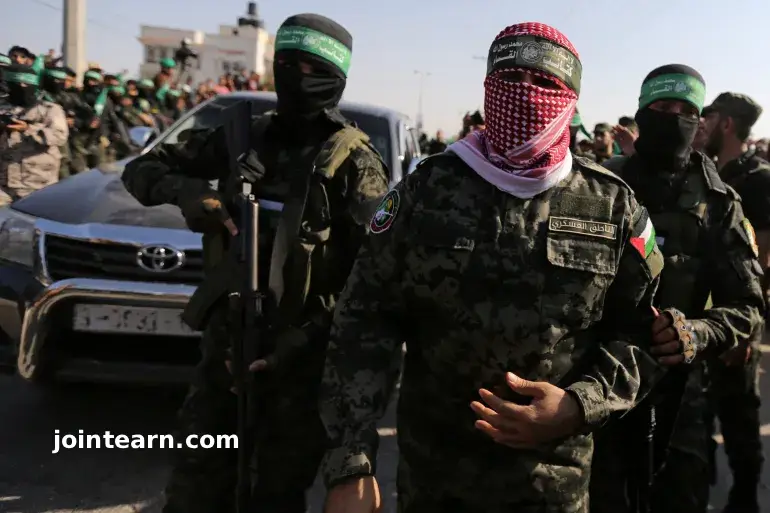
Hamas leaders and representatives of other Palestinian factions have convened in Cairo to discuss the second phase of the United States-led Gaza ceasefire plan. The talks come amid a fragile ceasefire that has been repeatedly violated by Israeli strikes, as the humanitarian situation in Gaza remains dire.
Palestinian Technocratic Committee Established
On Thursday, Palestinian leaders welcomed the formation of a 15-member technocratic committee to administer post-war Gaza under the supervision of a “Board of Peace,” reportedly chaired by US President Donald Trump. Bassem Naim, a senior Hamas leader, described the move as “a step in the right direction,” emphasizing its importance for consolidating the ceasefire, addressing the humanitarian crisis, and preparing for reconstruction.
The technocratic committee, to be led by former Palestinian Authority (PA) deputy minister Ali Shaath, will be tasked with providing essential public services to over two million Palestinians in Gaza. Shaath said the committee will operate under a “one homeland, one system” framework, fully integrated with the PA, without foreign members, and with no formal contact with Palestinian armed groups.
Key Focus Areas: Disarmament, Reconstruction, and Governance
Discussions in Cairo are focusing on:
- Reopening the Rafah border crossing with Egypt to allow the entry of stockpiled humanitarian aid.
- Ensuring Israeli withdrawal from occupied areas in Gaza.
- Disarmament of Palestinian armed groups, including Hamas, as part of the ceasefire implementation.
- Reconstruction of Gaza, with estimated costs exceeding $50 billion and a multi-year timeline.
Hamas adviser Taher al-Nunu emphasized the need to work with international mediators to achieve calm and restore normalcy. He also accused Israel of attempting to undermine the ceasefire while Hamas engages in negotiations to facilitate aid entry and Israeli withdrawal.
The United Nations and other mediators, including Egypt, Turkey, and Qatar, have welcomed the committee’s establishment, calling it an “important development aimed at consolidating stability and improving the humanitarian situation.”
Reconstruction Plans and Humanitarian Challenges
Shaath outlined a reconstruction strategy prioritizing shelters for displaced Palestinians within the first six months, rehabilitation of schools and academic institutions, and repair of desalination plants for potable water. Debris from destroyed buildings is planned to be recycled for road construction or used for marine land reclamation projects. Full debris removal is expected to take nearly three years, with financing sourced through a dedicated World Bank fund supported by Arab and international donors.
Despite these plans, the humanitarian crisis remains severe. Al Jazeera’s Hind Khoudary reported that Gaza residents are still experiencing daily Israeli attacks, limited aid deliveries, and displacement. Most Palestinians remain dependent on humanitarian assistance, with current aid shipments falling far short of the 600-truck daily target set under the US-brokered ceasefire agreement.
Phase Two: Disarmament Talks and Diplomatic Hurdles
The second phase of the Gaza plan, announced by US special envoy Steve Witkoff, focuses on establishing a transitional technocratic administration while beginning discussions on the demilitarization of Gaza, particularly the disarmament of Hamas and other unauthorized armed groups.
Witkoff described the goal as creating an alternative governance structure in Gaza that prioritizes peace and reconstruction. He emphasized engagement with Hamas regarding disarmament and with Israel concerning potential amnesty programs for armed factions that comply.
However, Israel maintains control over strategic areas, such as the so-called “yellow line” in eastern Gaza, and continues to occupy over 50% of the territory. Prime Minister Benjamin Netanyahu has reiterated that Israel will not fully engage in phase two until the remains of the last Israeli captive, Ran Gvili, are returned. Witkoff echoed that Hamas must meet its obligations regarding Gvili, warning of “serious consequences” for non-compliance.
Skepticism and Criticism
Analysts have expressed skepticism about the plan’s efficacy. Marwan Bishara, senior analyst at Al Jazeera, called the ceasefire deal “rigged,” arguing that US mediation favors Israeli interests and that long-standing peace efforts have historically been skewed by Washington’s alliance with Israel.
Despite official statements about the delivery of “historic humanitarian aid,” residents of Gaza continue to face severe shortages, homelessness, and ongoing Israeli attacks, highlighting the significant gap between diplomatic plans and on-the-ground realities.
Conclusion
Phase two of the US-led Gaza plan represents a critical moment in post-conflict governance, reconstruction, and humanitarian relief. The establishment of a Palestinian technocratic committee provides a potential framework for governance, while discussions on Hamas disarmament and Israeli withdrawal remain central to the peace process.
Yet, with ongoing military tensions, limited aid access, and deep mistrust between the parties, the path to stability in Gaza faces significant obstacles. International mediators, Palestinian factions, and Israel will need to navigate these challenges carefully to achieve lasting peace and rebuild a territory devastated by years of conflict.


Leave a Reply