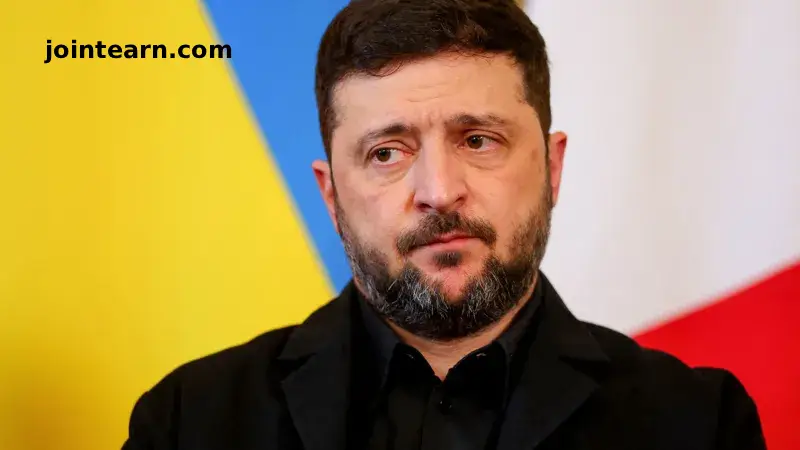
The United States has proposed that Ukraine withdraw from parts of the Donetsk region and create a “special economic zone” in the areas it currently controls, Ukrainian President Volodymyr Zelensky revealed in a briefing to reporters. This proposal comes amid complex negotiations to end the ongoing war with Russia, which began with the February 2022 invasion.
Key Issues in the Peace Negotiations
Zelensky identified territorial control and the Zaporizhzhia nuclear power plant as the two primary unresolved issues in the peace plan.
- Russia has demanded Ukraine relinquish roughly 30% of the eastern Donetsk region, a proposal Ukraine has rejected due to concerns that it would create a foothold for future Russian invasions.
- The US proposal would see Ukrainian forces withdraw from parts of Donetsk, with Russian forces committing not to advance into these territories. These areas would then become a demilitarized or special economic zone.
Zelensky stressed that any withdrawal must be mutual, raising concerns about Russia potentially exploiting the arrangement.
“What will restrain [Russia] from advancing? Or from infiltrating disguised as civilians?” Zelensky asked, highlighting the challenges of trust in negotiations.
The Zaporizhzhia Nuclear Power Plant
The Zaporizhzhia nuclear plant, Europe’s largest, has been under Russian control since March 2022 and remains a contentious issue. Zelensky proposed that the plant could be jointly managed by Ukraine and the US, though the feasibility of this arrangement remains unclear and may face strong resistance from Moscow.
US Involvement and Security Guarantees
Zelensky confirmed that Ukraine has submitted an updated 20-point plan to the US, including detailed proposals on security guarantees and reconstruction provisions. The US has reportedly aligned with Russia on certain points, such as delaying a ceasefire to allow Moscow to consolidate territorial gains.
While the Americans are pushing for a quicker resolution, Zelensky noted that there are no fixed deadlines, emphasizing that Ukraine’s military capabilities and battlefield outcomes will influence negotiations:
“Much depends on our military – what they can hold, where they can stop the enemy, what they can destroy. This affects the entire configuration.”
Challenges and Risks for Ukraine
Zelensky acknowledged the ongoing risks:
- Russian forces continue incremental advances along the frontline.
- Continuous aerial attacks are exhausting Ukrainian forces and civilians.
- Any peace agreement must safeguard Ukraine against renewed attacks, making American security guarantees critical.
He also expressed caution about US-Russia side agreements and the potential for US support, including weapons and intelligence, to decrease over time.
“We do not know what other agreements the US may have with Russia. We will learn in time,” Zelensky said.
International Reactions
Russian officials, including Foreign Minister Sergei Lavrov, praised US mediation efforts while downplaying Ukraine’s security concerns. Moscow insists on legal guarantees against attacks on NATO or EU countries but has a history of violating ceasefires, which has fueled European and Ukrainian skepticism.
Looking Ahead
The proposal to create a special economic zone in eastern Ukraine is seen as an attempt to balance territorial compromises with security guarantees. However, Zelensky warned that the situation remains fluid:
“No one knows what may happen the day after tomorrow… We do not know how these negotiations will end.”
With ongoing frontline fighting and complex diplomatic maneuvering, the ultimate outcome of these negotiations remains uncertain.


Leave a Reply