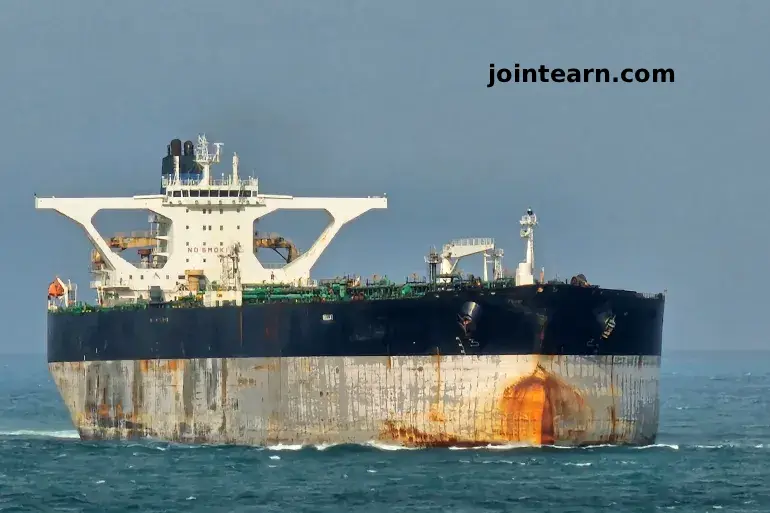
The United States has commandeered a Russian-flagged oil tanker linked to Venezuela in the North Atlantic after a weeks-long pursuit, prompting strong objections from Moscow. The vessel, the Marinera—formerly known as Bella-1—was seized by US special forces on Wednesday for violating American sanctions, according to the US European Command.
The Operation
US authorities reported that the Marinera had repeatedly evaded the US maritime blockade of sanctioned oil tankers traveling to and from Venezuela. Attempts by the US Coast Guard to board the ship in the Caribbean were unsuccessful, as the vessel refused compliance and headed across the Atlantic.
The operation involved a helicopter boarding, reportedly captured by Russian state broadcaster RT, which showed US forces taking control of the vessel while it sailed near Iceland’s exclusive economic zone. Tracking data confirmed the tanker’s route, highlighting its passage through international waters before capture.
“The blockade of sanctioned and illicit Venezuelan oil remains in FULL EFFECT – anywhere in the world,” US Defense Secretary Pete Hegseth wrote on social media.
The Marinera is considered part of a so-called “shadow fleet” that has transported oil for Venezuela, Russia, and Iran in violation of US sanctions.
Russia Condemns the Seizure
The Russian Transport Ministry called the seizure a violation of international maritime law, citing the 1982 UN Convention on the Law of the Sea. The ministry emphasized that the vessel, temporarily authorized to sail under the Russian flag on December 24, was boarded in the open sea beyond any territorial waters, which Russia argues constitutes unlawful use of force.
The Russian Foreign Ministry added that the tanker’s heightened attention by US and NATO forces was “disproportionate to its peaceful status,” asserting that no confrontation occurred between US and Russian military assets despite a submarine and warship being nearby.
Context: Sanctions and Trump Administration Policies
The Marinera was sanctioned by the US in 2024 for allegedly transporting cargo linked to Hezbollah, a Lebanese militant group. The seizure comes shortly after the US successfully executed its operation to capture Venezuelan President Nicolas Maduro, part of a broader campaign under former President Donald Trump to control Venezuela’s oil reserves.
Trump has vowed to exploit Venezuela’s oil wealth, claiming the country will hand over 30 to 50 million barrels of oil to the US. These moves align with previous US efforts to enforce sanctions against Venezuelan, Russian, and Iranian vessels allegedly engaged in illicit trade.
Seizure of a Second Tanker
In a related development, US Secretary of Homeland Security Kristi Noem confirmed that a second vessel, the supertanker M Sophia, was seized in international waters near the Caribbean. Panama-flagged and under US sanctions, the M Sophia had reportedly been carrying Venezuelan oil to China, operating in “dark mode” with its transponder turned off.
Noem stated that both tankers were either last docked in Venezuela or en route to it, highlighting a coordinated effort by US authorities to disrupt the illicit oil trade.
Implications for International Maritime Security
The Marinera and M Sophia seizures mark a significant escalation in US sanctions enforcement, demonstrating Washington’s willingness to pursue vessels globally to ensure compliance. While no direct confrontation occurred with Russian forces, the actions have drawn diplomatic protests and may heighten tensions between the US, Russia, and Venezuela.
Analysts note that these operations reflect broader geopolitical competition over energy resources, sanction enforcement, and strategic influence in Latin America and global oil markets.
“It’s clear that there is an operation underway,” Al Jazeera’s Kimberly Halkett reported from Washington, DC. “A number of vessels have now been apprehended, signaling a major escalation in sanction enforcement operations.”
As the US continues to pursue sanctioned oil shipments worldwide, the capture of the Marinera and M Sophia underscores the growing intersection of energy security, international law, and global geopolitics.


Leave a Reply