The United States has announced that it will take control of Venezuelan oil sales “indefinitely” following the controversial abduction of President Nicolás Maduro and his wife, Cilia Flores. The Trump administration said all proceeds from Venezuelan oil sales will be managed by US-controlled accounts, consolidating Washington’s influence over the South American nation.
US Takes Control of Venezuela’s Oil
On January 7, 2026, the US Department of Energy confirmed that it had begun marketing Venezuelan oil on global markets, with revenues to be deposited in accounts controlled by the United States. “These funds will be disbursed for the benefit of the American people and the Venezuelan people at the discretion of the US government,” the department said.
President Donald Trump also announced that Venezuela would purchase only American-made products with proceeds from the oil sales, including agricultural goods, medical supplies, and equipment to modernize Venezuela’s electric grid and energy infrastructure.
Trump emphasized on Truth Social:
“These purchases will include, among other things, American Agricultural Products, and American Made Medicines, Medical Devices, and Equipment to improve Venezuela’s Electric Grid and Energy Facilities.”
The announcement follows the US military operation that abducted Maduro and transported him to New York City to face charges of drug trafficking—a move widely criticized as a violation of international law.
Naval Blockade and Oil Tanker Seizures
The Trump administration has also enforced a partial naval blockade on Venezuela. On the same day as the oil announcement, US special forces seized two Venezuela-linked vessels, including a Russian-flagged tanker in the North Atlantic, allegedly in violation of US sanctions.
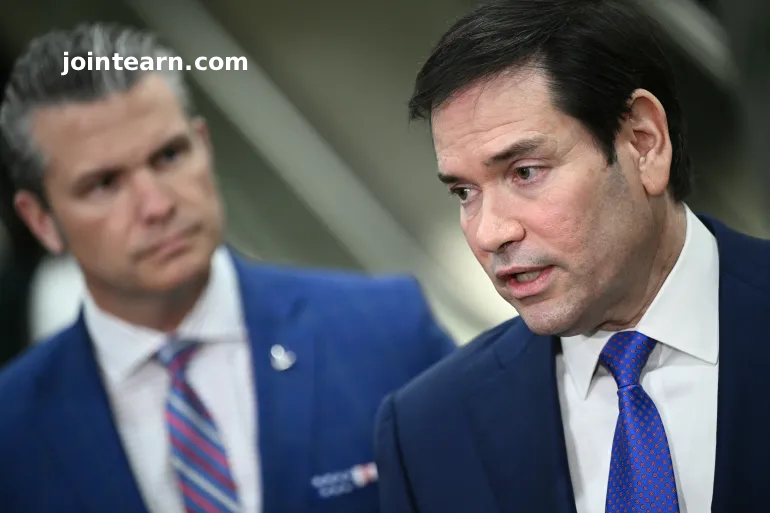
Senior US officials, including Secretary of State Marco Rubio and Secretary of Defense Pete Hegseth, briefed lawmakers on Capitol Hill regarding the operation, explaining the administration’s plan for managing Venezuela’s oil reserves. Rubio outlined a three-phase strategy:
- Immediate control of Venezuelan oil sales to generate revenue and control distribution.
- Opening Venezuela’s market to US and international companies, fostering economic reconciliation and enabling amnesty or reintegration of opposition figures.
- Transitioning governance, eventually stabilizing Venezuela under US oversight and facilitating long-term political reforms.
Analysts, including Gregory Brew of Eurasia Group, note that this approach resembles a “concessionary system” reminiscent of pre-1970s arrangements, where Western companies managed oil production and retained the bulk of profits, while the producer country technically retained ownership.
International Concerns and UN Warnings
The US move has sparked significant international concern. UN experts warned that exploiting Venezuela’s oil reserves under military occupation or regime-change strategies violates international law, including the right to self-determination and sovereignty over natural resources.
“Venezuela’s vast natural resources, including the largest proven oil reserves in the world, must not be cynically exploited through thinly veiled pretexts to legitimise military aggression, foreign occupation, or regime-change strategies,” the UN experts said.
Human rights organizations have also highlighted the risk of exacerbating Venezuela’s ongoing political and social crises.
Political Instability in Venezuela
Venezuelan Vice President Delcy Rodriguez was sworn in as interim president after Maduro’s abduction, emphasizing that “there is no foreign agent governing Venezuela.” Despite US claims to “run” the country, Rodriguez asserts domestic authority, creating a volatile political environment.
Analysts warn that Venezuela’s military, which wields significant economic and street-level power, could play a decisive role in either supporting or resisting US control of the country’s resources. Renata Segura of the International Crisis Group explained:
“It’s very important what the army might do. There might be a moment in which they think they’re not going to be on board with this particular arrangement that the United States is presenting.”
Conclusion
The Trump administration’s decision to control Venezuela’s oil indefinitely represents an unprecedented assertion of US influence over a sovereign nation’s natural resources. While officials claim this is intended to benefit both Venezuelans and Americans, the move raises serious questions under international law and could destabilize the region further. With the interim Venezuelan government asserting its authority and the military holding significant sway, the political and economic future of Venezuela remains highly uncertain.


Leave a Reply