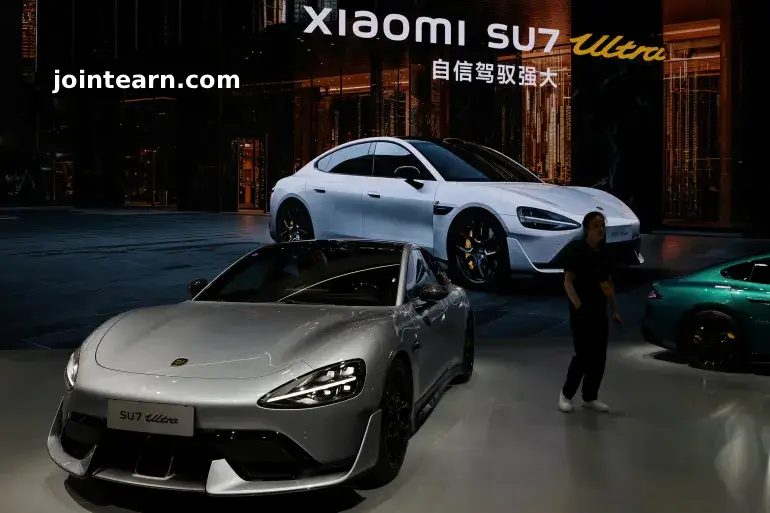
United States officials have criticized Canada’s decision to allow imports of Chinese electric vehicles (EVs), warning that the move could have negative implications for North American auto markets. The announcement comes after Canadian Prime Minister Mark Carney struck a deal with Beijing to reduce tariffs on Chinese EVs.
Canada-China EV Deal
On Friday, Carney announced a trade agreement that would allow up to 49,000 Chinese electric vehicles into Canada at a reduced tariff rate of 6.1 percent, down from the previous 100 percent tariff imposed in 2024.
The Canadian move was intended to ease trade frictions with China, including on agricultural exports such as canola seed, which China agreed to import at lower tariffs by March 1.
US Response
US Transportation Secretary Sean Duffy said the Canadian decision was “problematic” and predicted Canada might regret allowing Chinese vehicles into its market.
“I think they’ll look back at this decision and surely regret it to bring Chinese cars into their market,” Duffy said at a Ford factory event in Ohio, highlighting the US focus on protecting domestic auto jobs.
US Trade Representative Jamieson Greer echoed the concerns, stating that the limited number of vehicles allowed into Canada would not directly affect US auto exports.
“Those cars are going to Canada—they’re not coming here,” Greer explained, noting that US rules on cybersecurity for connected and navigational systems make it challenging for Chinese automakers to comply with US regulations.
Political Reactions
Trump administration officials have maintained a hardline stance on Chinese EVs, despite President Donald Trump expressing interest in having Chinese automakers build vehicles in the US.
Ohio Senator Bernie Moreno, a Republican, strongly opposed Chinese vehicles entering the US, stating:
“As long as I have air in my body, there will not be Chinese vehicles sold in the United States of America—period.”
Greer added that Canada’s EV decision could set a precedent for Chinese manufacturers, potentially undermining US policies designed to protect American auto workers and domestic vehicle production.
Trade and Market Implications
The Canada-China EV deal is part of a broader effort to normalize trade relations with China while reducing tariffs on certain goods. However, US officials remain cautious, arguing that Chinese EVs could give China a stronger foothold in North America, even as the US maintains tariffs and regulatory barriers for Chinese automakers.
The move also underscores a transatlantic trade divergence, with Canada prioritizing market access for Chinese EVs while the US continues to adopt a protectionist stance.
Key Takeaways
- Canada will allow up to 49,000 Chinese EVs at 6.1% tariffs, down from 100%.
- US officials warn Canada could regret the decision, citing risks to domestic auto production.
- US regulations on vehicle cybersecurity pose barriers for Chinese automakers.
- Senator Bernie Moreno affirmed strong opposition to Chinese vehicles in the US.
- The agreement reflects Canada-China trade normalization, but diverges from US policy.


Leave a Reply