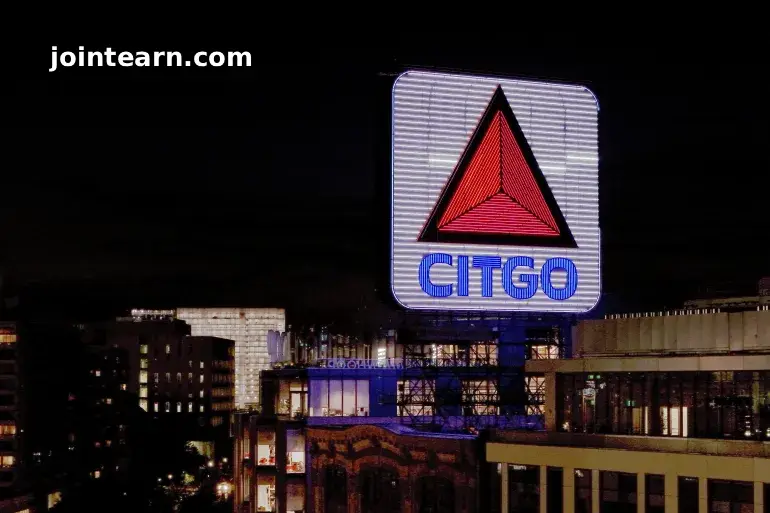
Venezuelan Vice President and Minister of Petroleum Delcy Rodriguez has strongly condemned a US court’s ruling authorizing the “forced” and “fraudulent” sale of Citgo, Venezuela’s Houston-based oil company subsidiary. The sale, intended to settle billions of dollars in debt, has sparked outrage in Caracas and renewed concerns over US intervention in the country’s energy sector.
US Court Orders Sale of Citgo
Last week, Delaware Judge Leonard Stark approved the sale of Citgo’s parent company to Amber Energy, an affiliate of the hedge fund Elliott Investment Management, for $5.9 billion. Elliott Investment Management stated that the acquisition was “backed by a group of strategic US energy investors.”
Citgo, owned by Venezuela’s state-run PDVSA (Petroleos de Venezuela, SA), has faced legal claims amounting to more than $20 billion from creditors. One notable creditor, Canadian mining company Crystallex, won a separate US court judgment in 2019 for $1.2 billion related to Venezuela’s 2008 nationalization of the Las Cristinas gold mine.
Venezuela Denounces the Sale
Rodriguez declared the sale “fraudulent” and said the Venezuelan government “energetically rejects the decision adopted in the judicial process.” She emphasized that Caracas has consistently opposed any attempt to divest Venezuelan oil assets, which it sees as a violation of national sovereignty.
Venezuelan President Nicolas Maduro has framed the court-ordered sale within a broader context of US military activity in the Caribbean Sea, claiming that these maneuvers aim to seize control over Venezuela’s vast oil reserves, which are the largest proven reserves in the world, estimated at 303 billion barrels as of 2023.
Venezuela’s Oil Exports and US Sanctions
Despite its immense reserves, Venezuela’s oil exports remain limited. In 2023, the country exported only $4.05 billion worth of crude, significantly lower than other major oil producers, primarily due to US sanctions targeting PDVSA and its operations. Historically, Venezuela supplied large volumes of crude to the United States, but exports declined sharply after Hugo Chavez came to power in 1998.
Under the first Trump administration, sanctions severely curtailed Venezuela’s oil exports to the US, prompting the country to pivot toward markets in China, India, and Cuba. A brief relaxation under President Biden allowed Chevron limited oil production licenses, but sanctions were re-tightened under the second Trump administration in early 2025.
OPEC Appeal and Global Implications
Maduro has appealed to OPEC members for support against what he calls “illegal threats” from the US. However, analysts such as Paolo von Schirach, president of the Global Policy Institute, are skeptical that Venezuela will garner substantial support within OPEC.
The sale of Citgo raises broader concerns about foreign influence on national oil assets and highlights the ongoing financial and operational challenges faced by PDVSA, including aging infrastructure, mismanagement, underinvestment, and sanctions pressure.
The Bigger Picture
This latest development underscores the geopolitical tension surrounding Venezuela’s oil industry. The forced sale of Citgo is seen in Caracas as a direct attack on national sovereignty and has further strained US-Venezuela relations. Analysts warn that the implications could reverberate through global oil markets, particularly in the Americas, and complicate OPEC negotiations.


Leave a Reply