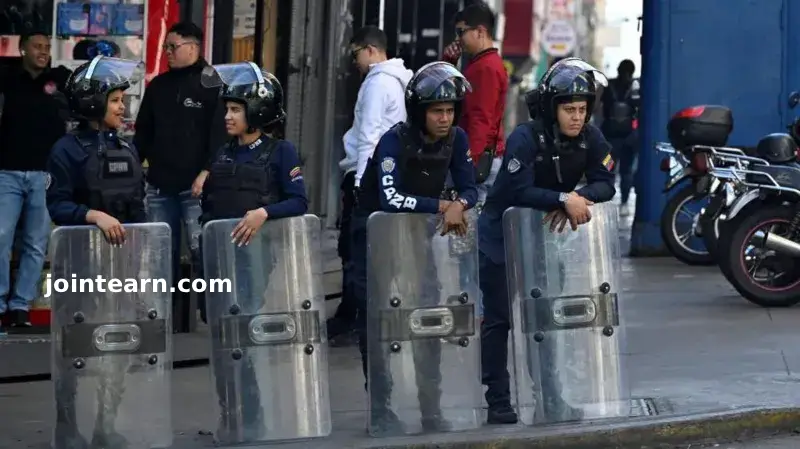
At least 14 journalists, mostly working for foreign news organizations, were detained in Venezuela on Monday while covering events following a dramatic US operation that seized Venezuelan leader Nicolás Maduro. The journalists were held by Venezuelan security forces at the National Assembly, Altamira, and the Colombia-Venezuela border, before most were released. One journalist, however, was deported, highlighting the ongoing risks for reporters operating in the country.
The incident coincides with Delcy Rodríguez being sworn in as interim president and her announcement that she was willing to cooperate with the Trump administration, which has stated it intends to “run” Venezuela.
Details of Journalist Detentions
According to the Venezuelan press union, security forces detained reporters both at government buildings and public streets in Caracas. Two journalists were seized by military counterintelligence, while others were taken by Venezuela’s intelligence service. Detained reporters reported that their phones and equipment were searched and that authorities reviewed their social media posts and private messages.
At the Venezuelan border near Cúcuta, Colombia, a Colombian and a Spanish reporter were held incommunicado for several hours before being returned to Colombia.
The press union called these detentions “alarming” and demanded the release of 23 journalists who remain in detention in the country.
Crackdown Beyond Media Workers
The repression extends beyond journalists. Residents of Caracas neighborhoods such as Petare and Altamira reported seeing hooded men and pro-government armed groups, known as “colectivos”, patrolling the streets, checking social media accounts, and instilling fear among the public.
“There is so much fear in the streets and in our homes,” said a 33-year-old resident, requesting anonymity.
Interior Minister Diosdado Cabello appeared keen to display the visibility of security forces, posting photos of himself with armed police on social media, reinforcing the presence of military and paramilitary groups throughout the city.
Residents reported that uniformed personnel stopped people on streets, checked phones, and censored communications, creating a climate of fear and limiting independent reporting.
Context: US Raid and Political Unrest
The detentions occurred days after a US raid in which Maduro and his wife were seized, resulting in the deaths of dozens of bodyguards and security personnel. While opposition Venezuelans outside the country celebrated the raid, there were no public celebrations within Venezuela, reflecting the regime’s tight control over information and public gatherings.
Venezuela has a long history of press restrictions, with very few foreign journalists granted visas. The current crackdown reflects ongoing government repression against dissent, with more than 2,000 arrests following the 2024 presidential election. Many detainees were accused of treason and faced lengthy prison sentences.
Pressure group Foro Penal reports that over 800 political prisoners remain incarcerated in Venezuela as of 5 January, underscoring the high level of political repression.
Press Freedom Concerns
The detentions have drawn criticism from international observers concerned about press freedom and human rights violations in Venezuela. Journalists working in the country face constant surveillance, harassment, and the risk of imprisonment, particularly when covering politically sensitive events.
The union representing Venezuelan media workers emphasized that the incidents are part of a broader pattern of censorship and intimidation, aimed at controlling the narrative about Maduro’s government and its response to foreign interventions.
Impact on International Reporting
With foreign journalists increasingly restricted, coverage of political developments in Venezuela is becoming harder to verify. Independent and foreign media outlets face serious risks of detention, deportation, and equipment seizure, limiting the flow of accurate information to the global public.
Analysts warn that international media suppression threatens not only press freedom but also the ability of the world to respond to human rights abuses occurring within Venezuela.
Summary
The detention of journalists in Venezuela highlights:
- The authoritarian tactics of the Maduro regime.
- Increasing military and paramilitary presence in urban areas.
- The dangerous conditions for foreign media attempting to cover political developments.
- Broader restrictions on freedom of speech, assembly, and movement.
As Venezuela faces ongoing political turmoil, these developments underscore the urgent need for international attention to protect journalists and ensure independent reporting can continue.


Leave a Reply