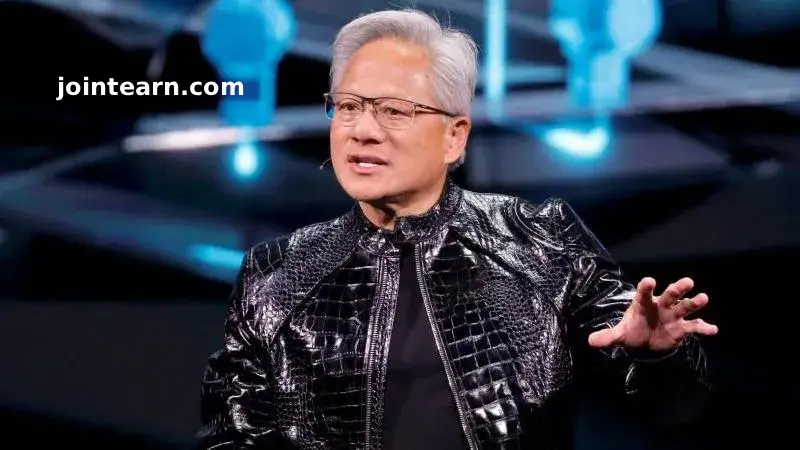
Nvidia has officially entered the self-driving car market with the unveiling of its new AI platform, Alpamayo, at the CES technology conference in Las Vegas. The chip-making giant, led by CEO Jensen Huang, aims to extend the company’s influence from AI computing into physical products, including autonomous vehicles.
Speaking to hundreds of attendees at CES, Huang emphasized that Alpamayo would allow cars to “think through rare scenarios, drive safely in complex environments, and explain their driving decisions”.
Alpamayo: AI “Reasoning” for Autonomous Vehicles
Alpamayo is designed as an open-source AI platform for autonomous vehicles. Unlike traditional AI systems focused purely on processing power, Alpamayo enables vehicles to reason about their actions, offering a layer of explainability to self-driving decisions.
“It drives so naturally because it learned directly from human demonstrators, but in every single scenario… it tells you what it’s going to do, and it reasons about what it’s about to do,” Huang said during his CES presentation.
The platform is available on Hugging Face, allowing researchers and developers to access, retrain, and improve the model for autonomous vehicle applications.
Collaboration with Mercedes and Robotaxi Plans
Nvidia revealed it is working with Mercedes-Benz to produce the first driverless cars powered by Alpamayo, initially in the US, before expanding to Europe and Asia. The AI platform’s flexibility is expected to enable safer, more adaptable autonomous driving in urban and complex environments.
In addition, Nvidia has announced plans to launch a robotaxi service by next year in partnership with an undisclosed company. This move positions Nvidia in direct competition with Tesla, which offers Autopilot for driver assistance. Elon Musk reacted to the Alpamayo announcement on social media, cautioning that “it’s easy to get to 99% and then super hard to solve the long tail of the distribution,” highlighting the challenges of fully autonomous vehicles.
Nvidia’s Push for Physical AI
Huang described the development as the “ChatGPT moment for physical AI”, highlighting the company’s pivot from a focus on software-driven AI models to integrating AI into tangible products. Analysts, including Paolo Pescatore from PP Foresight, described Alpamayo as a profound shift, positioning Nvidia as a platform provider for physical AI ecosystems rather than just a compute company.
The platform is expected to give Nvidia an edge over competitors as AI adoption expands beyond software applications into vehicles, robotics, and industrial automation.
Rubin AI Chips and Hardware Developments
Alongside Alpamayo, Nvidia confirmed that its Rubin AI chips are in production and slated for release later this year. The new chips are designed to compute using less energy, reducing operational costs for AI-powered systems while accelerating development in autonomous vehicles.
Shares of Nvidia rose slightly in after-hours trading following Huang’s CES presentation, reflecting investor optimism about the company’s long-term AI strategy and expansion into physical products.
Implications for the Autonomous Vehicle Market
Nvidia’s entrance into the self-driving car space could challenge Tesla and other autonomous vehicle companies, providing a fully integrated AI platform for vehicle reasoning and safety. Alpamayo’s open-source design also encourages collaboration among researchers and car manufacturers, potentially accelerating the adoption of safe autonomous driving technologies.
Nvidia’s market influence is significant, with the company holding a market capitalization exceeding $4.5 trillion, making it the most valuable publicly traded company in the world. While concerns remain about AI hype, Nvidia’s strategy demonstrates a clear effort to anchor AI in tangible, revenue-generating products.
Looking Ahead
With Alpamayo and Rubin AI chips, Nvidia is signaling a major shift in the future of AI-enabled vehicles. The combination of open-source AI, autonomous driving capabilities, and high-efficiency hardware could redefine the automotive and robotics industries, paving the way for fully autonomous cars and robotaxi services worldwide.
As Nvidia expands physical AI applications, the company’s innovations will likely continue to shape the intersection of machine learning, transportation, and smart infrastructure, reinforcing its position as a global AI leader.


Leave a Reply