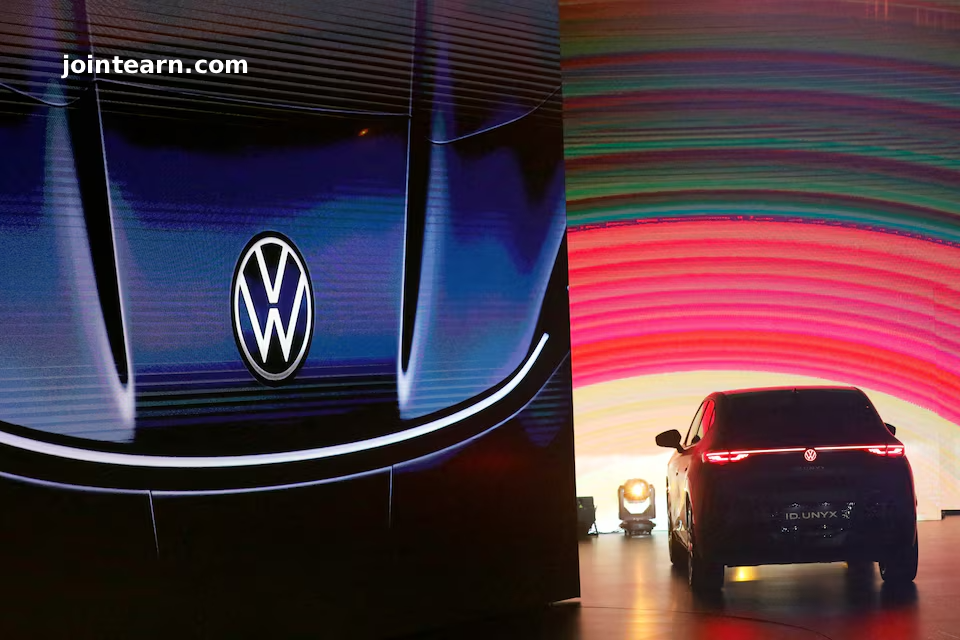
Volkswagen Looks to Boost China-Made Vehicle Exports
Volkswagen (VOWG.DE) is planning to expand exports of cars developed and manufactured in China to more overseas markets, according to Thomas Ulbrich, Chief Technology Officer of Volkswagen Group China. The German automaker, which recently started exporting China-made petrol limousines to the Middle East, is evaluating additional markets for its “made-in-China” offerings.
The strategy reflects Volkswagen’s effort to leverage its growing technological expertise in China to compete with domestic Chinese automakers and other global rivals. By capitalizing on local manufacturing capabilities and innovative vehicle technologies, the company aims to strengthen its global footprint outside Europe.
Focus on Southeast and Central Asia
Volkswagen’s Chinese factories in Hefei are capable of producing both internal combustion engine (ICE) vehicles and electric vehicles (EVs). Potential export destinations include Southeast Asian and Central Asian countries, where demand for competitively priced, high-quality vehicles is rising.
Ulbrich highlighted that the decision-making process for exports is collaborative with Volkswagen headquarters in Germany, ensuring the right vehicle portfolio is matched to each target market. “We have to pay attention that we have the right portfolio of cars in each market,” he said, emphasizing the strategic planning behind each expansion.
No Plans for Europe Due to Technology Differences
Despite the global expansion plans, Volkswagen does not intend to export China-made vehicles to Europe. The primary reason is a difference in electronic architecture and software technology for smart vehicles between China-made models and European market standards.
Volkswagen’s China-developed electronic architecture—a framework of control units, chips, and software—enables advanced smart vehicle features. However, this system differs from the platforms used in Europe, making direct export impractical at this time.
China as a Strategic Production Hub
Volkswagen has invested billions of euros in the Hefei production hub under its “in China for China” strategy, aimed at regaining market share from competitive Chinese brands. This hub allows faster decision-making, localized development, and cost efficiencies.
Notably, Volkswagen can now fully develop new vehicle platforms and technologies in China with all approval processes handled locally, outside Germany. Developing an EV model in China can cost up to 50% less than in other regions due to economies of scale and the concentration of suppliers and technology providers.
Ulbrich confirmed that vehicles built on Volkswagen’s flagship China-developed electronic architecture will soon be sold outside China, although specific markets and timelines were not disclosed.
Facing Global Competition from Chinese Automakers
While Volkswagen leverages China’s production advantages, it faces increasing competition as Chinese automakers expand overseas. Chinese brands are pursuing global markets to escape intense domestic price wars and overcapacity issues. Volkswagen’s strategy seeks to counter this trend by offering high-quality, cost-effective vehicles designed and manufactured in China.
Conclusion
Volkswagen’s move to export China-made vehicles to Southeast Asia, Central Asia, and other overseas markets marks a significant step in the automaker’s global strategy. By leveraging China’s technological and manufacturing strengths, the company aims to strengthen its competitive position internationally while addressing cost efficiencies. However, the exclusion of Europe highlights the challenges of aligning electronic architectures and smart vehicle technologies across regions.


Leave a Reply