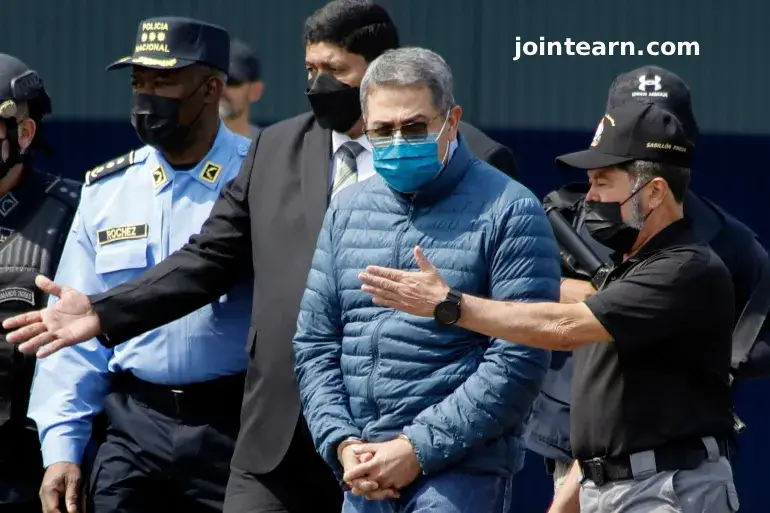
Former Honduran President Juan Orlando Hernandez has been at the center of controversy following his 2024 conviction for drug trafficking in the United States and his subsequent pardon by former US President Donald Trump in December 2025. Trump has claimed that Hernandez was “set up” by the Biden administration, sparking debates over US foreign policy, credibility, and the legality of prosecuting foreign leaders.
Background: Hernandez’s Conviction and Charges
Juan Orlando Hernandez served as President of Honduras from January 2014 to January 2022. Despite publicly cooperating with US authorities to combat drug trafficking during his tenure, Hernandez was indicted in April 2022 shortly after leaving office. He faced charges including:
- Conspiracy to import more than 400 tonnes of cocaine into the United States
- Weapons trafficking
- Using drug proceeds to fund political campaigns
- Protection and collaboration with violent drug cartels, including the Sinaloa Cartel
In June 2024, a US District Court judge sentenced Hernandez to 45 years in prison, along with five years of supervised release. Prosecutors detailed Hernandez’s alleged involvement in large-scale cocaine operations, including orchestrating armed protection for shipments and receiving millions in bribes. Witnesses included former traffickers and government insiders.
The prosecution argued that Hernandez leveraged his presidential authority to facilitate drug operations and shield co-conspirators, including family members like his brother, Juan Antonio Hernandez Alvarado, a former Honduran lawmaker.
Trump’s Pardon and Alleged ‘Set-Up’
On December 1, 2025, Donald Trump announced a full and unconditional pardon for Hernandez, claiming without evidence that the former president had been unfairly targeted by the Biden administration. Trump stated:
“If somebody sells drugs in that country, that doesn’t mean you arrest the president and put him in jail for the rest of his life.”
The White House framed the pardon as an attempt to correct what it described as a “miscarriage of justice,” questioning the fairness of Hernandez’s three-week jury trial. Critics argue, however, that the charges were based on documented involvement in drug trafficking to the United States, not merely his position as a foreign leader.
International Law and Prosecution of Former Heads of State
Under international law, sitting heads of state enjoy immunity from prosecution in foreign courts, but this protection typically does not extend to former leaders, especially when charged with crimes outside official duties. Georgetown University international law professor Anthony Clark Arend noted that:
“Because drug trafficking is not considered an official duty, the US was legally able to prosecute Hernandez as a former head of state.”
Historical precedents include:
- Manuel Noriega, former Panamanian leader, extradited and tried in the US on drug, money laundering, and racketeering charges
- Pavel Lazarenko, former Ukrainian Prime Minister, convicted in the US for money laundering
Experts emphasize that Hernandez’s prosecution was generally seen as legitimate both in Honduras and internationally, with broad support outside his core political base.
Implications for US Credibility and Policy
Trump’s pardon raises concerns about US credibility in Latin America and signals potential political interference in judicial matters. Critics argue the move could embolden corrupt leaders, undermine anti-drug efforts, and strain US-Honduras relations.
Meanwhile, Hernandez’s supporters maintain that his conviction was politically motivated and unjust. The debate continues over whether the pardon addresses a genuine miscarriage of justice or prioritizes political considerations over rule of law.
Key Takeaways
- Juan Orlando Hernandez was convicted in 2024 for large-scale cocaine trafficking to the US
- Trump pardoned him in December 2025, claiming a Biden administration “set-up”
- International law allows prosecution of former heads of state for crimes unrelated to official duties
- Historical precedents include Manuel Noriega and Pavel Lazarenko
- The pardon raises questions about US foreign policy, anti-drug efforts, and political impartiality


Leave a Reply