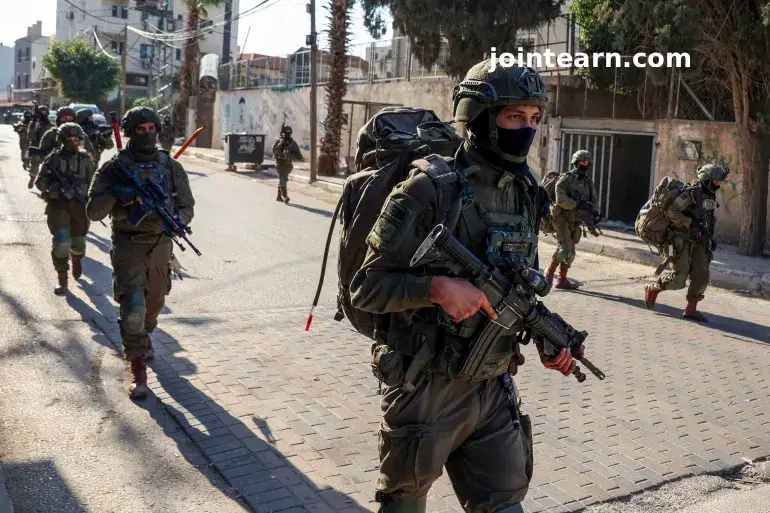
A 21-year-old Palestinian detainee has died in Israeli custody, according to the Palestinian Authority (PA), amid a sharp escalation of Israeli military operations and settler violence across the occupied West Bank. Rights organisations say the death adds to mounting evidence of widespread abuse within Israeli detention facilities.
Death in Custody Sparks Outrage
Abdul Rahman al-Sabateen, from the town of Husan near Bethlehem, passed away on Tuesday night at a Jerusalem medical facility. Al-Sabateen had been arrested in late June by Israeli soldiers. His family reported that he appeared healthy during their last court visit on November 25, raising urgent questions about the circumstances of his death.
Human rights groups say al-Sabateen’s case is part of a broader pattern. According to Physicians for Human Rights – Israel, at least 94 Palestinians have died in detention since October 2023. Their documentation includes testimonies pointing to severe mistreatment, medical negligence, and conditions that amount to torture.
The United Nations has separately confirmed at least 75 such deaths, emphasizing that Israeli authorities have imposed detention conditions that violate international law.
Over 100 Arrested in New Wave of West Bank Raids
Early Wednesday, Israeli forces carried out large-scale raids across multiple West Bank cities. More than 100 Palestinians were detained, including 30 people in Nablus and 24 in Silwad. Local witnesses told Wafa news agency that soldiers entered homes, conducted searches, and confiscated belongings and jewellery.
These arrests come as the West Bank experiences its highest levels of violence in decades. Since the start of the war on Gaza, over 1,000 Palestinians have been killed in the West Bank by Israeli forces.
Settler Violence Surges With Military Backing
UN data shows that more than 700 Palestinians have been injured in settler attacks so far this year—twice as many as in all of 2024. October alone saw 264 attacks, the highest monthly total since tracking began in 2006.
Human rights organisations warn that many settler attacks occur with the backing or presence of Israeli forces, particularly in areas targeted for settlement expansion.
Settlement Expansion Accelerates Despite Global Condemnation
On Wednesday, Israeli authorities approved 764 new housing units in three settlements. Finance Minister Bezalel Smotrich, a leading figure in Israel’s far-right government, called the decision part of “the revolution”—a reference to his plan to expand Israeli control over occupied Palestinian territory.
Since late 2022, Israel has authorised more than 51,000 new settlement units, a number that experts say entrenches de-facto annexation.
PLO Executive Committee member Wasel Abu Yousef condemned the plan, calling settlements “totally illegal” and contrary to international resolutions.
Human Rights Groups Warn of Widespread Displacement
Human Rights Watch recently reported that Israeli forces forcibly displaced 32,000 Palestinians from three West Bank refugee camps earlier this year. The organisation described these operations as war crimes and crimes against humanity, comparing the displacement to a “second Nakba.”
Omar Shakir, HRW’s Israel/Palestine director, said it was the largest displacement of Palestinians outside Gaza since 1967.
Mental Health Crisis Deepens Across Palestinian Communities
Doctors Without Borders mental health workers report an escalating psychological toll, particularly in cities like Hebron. One psychologist, speaking anonymously due to safety concerns, said many Palestinians feel a sense of inevitability about future violence, describing a widespread belief that “it’s just a matter of time.”
Continued Tensions at Al-Aqsa Mosque
In occupied East Jerusalem, around 190 Israeli settlers entered the courtyard of the Al-Aqsa Mosque compound on Wednesday, escorted by Israeli forces. Such incursions have surged over the past year and often include high-profile visits by far-right officials.
Under the long-standing status quo, Muslims are the only group permitted to worship at the site. Jews may visit—but not pray. Palestinians fear these repeated incursions are part of an effort to alter that arrangement.


Leave a Reply