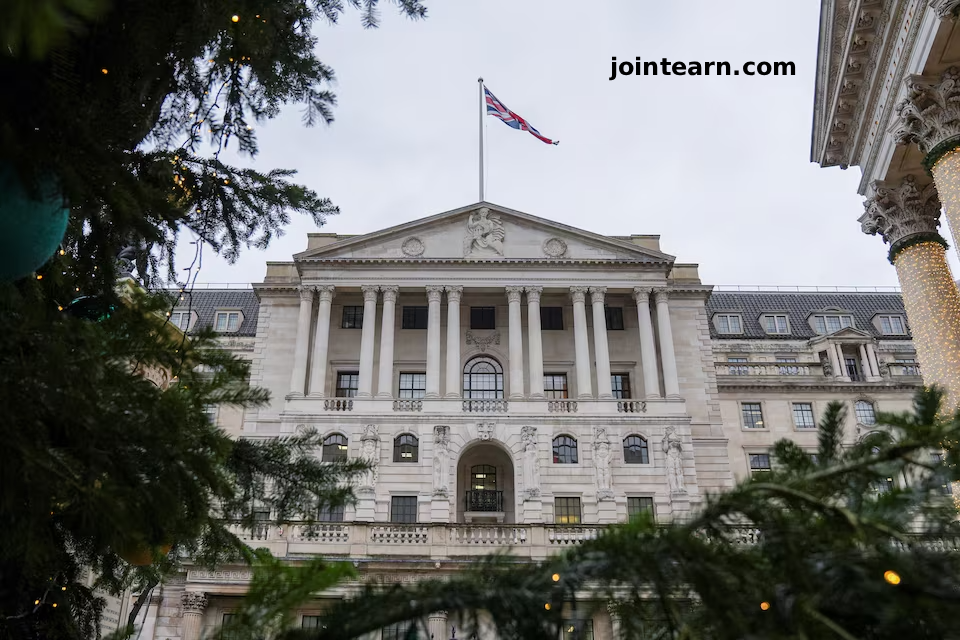
The Bank of England (BoE) is set to reduce interest rates this week following a significant slowdown in inflation and signs of weakening economic growth in the United Kingdom. Analysts expect the BoE to lower its benchmark Bank Rate from 4% to 3.75%, marking the fourth rate cut of 2025 and taking the rate to its lowest level in nearly three years.
Investors anticipate only one or two further rate cuts in 2026, reflecting ongoing price pressures that continue to keep inflation in the UK above other major economies in the Group of Seven (G7).
UK Inflation and Economic Data
Recent data shows UK inflation fell to 3.2% in November 2025, a larger-than-expected decline, driven partly by government measures such as the removal of green levies from power bills and the freezing of rail fares in the November budget. However, inflation remains the highest among G7 nations, exacerbated by tax increases on employers last year, a move designed to balance public finances.
The latest labor market figures also point to a slowdown, with unemployment reaching its highest level since 2021. Economic output shrank by 0.1% in the three months to October, as businesses delayed investment decisions ahead of the November budget announcement.
Monetary Policy Committee Dynamics
The Bank of England’s Monetary Policy Committee (MPC) remains divided on the path of interest rates. Historically, votes have been closely split; in November 2025, the MPC voted 5-4 to keep rates on hold. Analysts expect a similar 5-4 split in favor of a cut during the December meeting, potentially tipped by Governor Andrew Bailey switching his stance.
Hetal Mehta, chief economist at St. James’s Place, noted:
“There’s enough ambiguity around some of the numbers going into next year for there not to be back-to-back rate cuts. The data confirms the direction of travel; it’s the magnitude of rate cuts that is up for debate.”
Inflation Pressures Persist
Despite the headline drop in inflation, the BoE remains cautious. Price pressures in the services sector remain sticky, and survey data from S&P Global’s Purchasing Managers’ Index suggests that businesses continue to experience elevated input costs.
BoE officials are expected to frame any rate reduction as a gradual, risk-managed adjustment, rather than signaling a full easing cycle. As Daniela Hathorn, senior market analyst at Capital.com, explained:
“Because inflation remains above target and services components still look sticky, policymakers are unlikely to deliver a deeply dovish message. Instead, the BoE is likely to frame any cut as part of a gradual, risk-managed shift.”
Global Context
The BoE’s actions are being closely monitored in the context of other major central banks. The U.S. Federal Reserve has indicated one more potential rate cut in 2026, while the European Central Bank (ECB) appears to have ended its monetary easing cycle. These international developments highlight the unique challenges facing UK policymakers, who must balance stimulating growth with containing persistent inflation pressures.
Implications for the UK Economy
The rate cut will provide modest relief to borrowers and businesses, but it is unlikely to fully offset inflation pressures. Analysts suggest that the UK economy will continue to face headwinds in the near term, including slow wage growth, elevated costs for services, and lingering uncertainty in investment markets.
Finance Minister Rachel Reeves and Prime Minister Keir Starmer are under pressure to deliver stronger economic growth, and the BoE’s interest rate adjustments will play a key role in shaping the UK’s economic outlook in 2026.


Leave a Reply