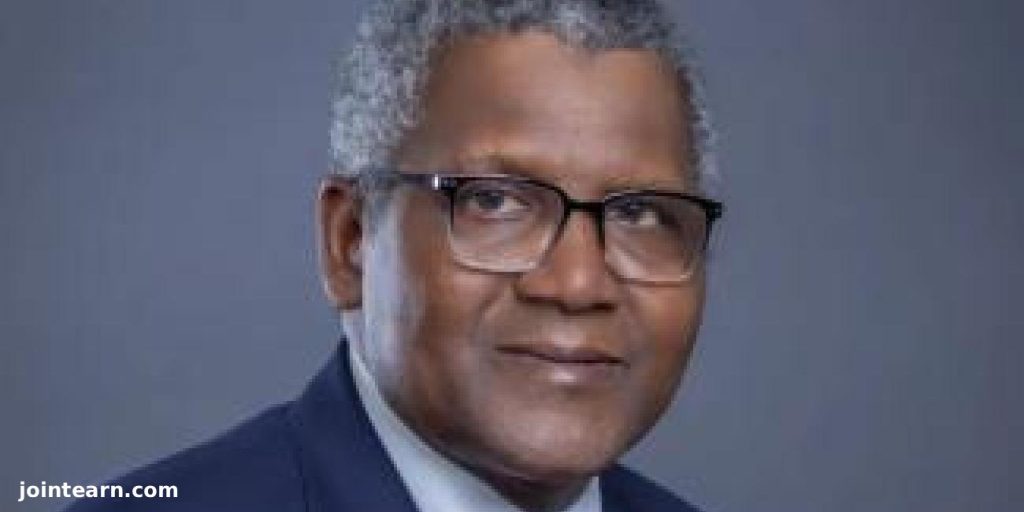
Nigerian billionaire and industrialist, Aliko Dangote, has launched a groundbreaking N100 billion annual education support initiative aimed at transforming the country’s educational landscape. The initiative, which is expected to exceed N1 trillion over the next 10 years, will be the largest private education intervention in Nigeria’s history.
Dangote, through his Aliko Dangote Foundation, revealed that he plans to allocate 25% of his personal wealth to fund the initiative. The program is designed to reach 1.3 million students across the country, with the aim of improving educational access, inclusivity, and quality for disadvantaged communities.
Key Features of the Program
The initiative, set to roll out in phases, is expected to support over 45,000 new students annually starting from 2026. The number will increase significantly in subsequent years, reaching 155,000 students annually by the fourth year and sustaining that level for a decade. The program is designed to target all 774 local government areas in Nigeria.
The initiative has four primary components:
- Aliko Dangote STEM Scholars Program:
- The program will provide financial support for 30,000 undergraduate students in Science, Technology, Engineering, and Mathematics (STEM) fields at public universities and polytechnics.
- Aliko Dangote Technical Scholars Program:
- This component will focus on 5,000 students enrolled in technical and vocational institutions, providing them with tools, materials, and training support.
- MHF Dangote Secondary School Girls Scholars Program:
- Named after Dangote’s daughters (Mariya, Halima, and Fatima), this program will support 20,000 girls in secondary school, prioritizing states with high rates of out-of-school girls, ensuring educational opportunities for them from Junior Secondary School (JSS1) to Senior Secondary School (SSS3).
- Dangote Teacher Training Program:
- A large-scale initiative to develop 10,000 STEM teachers across secondary schools in the country, initially focusing on government colleges attended by MHF scholars, before expanding nationwide.
Tackling Financial Barriers to Education
Dangote explained that financial difficulty, rather than a lack of talent, is the primary reason many students drop out of school in Nigeria. He emphasized that this initiative is not just a charitable effort, but a strategic investment in Nigeria’s future.
“This is not only charity. This is a strategic investment in Nigeria’s future,” Dangote said, stressing the importance of education in shaping the nation’s prosperity. “Every child we keep in school strengthens our economy. Every student we support reduces inequality. Every scholar we empower becomes a future contributor to national development.”
Dangote’s remarks were a direct appeal to Nigeria’s youth, stating that the program would not only give them opportunities but also the chance to learn, grow, and succeed. He stressed that young people are not seeking handouts, but opportunities to contribute to the country’s development.
Public and Government Reactions
The Presidency has lauded Dangote’s initiative, describing it as “the largest private education support program in Nigeria,” and aligning it with the Nigerian government’s human capital development agenda.
Vice President Kashim Shettima praised Dangote’s leadership, emphasizing that a population becomes a liability only when it is uneducated, and underscored the alignment of Dangote’s intervention with President Tinubu’s educational reforms, including efforts to strengthen basic education and expand technical education.
Education Minister, Tunji Alausa, called the program “pure human capital development,” noting that it would have a profound impact on educational access in every local government area across the country.
Lagos State Governor Babajide Sanwo-Olu also expressed his support for the program on behalf of the 36 state governors, further solidifying the initiative’s nationwide importance.
Long-Term Sustainability and Structure
Dangote’s commitment to long-term sustainability was made clear during the launch. He has committed to ensuring the continuity of the program through his personal financial investment, stating that he will allocate 25% of his wealth to fund the Aliko Dangote Foundation and its projects. A review of the initiative’s impact is scheduled for 2030 as part of Dangote Group’s Vision 2030 strategy.
Additionally, the program will be managed through a merit-based digital system for tracking applications, disbursements, and outcomes. The Aliko Dangote Foundation will collaborate with major institutions such as NELFUND, JAMB, NIMC, NUC, NBTE, WAEC, and NECO to ensure transparency, accountability, and efficiency in the process.
Steering Committee and Oversight
A Program Steering Committee chaired by His Highness Justice Sidi Dauda Bage, the Emir of Lafia, will oversee the implementation of the initiative. The committee will include former vice-chancellors, education administrators, technical advisors, and representatives from the Dangote family, ensuring diverse expertise and robust oversight.
Conclusion
Dangote’s latest philanthropic initiative promises to be a game-changer for Nigeria’s education sector. The long-term vision, substantial funding, and focus on critical areas such as STEM education, vocational training, and teacher development signal a commitment to creating a more educated and skilled workforce for Nigeria’s future.
As Aliko Dangote himself pointed out, “No nation can rise above the quality of education it offers its young people.” Through this initiative, Dangote is not just investing in individual students but in the future of Nigeria, a country that, despite its challenges, holds immense potential for growth and development.


Leave a Reply