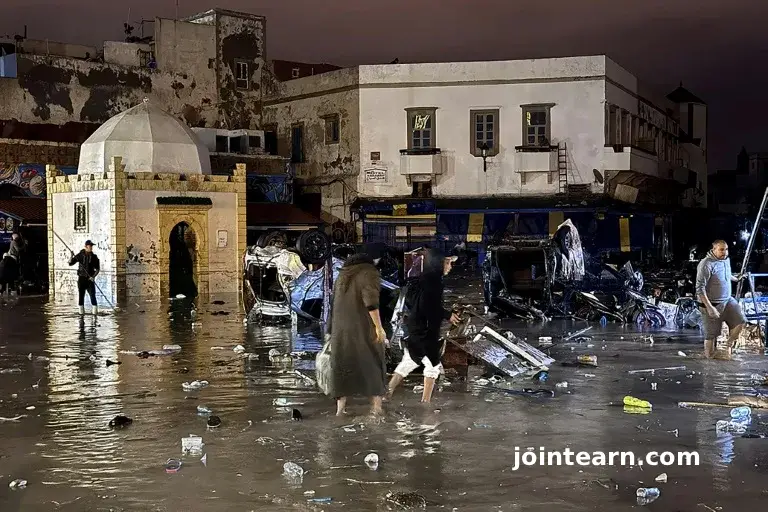
A devastating flash flood struck the Moroccan coastal town of Safi on Sunday, killing at least 37 people and causing widespread destruction of homes and businesses. Local authorities are continuing search and rescue operations as the community grapples with the aftermath of the disaster.
The flooding, which swept cars, debris, and trash through the town streets, has been described as the deadliest flash flood in Morocco in over a decade. Safi, located roughly 300 kilometres (186 miles) south of the capital Rabat, has suffered extensive damage to its historic town centre.
Casualties and Emergency Response
Officials report that 14 survivors are currently receiving treatment at Mohammed V Hospital, with two in critical condition in intensive care. Civil Protection units and local residents are working tirelessly to clear mud, debris, and wrecked vehicles from the town streets.
Schools in Safi have been closed for at least three days due to safety concerns, while local businesses assess the damage to their properties and merchandise. Shopkeeper Abdelkader Mezraoui stated that the retail sector has been “devastated,” with jewelry stores, clothing shops, and other local businesses losing nearly all their stock. Survivors are calling for government compensation to help restore livelihoods.
Human Impact and Personal Stories
The psychological toll of the disaster is immense. One victim, who asked to remain anonymous, told AFP:
“I’ve lost all my clothes. Only my neighbour gave me some to cover myself. I have nothing left. I’ve lost everything.”
Rescuer Azzedine Kattane highlighted the emotional strain on both victims and emergency responders, noting the challenge of coping with such a high number of casualties. As floodwaters recede, the town faces a long and difficult recovery.
Climate and Environmental Context
Morocco is experiencing its seventh consecutive year of severe drought, and last year marked the country’s hottest year on record. Experts warn that climate change is increasing the frequency and intensity of extreme weather events, as warmer seas and a hotter atmosphere hold more moisture, fueling more powerful storms.
Historically, Morocco has faced deadly floods, including hundreds of fatalities in 1995 and numerous casualties in 2002, demonstrating the recurring vulnerability of the region to extreme rainfall events.
Looking Ahead
Authorities in Safi are calling for immediate support to assist victims and rebuild infrastructure, while climate experts urge long-term planning to mitigate the impact of future floods. The combination of prolonged drought and intensifying storms highlights the urgent need for resilience measures in Morocco and across North Africa.


Leave a Reply