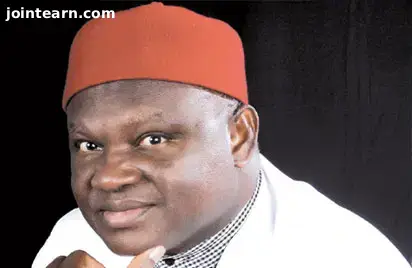
Chekwas Okorie, the Convener/National Chairman of the Igbo Agenda Dialogue (IAD), has expressed deep concern over the existential challenges the Igbo people have faced since the end of the Nigeria-Biafra Civil War in 1970. According to Okorie, these challenges continue to affect Igbo people both in the 13 states where they are indigenous, as well as the other 23 states and the Federal Capital Territory (FCT).
In a statement issued on behalf of the Igbo Agenda Dialogue on Wednesday, Okorie emphasized that despite these challenges, the Igbo people have survived, thrived, and prospered through a combination of divine grace, resilience, and their unwavering spirit.
He stated: “The Igbo have survived, thrived, multiplied, and prospered only by the special grace of God and our doggedness, resilience, and never-say-die spirit. Millions of our people were compelled by excruciating circumstances to seek more conducive environments abroad for greener pastures, including education and acquisition of skills to improve their well-being and provide for their families and relations back in the Homeland.”
The Global Spread of the Igbo
Okorie also highlighted the significant global presence of the Igbo people, with settlements in all 196 countries of the world, largely due to the migration patterns resulting from the harsh conditions in Nigeria post-Civil War. He underscored the important role that the Igbo diaspora plays in Nigeria’s economy, contributing around 75 percent of the country’s foreign exchange remittances each year.
Loss of Confidence in Citizenship
Despite the resilience of the Igbo people, Okorie expressed sadness over what he perceived as a loss of confidence in their citizenship of Nigeria. He lamented the widespread apathy among Igbo people toward the country’s democratic processes, citing that this apathy has led to poor leadership recruitment at the national, state, and local government levels.
He stated: “The resultant apathy is largely responsible for the poor leadership recruitment we experience at the National, State, and Local Government levels in every election cycle in Nigeria. This has further exacerbated our already precarious situation.”
Okorie also noted that this lack of participation in Nigeria’s political life has compounded the Igbo people’s problems, contributing to their underrepresentation in key political spheres.
A Call to Action: Reawakening the Igbo Nation
Despite the challenges, Okorie remains optimistic and calls for a revitalized political consciousness among the Igbo people. He believes that the Igbo, as the largest ethnic group in Nigeria with the most widespread geographical presence, have the potential to reshape the country’s political landscape.
He urged the Igbo people to awaken from their “self-induced slumber” and actively engage in the political process to reclaim their rightful place in Nigeria’s political hierarchy.
Okorie continued: “I am of the firm belief that we can reverse our unacceptable situation without firing a shot. We are unarguably the largest ethnic group in Nigeria and have the widest geographical spread. We have the most enviable network of associations, unions, and groups in Nigeria and the diaspora. We are like a sleeping giant that only needs to awaken from its self-induced slumber to resume its place of pride in the country.”
The Igbo Agenda Dialogue and the 2027 Elections
The Igbo Agenda Dialogue (IAD), which was inaugurated in August 2025, is a non-partisan socio-political platform aimed at unifying Igbo groups and advancing their political interests. The IAD seeks to consolidate efforts of various Igbo organizations and create a powerful political grid for the Igbo people.
As part of its efforts to reawaken Igbo political consciousness, the group is planning to host the first-ever Igbo political summit in the first quarter of 2026. One of the key highlights of the summit will be the unveiling of the Igbo Charter, which aims to articulate the political and economic aspirations of the Igbo people, following the historical significance of the Ahiara Declaration.
Okorie emphasized the importance of collective action to reframe the political narrative of the Igbo in Nigeria. He believes that a unified and proactive Igbo political strategy, especially in the 2027 general election, will attract both local and international attention to the Igbo nation.
“We have the capacity to redraw the Nigerian political map by simply taking our destiny into our own hands. We have no excuse to be irrelevant or beggarly in our common patrimony called Nigeria. A resurgent Igbo beyond where our founding fathers left it is possible in our time,” Okorie declared. “The time is now or never.”
Conclusion
Okorie’s call for Igbo unity and political activism comes at a time when there is growing concern among many ethnic groups about the marginalization and underrepresentation in Nigeria’s political space. The success of the Igbo Agenda Dialogue and its efforts to consolidate Igbo power in the country’s democratic framework may play a pivotal role in determining the future political trajectory of the Igbo people in Nigeria.


Leave a Reply