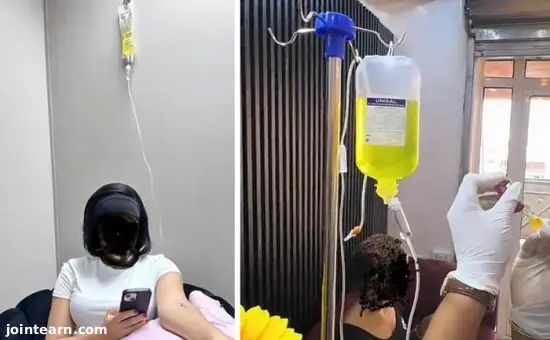
The pursuit of fairer skin has become a booming yet risky industry in Nigeria, particularly among women, and to a lesser extent, men. Among the latest trends is the use of intravenous (IV) glutathione infusions, a controversial procedure promoted in spas and wellness centers despite warnings from health professionals about its potential dangers.
The Allure of Fair Skin
For 27-year-old Precious, visiting a luxurious spa in Lekki for glutathione infusions was driven by social pressures and the perceived prestige of lighter skin. “I felt my self-esteem drop whenever I compared myself to other light-skinned women,” she revealed. Despite fears of unqualified personnel administering injections, she pursued the treatment to meet beauty standards.
This trend extends beyond skin tone, with many seeking body enhancements such as breast and buttock augmentations, spurred by global beauty ideals and peer influence.
Glutathione IV: Promise vs. Risk
Glutathione, an antioxidant naturally produced by the liver, plays a key role in immunity, skin repair, and anti-aging. While its therapeutic benefits are established, its use for cosmetic skin whitening lacks scientific backing.
Administered intravenously, glutathione is claimed to lighten skin by interfering with melanin production. Treatments typically start with three infusions per week, tapering to weekly sessions over several weeks. Costs range from ₦35,000 to ₦70,000 per session in Lagos spas.
However, medical experts caution against these procedures, particularly when performed by non-medical personnel. Dr. Kemisola Ahmed, a Lagos-based dermatologist, warned:
“After an infusion, your skin may look temporarily lighter, but there’s no proof of safety or effectiveness for skin lightening. Allowing someone unqualified to inject fluids directly into your veins is inherently dangerous.”
Dr. Samson Adeife added that these practices exploit the desperation of clients, often leading to hospital visits for complications caused by unregulated treatments.
Global Concerns
The unregulated glutathione market is not unique to Nigeria. In the UK, over 300 beauty salons offer IV glutathione drips for cosmetic purposes, many without clinical supervision, leading to serious side effects including infections, kidney strain, and anaphylaxis. Similar issues in the Philippines prompted a ban on cosmetic glutathione injections in 2011.
Experts like Ian Andrews, Head of Environmental Health at the Chartered Institute of Environmental Health (CIEH), have called for stronger legislation to protect consumers from unlicensed cosmetic procedures.
Medical Opinions
Health professionals emphasize that the body naturally produces the necessary antioxidants, vitamins, and collagen. Dr. Ajidahun Olusina, a global health executive, noted:
“Spas are using these drips as a cash cow strategy. You get more benefits from proper diet and hydration than from unnecessary infusions.”
Dr. Obinna Ossai and UK-based Dr. Olufunmilayo Ogunsanya echoed these warnings, highlighting the risks of infections, liver and kidney damage, and even fatal complications from unsafe IV administration in unlicensed settings.
Body Dysmorphia and Social Pressures
Experts also point to body dysmorphia and societal pressures as drivers of the trend, with some women even exposing unborn children to these substances in attempts to lighten skin. The normalization of such extreme measures has allowed unqualified spa operators to thrive, leaving clients unaware of the serious health consequences.
Takeaway
While the desire for aesthetic enhancement is understandable, medical professionals unanimously warn against IV drips and glutathione infusions in unregulated settings. A balanced diet, hydration, and healthy lifestyle remain the safest and most effective ways to maintain skin and body health.
“You do not need vitamin or glutathione drips in a spa. You are risking your life and wasting your money. Eat well, drink water, take fruits, exercise regularly — that’s all your body truly needs,” said Dr. Ogunsanya.


Leave a Reply