London, UK – Huda Ammori, cofounder of Palestine Action, is set to challenge the UK government’s controversial decision to proscribe the pro-Palestine activist group as a terrorist organisation. The case will be heard at London’s High Court, following a ruling by the Court of Appeal that there are reasonable grounds to argue the ban interferes with freedom of speech and protest.
The judicial review is scheduled to begin on Wednesday, with subsequent hearings on Thursday and December 2.
“Proscribing Palestine Action wasn’t done to protect the public; it was done to crush dissent and defend the Israeli weapons industry,” Ammori told Al Jazeera. “This is an opportunity for the courts to right the wrongs of the government.”
Background on the Ban
The UK government, under Prime Minister Keir Starmer, outlawed Palestine Action in July 2025 after two members broke into RAF Brize Norton, spraying red paint on Voyager planes alleged to be used in Israel’s operations in Gaza.
- In August 2024, activists also targeted the Israeli defence firm Elbit Systems in Bristol, destroying quadcopter drones.
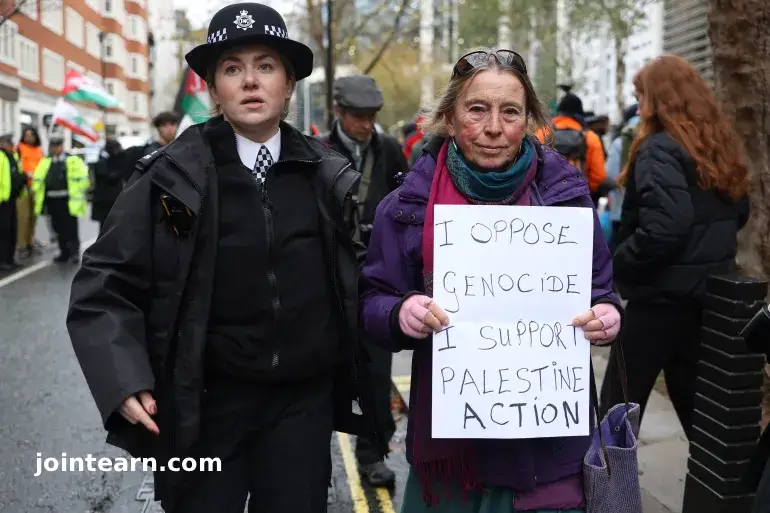
- Since the ban, more than 2,000 people have been arrested for showing support for the group, often simply by holding signs reading: “I oppose genocide, I support Palestine Action.”
- Membership or support of the group carries a potential prison sentence of up to 14 years.
Legal and Political Controversy
The group’s supporters argue the proscription is politically motivated, claiming the UK government is attempting to suppress dissent over its involvement in Gaza.
- Defend Our Juries, a UK campaign supporting Palestine Action, calls the ban “absurd” and claims the UK government is ignoring public protests against military support for Israel, including F-35 jet components and Shadow R1 surveillance flights.
- Legal experts highlight the broad definition of terrorism under the Terrorism Act 2000, which includes acts like criminal damage without violence toward humans, raising questions over the legitimacy of the ban.
Direct Action and UK Complicity
Human rights group Cage International criticized the government’s “draconian use of terrorism legislation” to shut down activism. According to Cage:
“Direct action has been focused on specific nodes that make war possible: manufacturers, insurers, logistics providers, financiers, universities, lobbyists, and government infrastructure. Principled disruption becomes not only legitimate but necessary when ordinary channels fail.”
The International Court of Justice (ICJ) concluded in July 2024 that Israel’s prolonged presence in occupied Palestinian territories, including East Jerusalem, breaches international law and could plausibly amount to genocide, issuing six provisional measures to mitigate risks.
Palestine Action’s protests between 2020 and 2025 have led to shutdowns at sites connected to weapons production used by Israeli forces, significantly shaping the UK’s activism landscape.
Humanitarian Context
Since October 2023, Israel’s military campaign in Gaza has resulted in:
- 69,733 Palestinians killed
- 170,863 wounded
- Over 300 deaths since the recent ceasefire, with hundreds of violations reported
During the October 7, 2023 attacks on southern Israel, 1,139 people were killed and around 200 were taken captive.
Ammori and supporters stress that the High Court must weigh the broader implications of the ban, both for civil liberties in the UK and for international attention to Palestine.


Leave a Reply