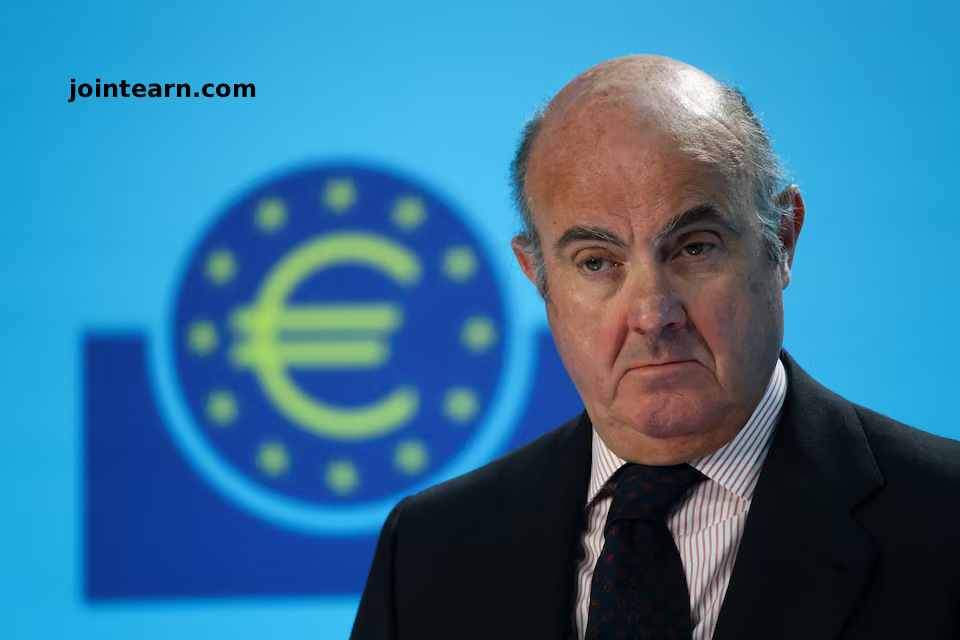
Six candidates are in the running to replace Spain’s Luis de Guindos as European Central Bank (ECB) vice president, with eurozone finance ministers expected to nominate one on January 19, 2026. The position becomes available at the end of May when de Guindos’ term expires, marking a key moment in the ECB’s ongoing leadership transition.
The Candidates for ECB Vice President
The six candidates announced by the Eurogroup chairman Kyriakos Pierrakakis are:
- Mario Centeno – Portugal
- Martins Kazaks – Latvia
- Madis Muller – Estonia
- Olli Rehn – Finland
- Rimantas Sadzius – Lithuania
- Boris Vujcic – Croatia
The successful nominee will need the support of at least 16 of the 21 eurozone countries, representing at least 65% of the eurozone population. After nomination, the ECB and European Parliament are consulted, but neither institution holds veto power. The final decision will be made by EU leaders at their March summit.
Significance of the ECB Vice Presidency
The vice president plays a crucial role in the day-to-day operations of the ECB, overseeing monetary policy implementation, regulatory compliance, and financial stability initiatives. While traditionally seen as less prominent than the chief economist or the president, the position is pivotal as the ECB faces ongoing challenges including inflation management, digital euro development, and post-pandemic economic recovery.
This appointment also marks the start of a two-year process to renew most of the ECB executive board, including President Christine Lagarde, who will complete her non-renewable term in 2027. Other positions slated for replacement in 2027 include the chief economist and the head of market operations.
Gender and Geographic Representation at the ECB
Historically, the ECB board has been dominated by men from the four largest eurozone economies—France, Germany, Italy, and Spain. Eastern European countries, representing roughly a third of the EU population, have never held an ECB board seat. The vice presidency presents an opportunity to diversify both gender and geographic representation on the board.
Since the ECB’s founding in 1998, women have held only 19% of board seats, though President Lagarde’s leadership has been a notable step toward greater gender diversity in EU financial institutions.
Next Steps and Timeline
- January 19, 2026: Eurogroup to nominate the preferred candidate
- March 2026: EU leaders’ summit to approve the appointment
- 2027: Non-renewable terms for president, chief economist, and head of market operations expire
The choice of ECB vice president will influence the direction of eurozone monetary policy for years to come, especially as the board navigates post-pandemic economic recovery, inflation control, and financial regulation reforms.


Leave a Reply